Choose your operating system to start
Transit dispatchers and municipal route planners confront complex route adherence, tight headways, shifting passenger volumes, and stringent passenger safety standards. Systems relying on fragmented data feeds inevitably break down under daily urban transit strain.
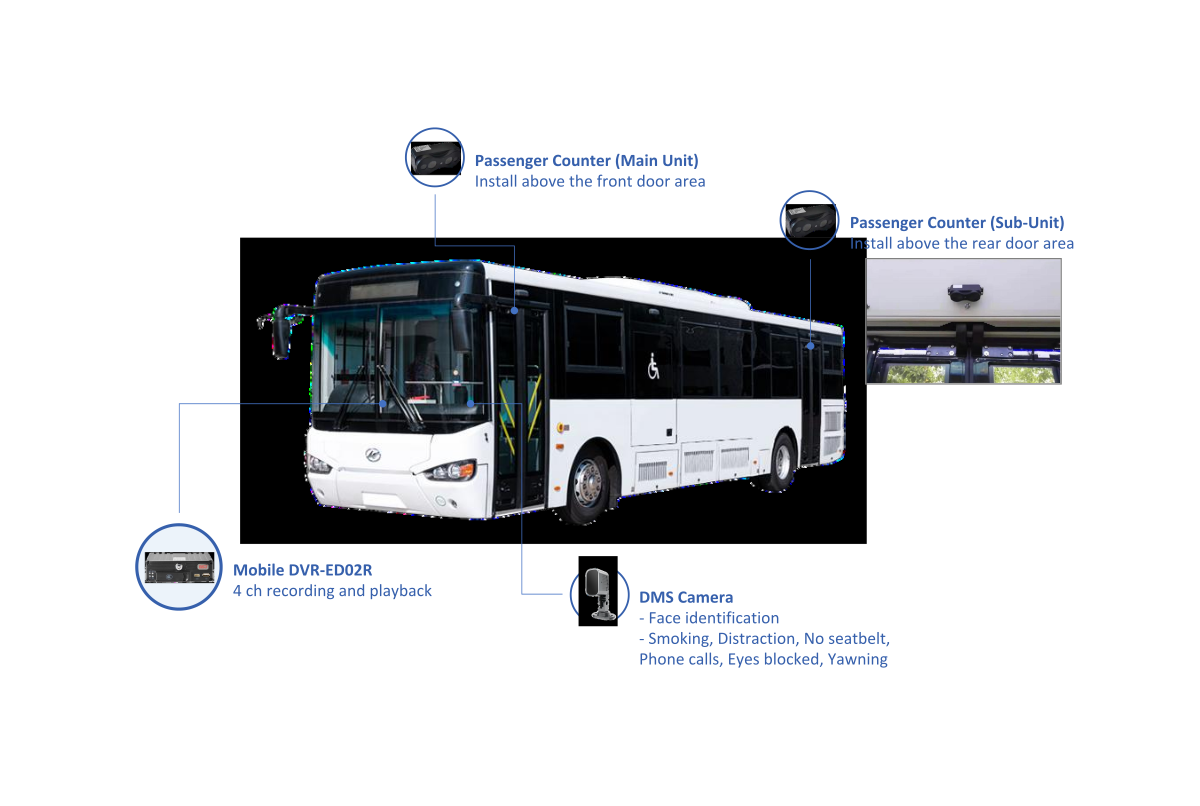
Fleet supervisors need an integrated software architecture bridging real-time vehicle positioning, high-bandwidth sensor feeds, and active video telematics. Purpose-built bus fleet management software delivers that unified cockpit by synchronizing depot dispatch with live roadway reality.
Public transit relies on schedule integrity and headway regularity rather than static point-to-point tracking. Route controllers need automated headway monitoring, early delay warnings, and intelligent dispatch adjustments when gridlock or detours disrupt active runs. Without dynamic timetable recalculation, buses bunch together, leaving long passenger wait gaps across downstream stops.
Dispatch consoles must ingest high-frequency GNSS telemetry alongside geofence triggers to project accurate arrival times at passenger shelters and mobile ticketing apps. Real-time deviation tracking alerts control rooms before timetable drifts turn into systemic route collapses.
Automated schedule balancing tools suggest holding strategies or skip-stop patterns to restore uniform service intervals. Such responsiveness forms the operational bedrock of any viable smart public transportation system.
Passenger security and liability mitigation demand far more than retrospective video downloads after an incident occurs. Operating teams require multi-channel in-cabin, passenger door, and road-facing camera feeds directly accessible through their monitoring software. Central dispatchers must confirm driver well-being, passenger density, and road hazards without toggling across disconnected third-party surveillance systems.
Edge computing transforms camera hardware into an active safety guardian. At BSJ Technology, we develop AI video telematics hardware that processes ADAS and driver fatigue events directly on the vehicle before pushing verified video clips to dispatch. Integrating these edge detections gives software the ability to flag genuine risks immediately while filtering out nuisance alerts.
Software dashboards should automatically bookmark video clips tied to harsh braking, door entrapment alarms, or physical altercations. Rapid evidence retrieval cuts claims resolution time from weeks to minutes, protecting agencies against false passenger liability claims while safeguarding operating personnel. Immediate visual confirmation also lets controllers direct emergency responders with context-rich awareness.
Urban transit planning depends heavily on empirical boarding numbers rather than guesswork to justify route frequencies. Modern bus fleet management software must interface cleanly with automated passenger counting sensors mounted above each bus door. Collecting directional passenger flows allows transit agencies to match vehicle capacity to actual passenger demand across peak and off-peak corridors.
Diagnostics telemetry represents another non-negotiable operational layer. Ingesting standard CAN bus parameters—including coolant temperature, brake wear warnings, transmission fault codes, and high-voltage battery states on electric buses—enables proactive maintenance dispatch. Detecting impending mechanical failures before vehicles leave the depot prevents costly road calls and service cancellations.
Maintenance supervisors also require historical sensor trending to schedule component overhauls during scheduled downtime rather than during peak service hours. Correlating diagnostic trouble codes with specific driver behavior metrics highlights systemic component stress, helping maintenance managers train drivers on smoother braking and throttle control.
Proprietary hardware lock-in severely hampers transit modernization and inflates municipal lifecycle budgets. Solution architects need software platforms that consume standardized communication protocols, including JT/T 808, JT/T 1078, and MQTT, from ruggedized on-board mobile digital video recorders and telematics gateways.
Open hardware integration gives operators freedom to choose dependable mobile digital video recording units tailored to harsh transit environments. That is why our engineering team at BSJ Technology designs connected IoT hardware with open API architectures, empowering systems integrators to link multi-sensor payloads directly into their preferred operating consoles.
Flexible protocol support simplifies peripheral expansion inside the passenger cabin. Fare collection validators, destination LED boards, reverse radar sensors, and acoustic passenger announcements can feed status updates into a unified software environment, creating a coherent smart public transportation system infrastructure. Standardized data parsing reduces integration timelines when adding newly procured vehicle models.
Servicing hundreds of public buses spread across regional terminals creates severe logistical headaches when hardware adjustments require manual cable connections. Transit agencies need software equipped with robust remote device management and firmware-over-the-air capabilities to oversee physical equipment health.
Operations teams require centralized visibility into peripheral connectivity, cellular signal strength, storage health on solid-state drives, and camera angle alignments. Resolving sensor errors or pushing configuration profiles remotely preserves labor hours and keeps transit vehicles on the road where they belong.
Deploying scalable bus fleet management software eliminates the maintenance bottlenecks that undermine digital transformation projects. Remote parameter tuning ensures speed thresholds, driver alert sensitivities, and video streaming bitrates adapt to changing route environments without physical depot visits. Administrators can stage updates during overnight depot parking windows to maintain operational readiness.
Public bus transit cannot function efficiently when scheduling, passenger safety, mechanical health, and driver oversight exist in disconnected administrative silos. Evaluating software requires looking beyond aesthetic mapping interfaces to scrutinize how effectively the platform handles high-throughput vehicle telemetry under real-world operating conditions.
Successful transit modernization hinges on dependable synergy between edge hardware and cloud software logic. Deep technological partnerships with BSJ Technology provide the ruggedized telematics foundation and sensor connectivity needed to power a high-performance smart public transportation system.
Unifying active safety video, automated passenger counts, CAN bus telemetry, and dynamic dispatch empowers transit operators to elevate passenger satisfaction, reduce operating costs, and maintain safety across every kilometer traveled. Investing in open, data-rich telematics ensures public bus networks remain agile, resilient, and ready for future urban mobility demands.

BSJ Technology (SZSE: 301608) is a global provider of AI Video Telematics and Connected Fleet IoT solutions. Since 2009, BSJ has developed AI Dashcams, MDVR systems, and GPS tracking solutions for commercial fleets worldwide.