Choose your operating system to start
Multi-stop delivery creates a very different tracking challenge from a simple point-to-point journey. A small van may complete numerous stops during one route, making visibility important from the moment the vehicle starts until the final delivery is completed. Missed stops, route deviations, unsafe driving, and cargo-related disputes can all affect delivery performance.
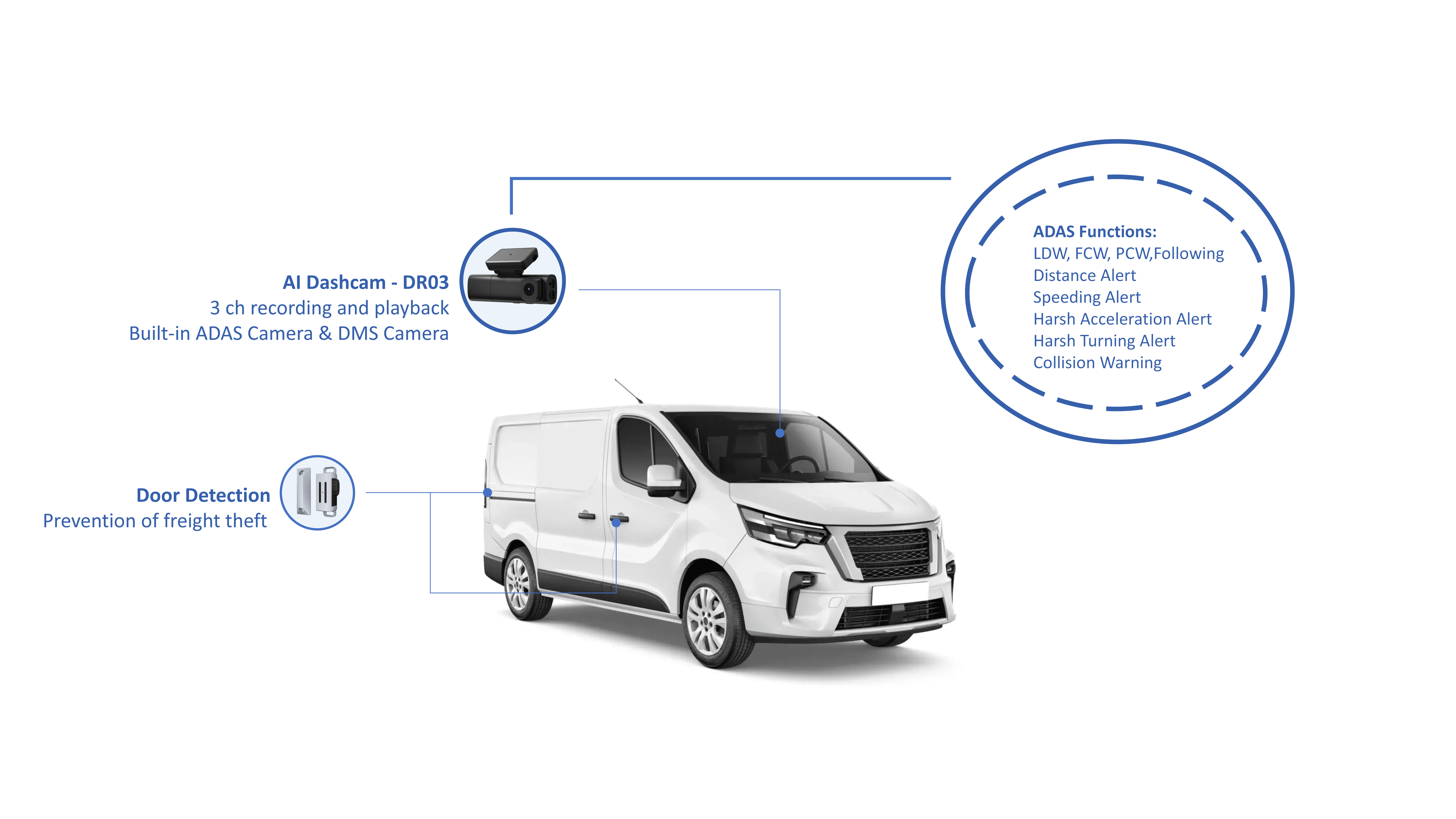
We develop telematics solutions specifically for small vans and last-mile delivery fleets. Our approach combines AI-powered telematics hardware, real-time GPS tracking, and cloud-based fleet management so operators can maintain visibility throughout the delivery cycle. The objective is to connect vehicle movement, driver safety, delivery activity, and video evidence within one operational environment.
A basic tracker can show a vehicle's location, but multi-stop operations require more detailed route visibility. Dispatch teams may need to know whether a driver is following the scheduled route, when the vehicle enters a particular area, and where the van has traveled during the day.
Our small-van solution provides real-time GPS tracking with location updates in less than 10 seconds, route history playback, and intelligent geofence alerts. These functions can help fleet managers monitor vehicle movements and identify route deviations or entries into restricted areas.
For businesses using a delivery vehicle tracking system, this means tracking can extend beyond simply locating a van on a map. Historical route information provides a record of completed movements, while geofence notifications can draw attention to specific location events during active operations.
Multi-stop delivery requires constant coordination because the operating picture can change throughout the day. A van may be handling several scheduled destinations while dispatchers need to monitor progress across the entire fleet.
Real-time location data gives operations teams a clearer view of where each van is. Route history can then be used to review completed journeys and understand how a vehicle moved between delivery locations.
The value of this visibility is particularly relevant to last-mile fleets, where every additional stop adds another point at which a route can deviate from expectations. Instead of checking vehicles individually, managers can use a connected platform to maintain a broader operational view.
A delivery route is only as effective as the vehicle operation behind it. Driver behavior can affect both road safety and delivery reliability, especially when drivers spend long periods completing repeated stops.
Our delivery fleet management software pairs AI dashcams that integrate Advanced Driver Assistance Systems and Driver Monitoring Systems into compact hardware designed for vans. According to the official small-van solution, these systems can detect drowsiness, phone use, seatbelt violations, tailgating, and lane departures in real time. In-cab audio alerts can warn drivers when relevant events are detected.
This makes driver monitoring part of the same connected environment as vehicle tracking rather than a separate safety process.
Location information explains where a vehicle was, but it does not necessarily show what happened around it. For delivery fleets, video can provide additional context when operators need to investigate an incident or dispute.
Our multi-channel AI dashcam systems provide continuous HD recording covering front, rear, and interior cargo views. The official solution also specifies crash-triggered automatic video upload, helping preserve important footage when a device is damaged during an incident.
The BSJ cloud platform allows video clips to be searched by vehicle, date, and event type. This can make incident review more practical for operations teams that need to locate specific footage instead of manually reviewing long recordings.
Small delivery vans often carry goods through multiple stops before returning to a depot or completing the route. Because the cargo area is directly connected with delivery operations, monitoring the interior can provide useful visual evidence.
The combination of front, rear, and interior cargo views gives fleet teams more information about vehicle activity. This does not replace normal delivery procedures, but it can provide another source of evidence when an incident requires review.
For managers evaluating delivery fleet management software, video management therefore deserves attention alongside GPS functions. The software should help turn recorded information into something that can be searched and reviewed when operational questions arise.
Delivery performance depends on vehicles being available when they are needed. Unplanned downtime can interrupt routes and create additional pressure on dispatch operations.
Our small-van solution includes predictive maintenance and fleet health monitoring capabilities. The official solution describes these functions as helping minimize downtime and maximize deliveries. It also connects fleet devices with the BSJ software ecosystem, allowing the device fleet to stay updated and optimized without requiring manual on-site intervention.
Remote device management can be particularly useful when a business operates multiple vans across different locations.
For multi-stop delivery fleets, several capabilities should be evaluated together:
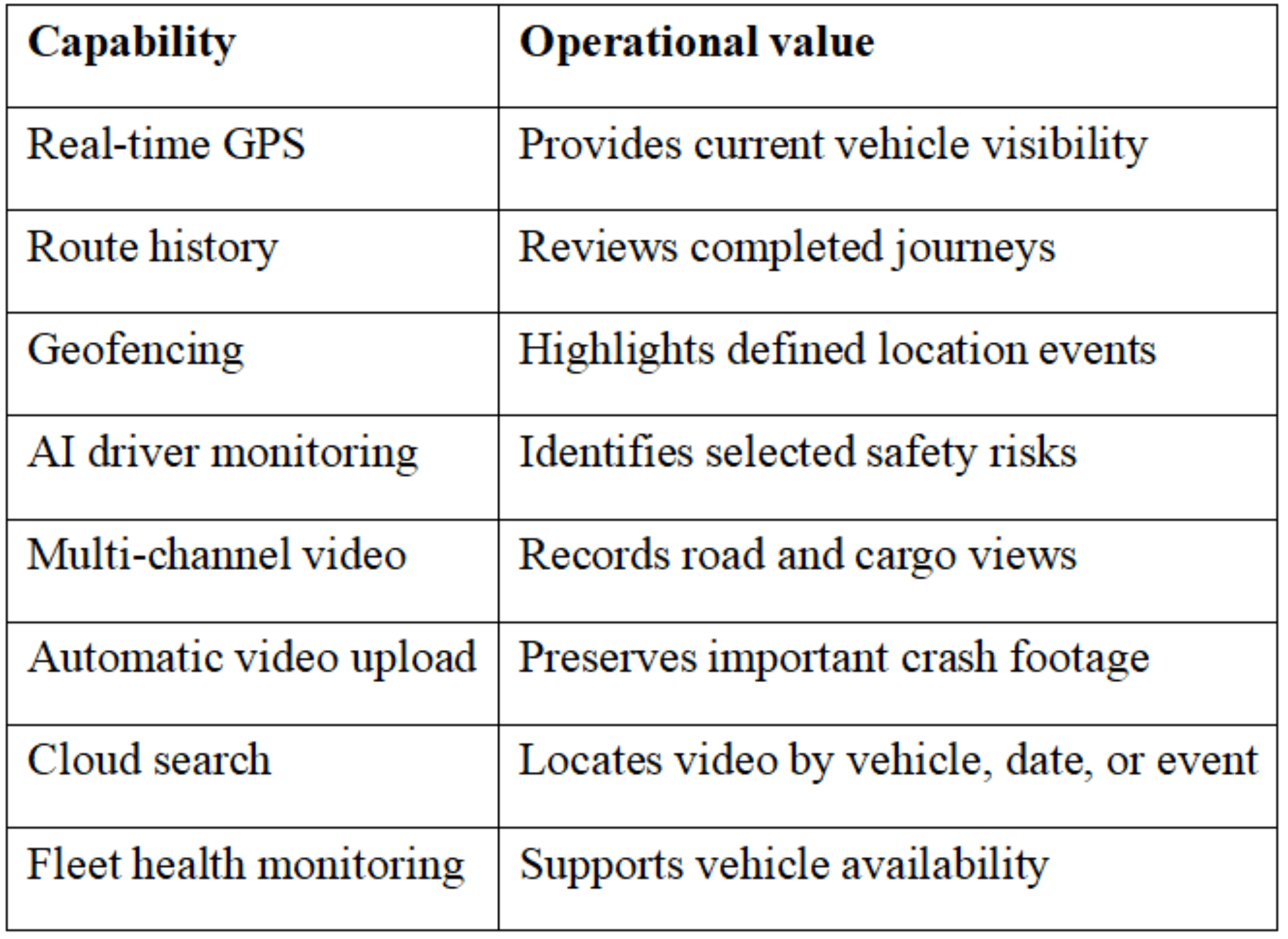
These functions reflect the architecture of our small-van solution rather than treating tracking as an isolated GPS feature.
A multi-stop route generates many individual events, from ignition and vehicle movement to driver behavior, route changes, and delivery-area activity. The more effectively these events are connected, the easier it becomes for fleet teams to understand daily operations.
At BSJ Technology, our delivery vehicle tracking system delivers AI powered telematics hardware for small vans and last-mile delivery fleets, combining real-time GPS tracking, intelligent route visibility, driver safety monitoring, cargo video evidence, and fleet health management.
For operators, the purpose of a connected van solution is not simply to watch vehicles move. It is to create continuous visibility from the first ignition through the final drop-off, while giving the operations team practical information about routes, drivers, vehicles, and delivery-related events.

BSJ Technology (SZSE: 301608) is a global provider of AI Video Telematics and Connected Fleet IoT solutions. Since 2009, BSJ has developed AI Dashcams, MDVR systems, and GPS tracking solutions for commercial fleets worldwide.