Choose your operating system to start
A truck camera system must do more than capture images. Fleet operators need footage that covers the right areas, remains available after an incident, and can be reviewed without unnecessary delays. Choosing a truck camera system with mobile DVR recording therefore requires attention to camera configuration, onboard storage, video retrieval, and the way recorded evidence fits into daily fleet operations.
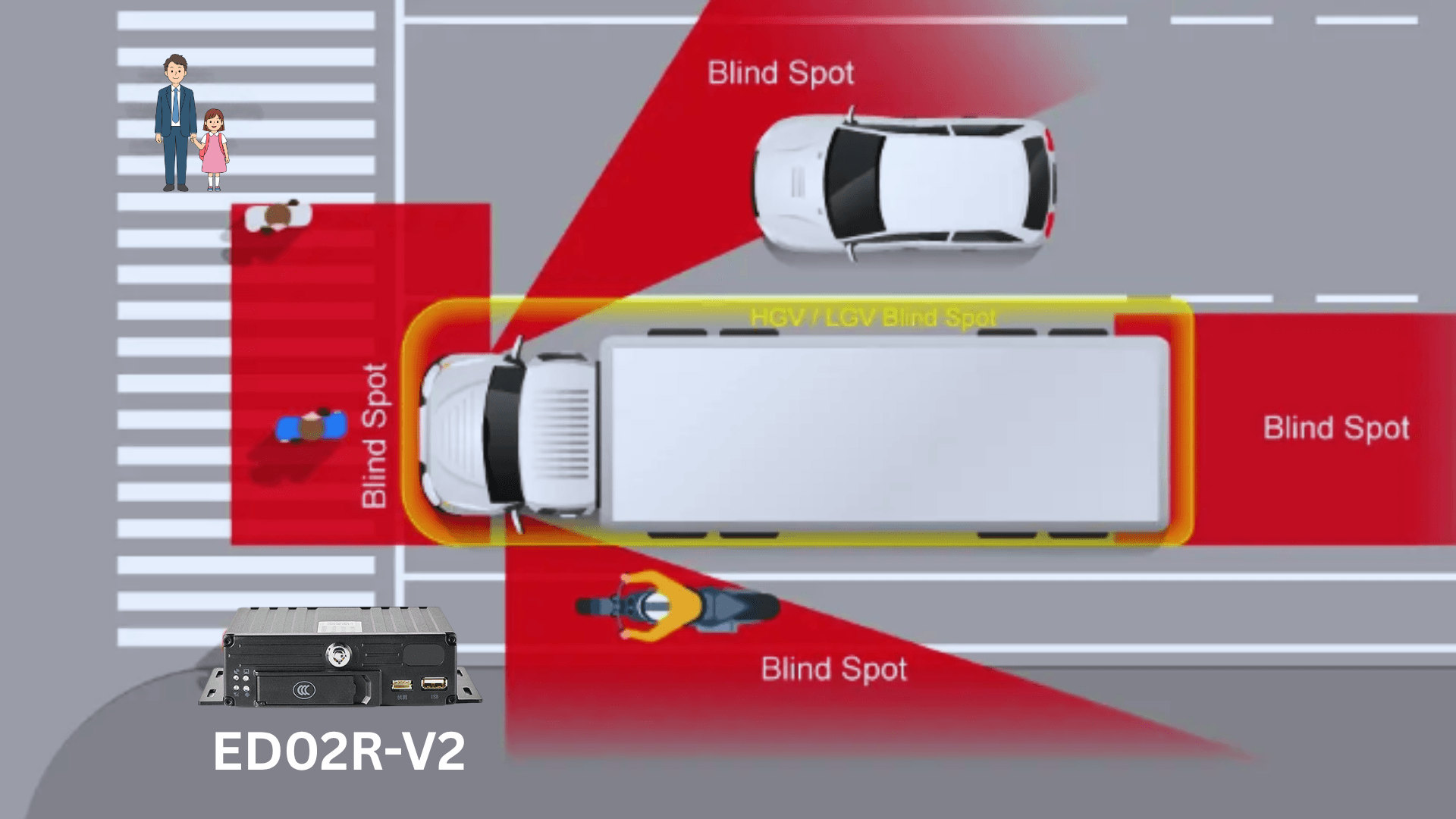
Camera placement should follow the vehicle's operational risks. A long-haul truck may require forward-facing footage to review road incidents, while a heavy vehicle working at loading docks or construction sites may need additional views around its sides and rear. Cabin recording can also support driver behavior reviews where appropriate.
An MDVR camera system connects multiple cameras to a central in-vehicle recorder, depending on the model's supported channels and inputs. This architecture can consolidate footage from different viewing angles, making it easier to investigate events involving the road, driver, vehicle surroundings, or cargo area.
Before selecting equipment, map each required view to a camera position. Check the number of channels, supported camera resolutions, mounting constraints, cable routing, and the recorder's available storage options. More cameras are not automatically better if important views remain obstructed or the installation creates maintenance difficulties.
We recommend defining the evidence requirement first, then selecting the recording architecture around it. Our AI MDVR range includes the ED02R-V2, which supports four-channel HD recording at 1080p or 720p. The appropriate configuration depends on the fleet's coverage objectives and installation requirements.
A recorder may capture an incident successfully, yet locating the relevant footage can become difficult if the retrieval process is poorly planned. Fleet teams should understand how recordings are stored, how historical clips are accessed, and whether the system supports remote video functions.
A mobile DVR typically records video onboard the vehicle, reducing dependence on continuous network connectivity for local recording. Remote access and real-time uploads, where supported, add another layer by allowing authorized personnel to review selected footage without waiting for the vehicle to return to its depot.
Storage capacity, recording resolution, camera count, and retention requirements should be considered together. Higher-resolution footage and additional camera streams affect storage consumption. Buyers should confirm how the selected device manages recordings and determine whether its storage arrangement meets the intended retention policy.
Incident workflows deserve equal attention. Can an authorized reviewer identify a vehicle, locate the relevant time period, and retrieve the correct camera view? Can uploaded footage be associated with a reported event? Testing these tasks during a pilot reveals practical limitations that a specification sheet alone may not show.
Conventional recording provides visual evidence for later review. AI-enabled systems can add supported detection functions, helping fleets identify particular driving risks and connect relevant events with video footage.
Advanced Driver Assistance Systems (ADAS) can provide alerts for supported road hazards, while Driver Monitoring Systems (DMS) can monitor specified driver behaviors. Blind Spot Detection (BSD), when supported by the recorder and compatible cameras, can help detect nearby vehicles or vulnerable road users in monitored areas.
These capabilities depend on the installed hardware, camera placement, configuration, and supported algorithms. Buyers should verify which functions are included in the proposed model rather than assuming that every recorder offers the same intelligence.
For fleets considering an MDVR camera system with AI features, acceptance testing should cover both detection behavior and recording. Confirm that relevant events are identified under intended operating conditions and that associated footage can be reviewed. AI alerts complement driver training and operational safety procedures; they do not replace attentive driving.
A successful installation depends on the complete hardware arrangement. Camera compatibility, cable lengths, power connections, mounting positions, and environmental conditions can all influence whether the system operates as intended in a commercial truck.
Create an installation plan for each vehicle type before ordering equipment in volume. Verify that the selected recorder accepts the required camera inputs and that the planned wiring route avoids interference with vehicle controls or routine maintenance access. Commissioning checks should confirm that every camera produces a usable image and that recordings can be played back.
Platform integration introduces another set of requirements. Fleet operators may want location data, video events, and recording access available through an existing telematics application. Confirm supported communication protocols, event mappings, remote access functions, and software compatibility before deployment.
At BSJ Technology, we develop AI MDVR hardware for connected fleet applications, including the ED02R-V2 with supported video recording, real-time uploads, ADAS, DMS, and BSD functions. Integration and device-management options should be verified against the specific model and target platform.
The right configuration depends on vehicle layout, incident risks, monitoring needs, and how footage will be used. A truck requiring basic multi-view evidence may need a different arrangement from a fleet seeking AI-assisted safety alerts and remote video review.
For distributors and system integrators, product evaluation should include channel requirements, camera compatibility, recording specifications, storage arrangements, integration support, and OEM/ODM options where customization is needed. A pilot installation can validate these details before the design is standardized across a larger fleet.
Our focus at BSJ Technology is vehicle telematics hardware, including connected video recording solutions for commercial vehicles. We recommend selecting equipment through documented requirements and practical testing rather than channel count or price alone.
A well-matched mobile DVR solution brings camera coverage, dependable onboard recording, accessible evidence, and compatible integration into one workable deployment.
When those elements are validated together, fleet teams can investigate incidents more effectively and build a recording setup suited to their vehicles and operational priorities.

BSJ Technology (SZSE: 301608) is a global provider of AI Video Telematics and Connected Fleet IoT solutions. Since 2009, BSJ has developed AI Dashcams, MDVR systems, and GPS tracking solutions for commercial fleets worldwide.