Choose your operating system to start
Modern commercial supply chains operate under relentless pressure to improve transit speed, minimize operational costs, and guarantee asset security across complex road networks. For long-haul logistics providers, regional freight distributors, and heavy transport operators, managing a fleet of heavy-duty vehicles requires far more than basic location tracking.
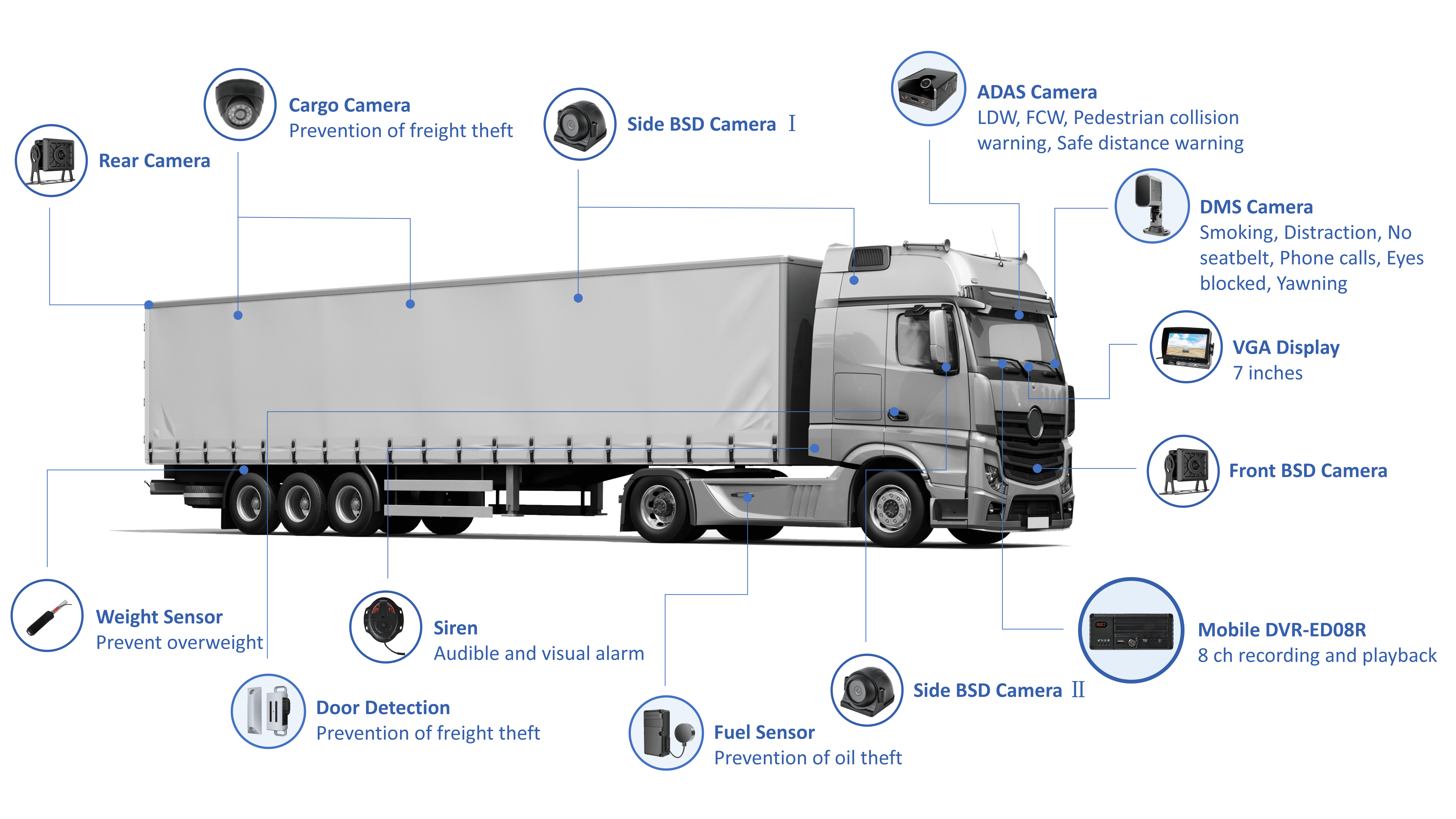
Connected trucks have become the indispensable backbone of modern freight movement, relying on complex arrays of IoT sensors, telemetry gateways, and vision systems to communicate vital operational data in real time. We understand that blind spots in fleet operations directly lead to escalating fuel expenditures, unexpected mechanical breakdowns, cargo spoilage, and heightened liability risks. Furthermore, compliance mandates regarding Hours of Service (HOS) and Electronic Logging Devices (ELD) require continuous, tamper-proof operational monitoring across international borders.
To overcome these persistent obstacles, enterprise transport leaders must move away from fragmented, legacy monitoring tools. Transitioning to an integrated framework for truck fleet management empowers dispatchers and logistics executives with granular, real-time control over their mobile assets. By combining location intelligence, engine diagnostics, and driver behavior analysis, connected transportation networks achieve unprecedented levels of efficiency and safety, ensuring that every load arrives on schedule while protecting profit margins across every haul.
Building a robust telematics architecture for heavy transport requires deploying specialized, industrial-grade hardware engineered to withstand severe road vibrations, broad temperature fluctuations, and volatile electrical environments. A comprehensive logistics fleet management system relies on a multi-tiered hardware approach where each component addresses a distinct operational requirement while sharing telemetry seamlessly across a central network gateway.
Modern heavy trucks frequently feature dual CAN bus networks (J1939 and OBD-II), requiring telematics hubs capable of parsing multiple vehicle control protocols simultaneously without introducing signal interference to the vehicle's onboard computers.
To visualize how integrated telematics components interact within a connected truck ecosystem, consider the following primary hardware tiers:
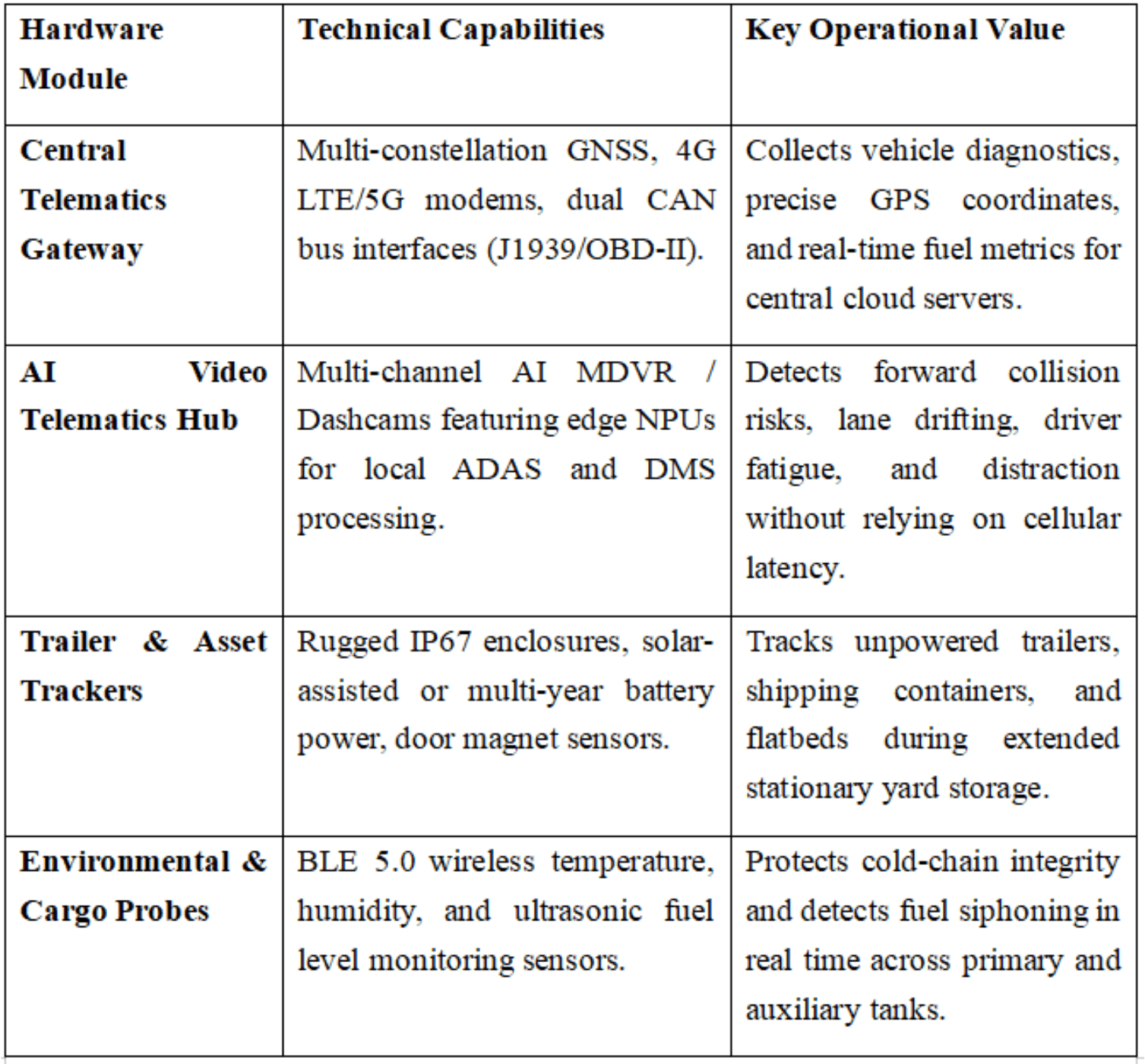
For robust truck fleet management, integrating these hardware modules into a unified ecosystem, commercial transport operators eliminate information silos. This enables dispatch teams to monitor vehicle health, driver attentiveness, and cargo status simultaneously through a single centralized dashboard.
Fuel represents one of the largest variable expenses for commercial transport companies. Achieving long-term profitability requires continuous monitoring of engine performance and fuel consumption patterns. Through direct CAN bus integration, our telematics devices read real-time parameters such as engine RPM, throttle position, idle duration, and fuel rate directly from the vehicle's electronic control unit (ECU). When paired with non-invasive ultrasonic fuel level sensors, the system can instantly flag sudden drops in fuel volume, identifying unauthorized siphoning during driver rest stops or detecting subtle fuel theft over extended transit corridors.
In addition to fuel optimization, protecting human capital and reducing accident liabilities remain top operational priorities. By embedding artificial intelligence directly into cabin dashcams and multi-channel recorders, commercial trucks gain proactive safety co-pilots that operate independently of cellular coverage:
Deploying telematics technology across large commercial transport fleets demands flexible hardware architectures that respect existing software investments. Proprietary hardware lock-in restricts growth and forces companies into rigid operational frameworks that hinder long-term scalability.
At BSJ Technology, we advocate for open ecosystem development. We engineer our hardware with flexible APIs, open protocols, and standardized communication streams, ensuring smooth integration with leading third-party fleet management platforms, such as Wialon, GpsGate, and custom enterprise resource planning (ERP) systems.
Furthermore, our hardware supports remote Firmware Over-The-Air (FOTA) updates, allowing fleet operators to upgrade device capabilities and patch security protocols across thousands of active vehicles without requiring manual shop service.
Different transport sectors present unique operational challenges, whether hauling hazardous chemical tankers, flatbed industrial machinery, or temperature-sensitive pharmaceuticals. To meet these varied demands, we offer extensive OEM and ODM manufacturing capabilities.
Supported by a dedicated team of research and development engineers and an experienced technical support division, we deliver customized firmware configurations, tailored wiring harnesses, and specialized sensor integration with rapid turnaround times and strictly controlled delivery schedules.
As the commercial logistics landscape becomes increasingly competitive, relying on outdated or disconnected vehicle monitoring methods introduces severe operational risks. Upgrading to advanced connected truck technology guarantees total visibility across every mile, enabling transport companies to lower fuel costs, elevate driver safety standards, and protect valuable freight.
Partnering with a reliable, forward-thinking telematics manufacturer ensures your fleet remains resilient, efficient, and fully prepared for the future of global commercial transportation.

BSJ Technology (SZSE: 301608) is a global provider of AI Video Telematics and Connected Fleet IoT solutions. Since 2009, BSJ has developed AI Dashcams, MDVR systems, and GPS tracking solutions for commercial fleets worldwide.