Choose your operating system to start
In transport and fleet management, a fleet manager may know where every truck is located and still struggle to coordinate deliveries, manage schedules, or respond to operational delays. Conversely, a dispatch team may have sophisticated planning tools but lack reliable information about vehicle location, driver behavior, or events occurring on the road.
The distinction between transportation fleet management software and a telematics platform lies in how each addresses these different needs—and how they work together.
Two Systems, Two Different Jobs in Fleet Operations
Transportation fleet management software typically focuses on organizing fleet-related business activities. Depending on the product, its functions may include dispatch planning, delivery coordination, work allocation, maintenance scheduling, and operational reporting. It helps teams manage tasks, resources, and workflows across a transportation operation.
A telematics platform focuses more directly on information generated by vehicles and connected devices. It can collect and present location data, vehicle status, driver behavior events, sensor readings, and video-related information, depending on the installed hardware and supported integrations.
The distinction is functional rather than absolute. Some products combine both categories, while others specialize in one. A fleet management application may include GPS tracking, and a telematics platform may offer tools for managing vehicles and reviewing reports. Buyers should therefore compare actual capabilities instead of relying on product labels.
For transport and fleet management teams, the practical question is which operational decisions each system supports and where information must pass between them.
What Happens Before Dispatch—and What Happens on the Road
Consider a logistics company preparing a day's deliveries. Its operational software may help dispatchers assign vehicles, organize delivery tasks, and coordinate schedules. These functions establish what the fleet is supposed to accomplish.
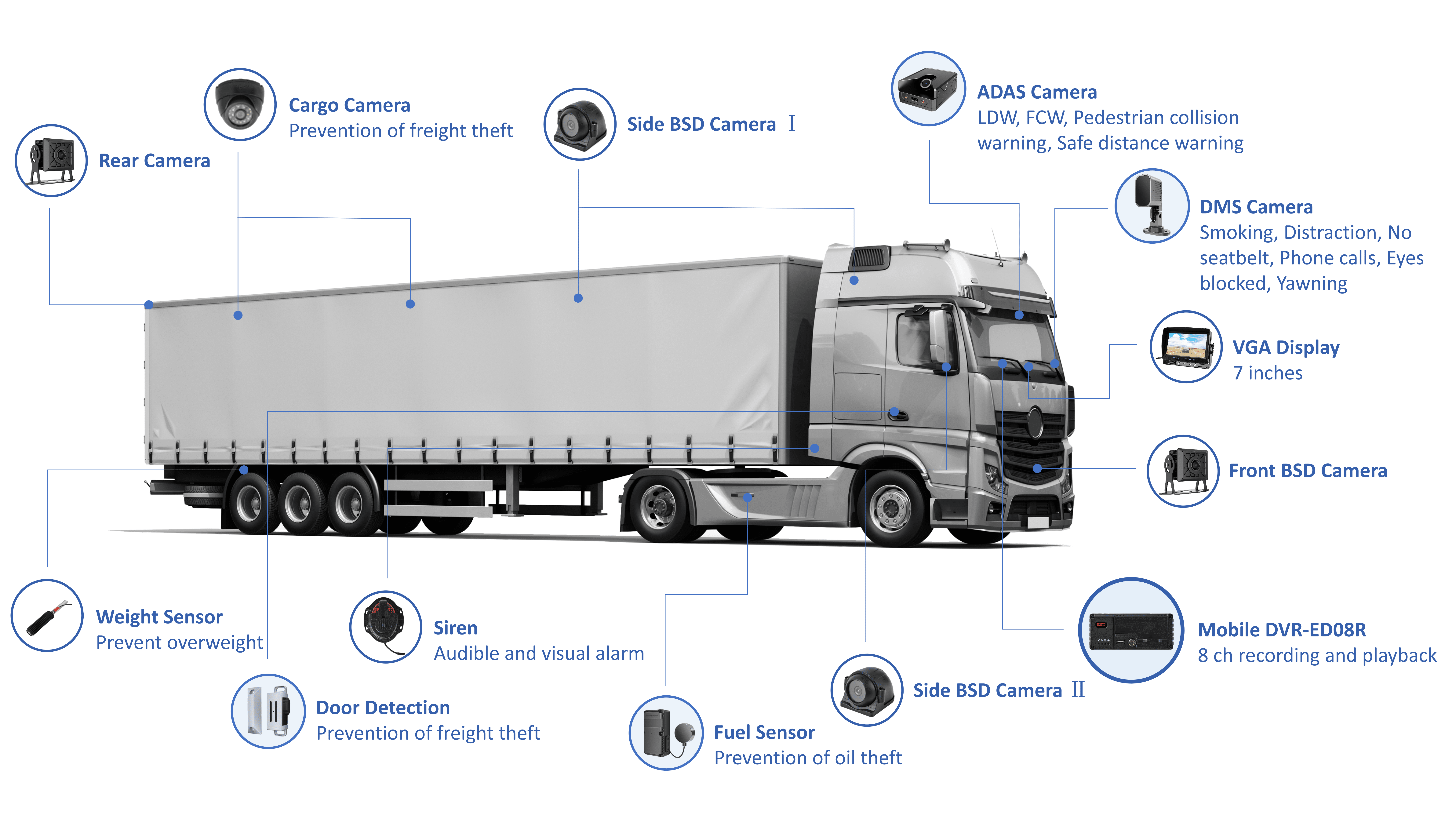
Once vehicles leave the depot, telematics data provides visibility into what is actually happening. GPS tracking can show vehicle positions and route progress, while supported sensors and connected devices can report relevant vehicle conditions. AI dashcams and mobile digital video recorders (MDVRs) can add video evidence and safety-related events to the operational picture.
The two perspectives answer different questions. Dispatch software may show which vehicle is assigned to an order, while telematics information can help determine whether that vehicle is moving, has deviated from its route, or has generated a safety alert. The usefulness of each data point depends on the device configuration and the platform's ability to interpret it.
This distinction also affects troubleshooting. A missed delivery may result from poor scheduling, a traffic delay, an unexpected stop, or a vehicle problem. Reviewing operational records alongside vehicle data gives the team more context than either source can provide alone.
Where Tracking Data Becomes Operationally Useful
Collecting location data is only the first step. Its business value increases when the information reaches the people or applications responsible for taking action.
Imagine a truck arriving later than expected. A telematics platform may provide its current position and recent movement history. If that information can be connected to dispatch records, the operations team can compare actual progress with the delivery plan and decide whether to adjust assignments or notify the customer.
Maintenance offers another example. Vehicle diagnostics or sensor data, when supported by the installed equipment, may indicate a condition requiring inspection. Linking relevant records with maintenance workflows can help teams coordinate follow-up rather than treating a device alert as an isolated notification.
This is where transportation fleet management software and telematics systems can complement each other. Integration may involve application programming interfaces (APIs), supported protocols, or other data-exchange mechanisms. Before deployment, teams should verify field mappings, vehicle identifiers, event timing, access permissions, and how errors or missing data are handled.
BSJ Technology develops connected fleet hardware, including GPS trackers, AI dashcams, and MDVR systems, that can provide the vehicle data required by compatible monitoring applications. The specific information available depends on the selected device, configuration, and integration.
Choose the Architecture That Fits Your Operating Model
Not every fleet needs two separate platforms. The right arrangement depends on existing systems, operational complexity, and the information required for daily decisions.
A business primarily seeking vehicle visibility may begin with a telematics solution offering location monitoring, alerts, and relevant device data. A transportation company focused on coordinating orders and dispatch may prioritize operational software, adding connected hardware when real-time vehicle information becomes necessary.
Larger or more specialized operations may need an integrated architecture. In that model, business applications manage transportation workflows while telematics components supply vehicle events and monitoring data. Before selecting this structure, assess whether the existing software can accept the required data and whether the integration introduces duplicate records or conflicting vehicle statuses.
For commercial fleet telematics projects, evaluation should include more than feature lists. Test representative workflows, check data latency requirements, confirm supported device interfaces, and determine who maintains the integration when either system changes. These checks help buyers understand the ongoing technical responsibilities behind the initial deployment.
Connect the Vehicle Layer to the Business Layer
A connected fleet solution works best when each component has a defined role. Operational software organizes transportation activities; telematics devices capture vehicle information; and the platform or integration layer makes that information available for monitoring, analysis, and action.
At BSJ Technology, we focus on AI video telematics hardware and connected fleet IoT solutions, with integration options for customers using existing fleet platforms. Our hardware-oriented approach gives system integrators and solution providers a way to add vehicle tracking, video, and supported monitoring functions without assuming they must replace their established business software.
For transport and fleet management providers, the decision should ultimately follow the operational gap. Choose software to address workflow needs, telematics to establish vehicle visibility, or an integrated solution when dispatch decisions depend on information from the road. We can support the connected hardware side of that architecture, helping customers evaluate the devices and integration requirements needed for their intended deployment.

BSJ Technology (SZSE: 301608) is a global provider of AI Video Telematics and Connected Fleet IoT solutions. Since 2009, BSJ has developed AI Dashcams, MDVR systems, and GPS tracking solutions for commercial fleets worldwide.