Choose your operating system to start
BSJ Technology, Geotab, Samsara, Verizon Connect, Motive, Azuga, and Teletrac Navman are worth considering when comparing telematics companies for commercial fleets. Their strengths differ: some emphasize integrated software workflows, while others offer open data ecosystems, driver engagement tools, or specialized AI video hardware.
The best telematics companies for your operation depend on the problems you need to solve. Dispatch visibility, driver monitoring, vehicle maintenance, and equipment security require different combinations of devices, software, and support.
This guide compares 7 noteworthy providers, explains their strengths and considerations, and outlines how to make an informed selection.
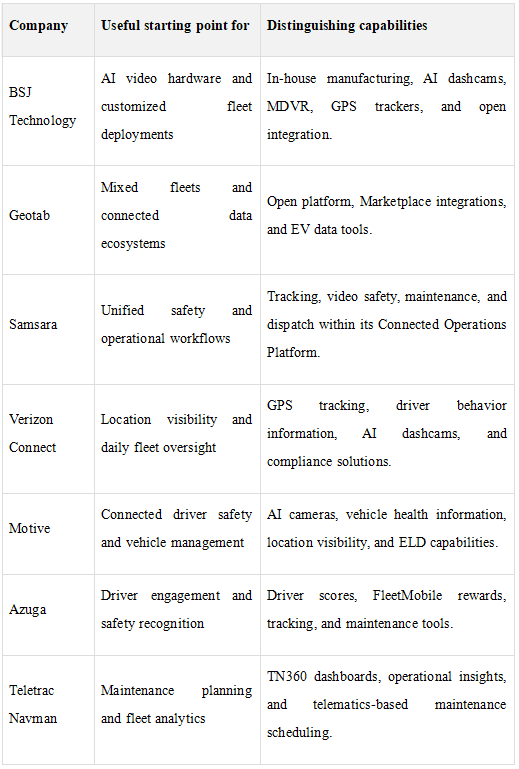
BSJ Technology is an AI video telematics manufacturer and connected fleet IOT solutions provider. Founded in 2009, the company combines in-house R&D, manufacturing, AI technology, and open integration capabilities for fleets, system integrators, platform providers, and OEM partners.
Its portfolio covers AI dashcams, AI MDVR systems, GPS trackers, fleet cameras, and IoT sensors. Selected devices support advanced driver assistance systems (ADAS), driver monitoring systems (DMS), and blind spot detection (BSD), integrating video with vehicle location and operational data.
For example, the EH26 2-CH AI Dashcam combines dual-channel video, ADAS, DMS, 4G connectivity, and GNSS positioning. The ED02R-V2 4-CH AI-Powered MDVR provides four-channel recording with ADAS, DMS, and BSD capabilities.
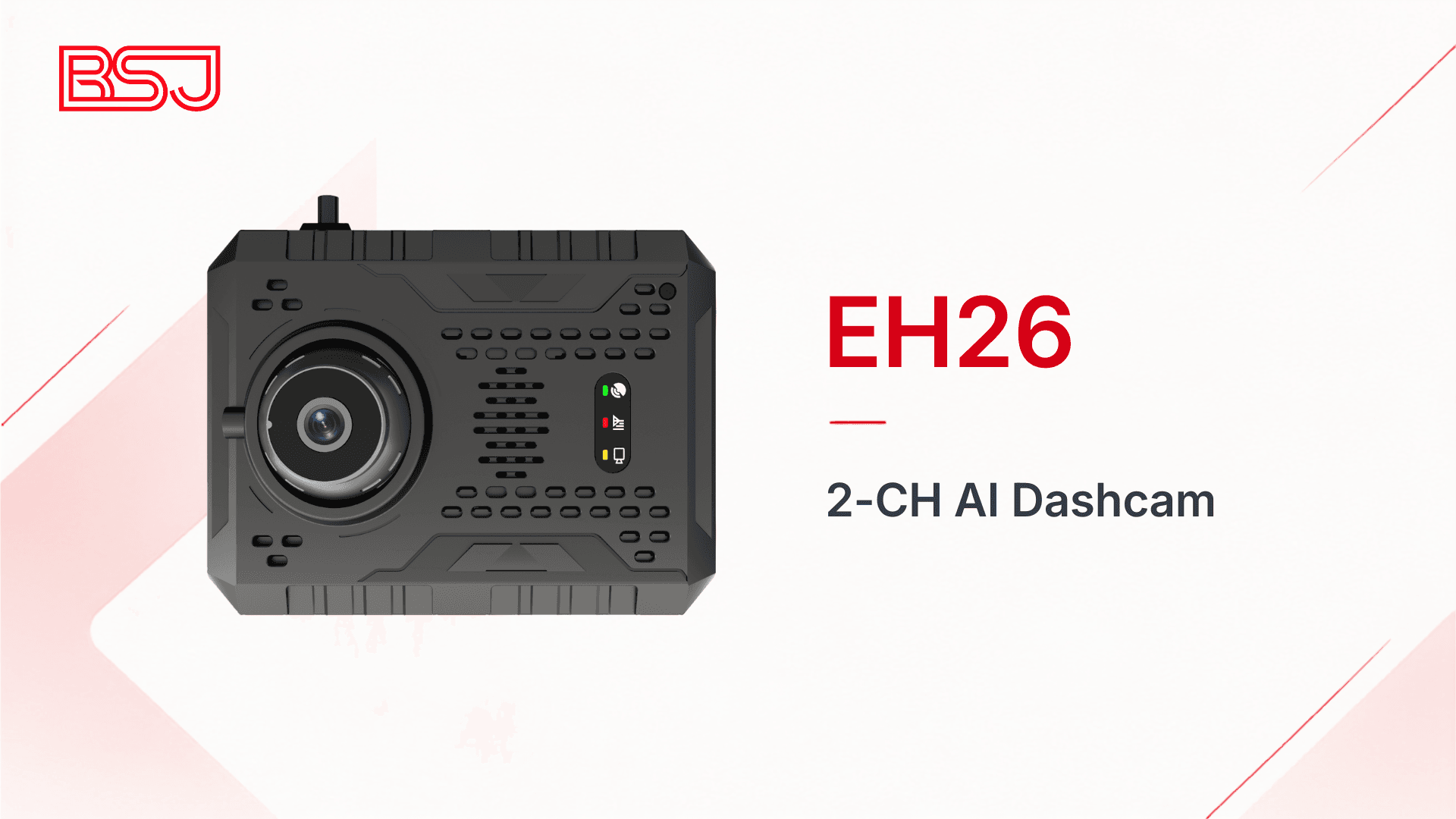
Picture shown: BSJ EH26 2-CH AI Dashcam with dual-channel 1080P HD recording and AI-powered safety features for reliable fleet monitoring and management.
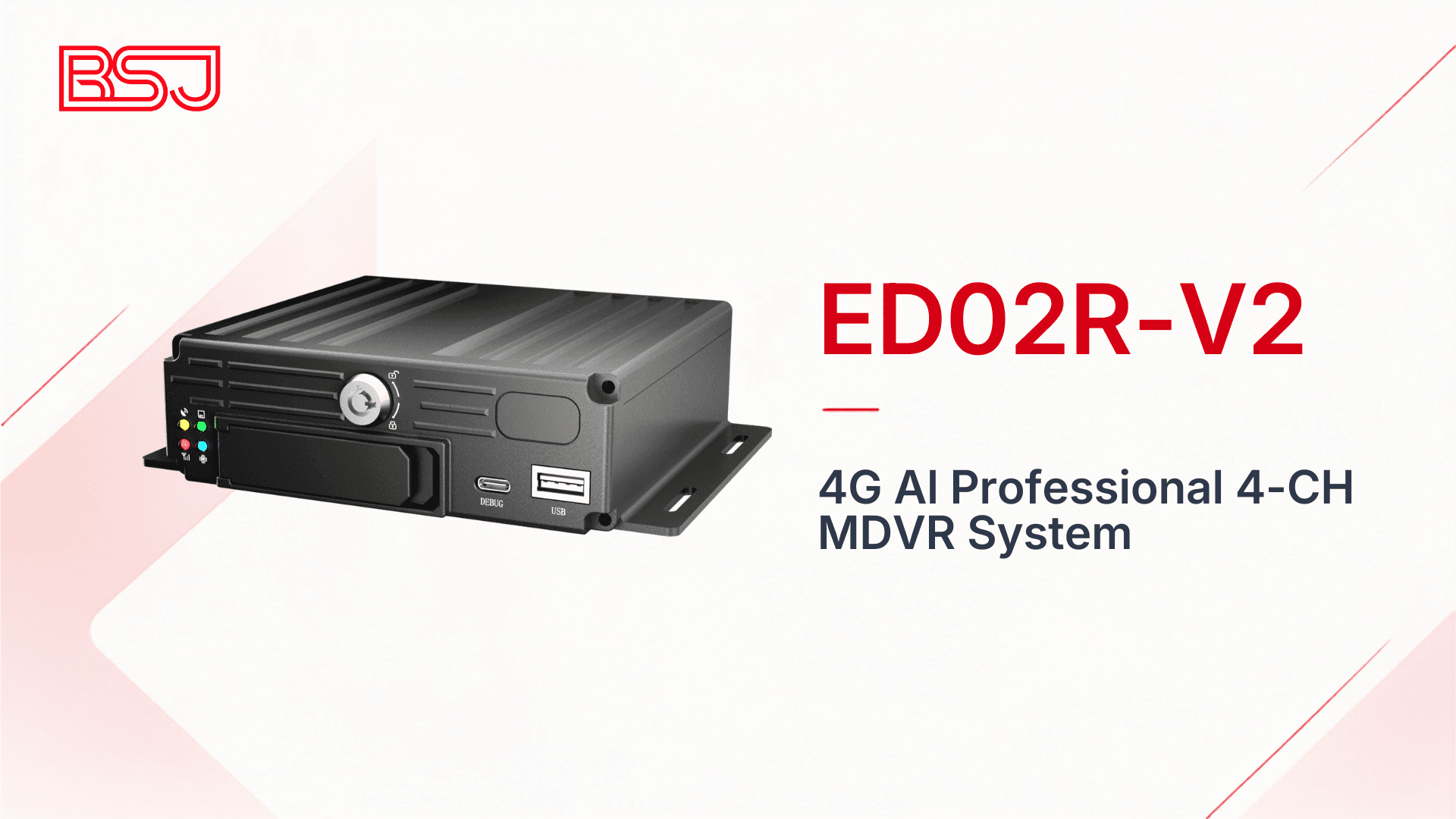
Picture shown: BSJ ED02R-V2 4-CH AI-powered MDVR with 1080P video recording and intelligent safety features for enhanced fleet safety and real-time fleet monitoring.
BSJ also offers OEM/ODM cooperation, third-party platform connectivity, configuration tools, and remote firmware maintenance. Its fleet solutions address logistics, mining, oil and gas, public transportation, school buses, and other applications.
Best for: Fleet operators, telematics service providers, and system integrators seeking adaptable AI video hardware and connected fleet solutions.
Procurement focus: Confirm camera coverage, AI functions, platform compatibility, and customization requirements for each deployment.
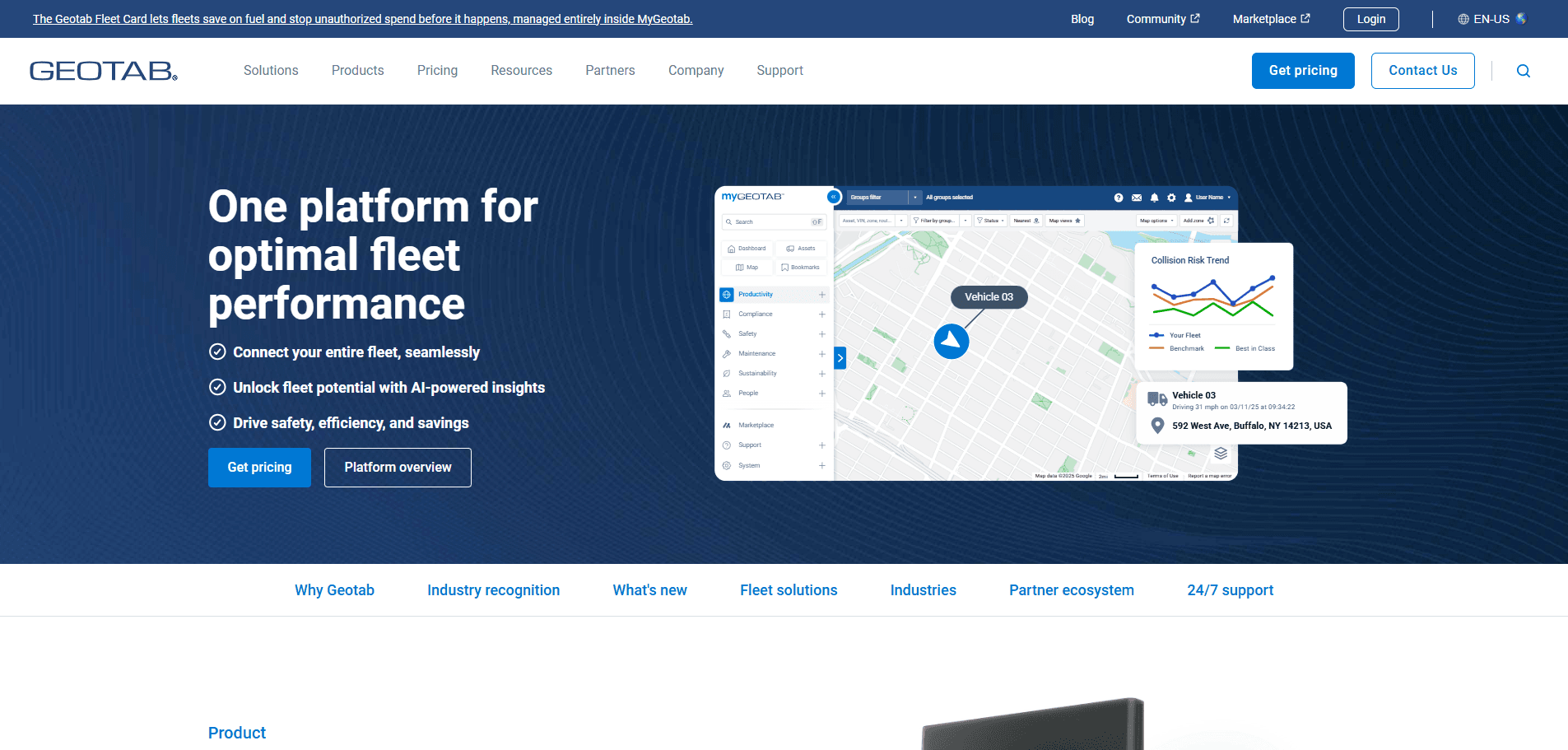
Geotab offers an open telematics platform that brings together vehicle location, engine health, fuel usage, and other operational information. Its Marketplace extends the platform through integrated hardware and software covering video, asset tracking, routing, maintenance, and fuel management.
Geotab also provides EV tools for charge status, energy usage, and electrification planning. These capabilities make it relevant when comparing conventional and electric vehicles within one fleet.
Best for: Data-driven fleets and organizations with complex integration requirements.
Procurement focus: Identify which capabilities are native and which require Marketplace products, additional hardware, or integration work. Verify support for the specific vehicles in your fleet.
Samsara brings GPS tracking, routing and dispatch, maintenance, fuel and energy management, and compliance tools into its Connected Operations Platform. Its AI cameras add driver- and road-facing video, risk alerts, and coaching tools.
This combination is relevant for organizations seeking shared operational information across dispatch, safety, and maintenance teams. Rather than assessing cameras separately, buyers can evaluate how safety events and vehicle information fit into daily workflows.
Best for: Fleets seeking broad visibility and standardized workflows across operations.
Procurement focus: Request a demonstration using your actual processes. Confirm the hardware, software modules, camera configuration, and regional functionality included in the proposal.

Verizon Connect provides GPS fleet tracking, AI dashcams, and compliance solutions. Its fleet management technology can provide information on location, speed, idling, harsh acceleration or braking, vehicle faults, and engine data.
These capabilities support practical questions such as where vehicles are, which driving behaviors need attention, and whether vehicle issues require investigation. Driver behavior information can also inform coaching programs.
Best for: Service businesses and multi-vehicle fleets prioritizing vehicle visibility and dispatch oversight.
Procurement focus: Compare reporting, alert configuration, installation requirements, and maintenance features against your needs. Confirm that quoted capabilities are available for your vehicle types and operating region.
Additional Note: In October 2025, Geotab acquired Verizon Connect’s telematics business in the UK, Ireland, Italy, France, Germany, the Netherlands, Poland, Portugal, and Australia. However, this acquisition did not include Verizon Connect’s product, engineering, or other non-sales teams.
Motive combines AI-enabled safety with vehicle location, utilization, and health information. Its AI Dashcam Plus integrates a Vehicle Gateway and AI dashcam into one device and includes ELD capabilities.
This makes Motive a relevant candidate for fleets wanting connected safety and vehicle management workflows. Its official guidance also emphasizes linking incident footage with ELD records and maintenance information rather than reviewing events in isolation.
Best for: Commercial trucking fleets balancing safety, utilization, and compliance responsibilities.
Procurement focus: Verify applicable compliance requirements, camera configurations, coaching processes, and integration needs. ELD functionality should be evaluated against the rules governing your operation, not treated as a universal compliance guarantee.
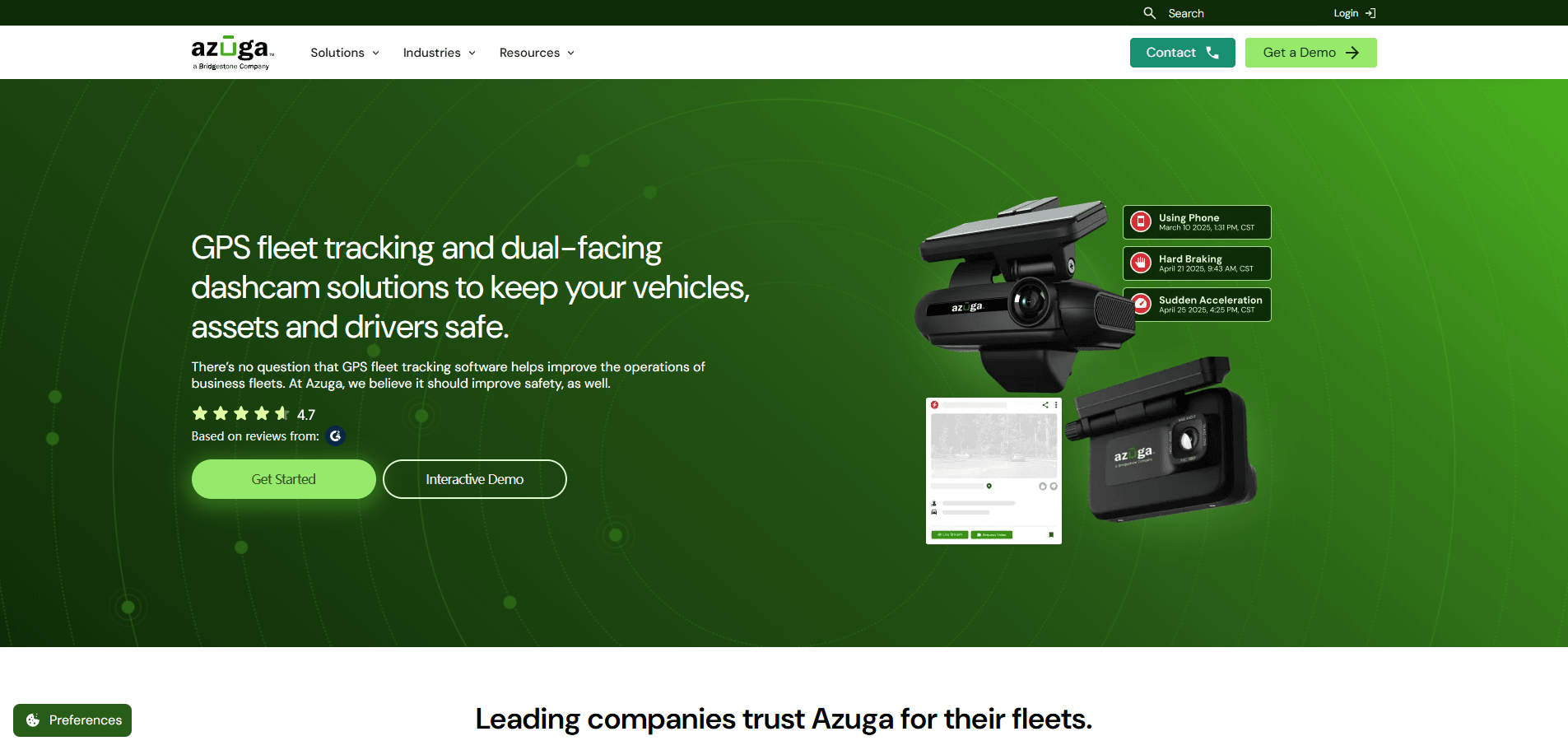
Azuga combines fleet tracking with driver scores, camera capabilities, maintenance tools, and asset visibility. Its Driver Rewards feature allows managers to recognize safer driving through FleetMobile or email.
The distinctive consideration is driver participation. Scores and recognition can give drivers visibility into performance and provide a structured basis for coaching and rewards, rather than relying only on exception alerts.
Best for: Small and midsize fleets seeking to encourage driver engagement alongside tracking.
Procurement focus: Examine how scores are calculated, which behaviors are measured, and how drivers access feedback. Decide who will administer rewards and how the program will align with existing safety policies.
Teletrac Navman’s TN360 platform combines location, safety, maintenance, compliance workflows, and driver communications. Its dashboards and analytics help organize fleet information for operational review.
The TN360 maintenance module supports schedules based on odometer readings, engine hours, or fixed time periods. This is useful when maintenance planning must reflect how vehicles and equipment are actually used.
Best for: Fleets looking to simplify daily decisions across vehicles, assets, and teams.
Procurement focus: Check the available modules, vehicle data sources, equipment support, and maintenance integrations. Ask how alerts become assigned tasks and how completed work is recorded.
Begin with the problems you need to solve, not the longest product feature list. For example, a delivery fleet may prioritize GPS visibility and route performance, while a mining or construction fleet may need multiple cameras, blind-spot alerts, and ruggedized hardware.
1. Define operational priorities. Identify measurable requirements for tracking, accident prevention, driver coaching, maintenance, or regulatory reporting.
2. Match the technology to vehicle types. Review camera channels, vehicle data interfaces, power supply, connectivity coverage, and environmental conditions.
4. Evaluate integration and ownership. Ask about APIs, existing fleet software, data export, device management, OEM/ODM options, and who maintains each component.
5. Calculate total cost. Include devices, installation, connectivity, subscriptions, video storage, training, and support—not just advertised monthly rates.
6. Run a pilot. Test a representative set of vehicles and measure alert accuracy, video retrieval, driver acceptance, and support response.
For international deployments, also check privacy rules, video retention, cellular networks, and local compliance requirements.
As fleets plan for 2027, several developments deserve attention: AI video analytics that connect risk alerts with coaching; vehicle and asset data integration that reduces disconnected dashboards; and remote device management that makes large-scale deployments easier to maintain.
Configurable hardware and sensor combinations may also become more important as operators seek industry-specific systems rather than one-size-fits-all packages.
These are purchasing considerations, not guarantees that every provider will deliver identical capabilities by 2027.
There is no single answer for every fleet. Geotab emphasizes open integrations; Samsara combines operational workflows; BSJ emphasizes AI video telematics manufacturing and connected hardware. Select according to your deployment model and priorities.
No. GPS tracking focuses on location and movement. Video telematics adds camera footage and, in compatible systems, AI risk detection and driver monitoring. The two can work together to provide location and visual context.
BSJ supports connections with third-party telematics platforms. However, compatibility depends on the selected devices, protocols, and required functions, so confirm the integration scope before purchasing.
The top telematics companies offer different routes to better fleet visibility and safety. Compare their capabilities against your vehicles, workflows, and deployment needs.
For businesses seeking an AI video telematics manufacturer with connected fleet IoT capabilities, BSJ Technology offers hardware, customization, and industry-oriented integration support. Contact BSJ Technology to discuss AI dashcams, MDVR systems, GPS trackers, fleet sensors, and a solution suited to your deployment requirements.
BSJ Technology (SZSE: 301608) is a global provider of AI Video Telematics and Connected Fleet IoT solutions. Since 2009, BSJ has developed AI Dashcams, MDVR systems, and GPS tracking solutions for commercial fleets worldwide.