Choose your operating system to start
Pupil transportation carries a unique operational and moral responsibility where standard commercial logistics criteria fall short. Commercial delivery trackers focus on basic transit time and route efficiency, but transporting children demands absolute accountability across every stop, door cycle, and passenger seat. Transit directors and school contractors must look far beyond basic location dots on a consumer mapping screen.
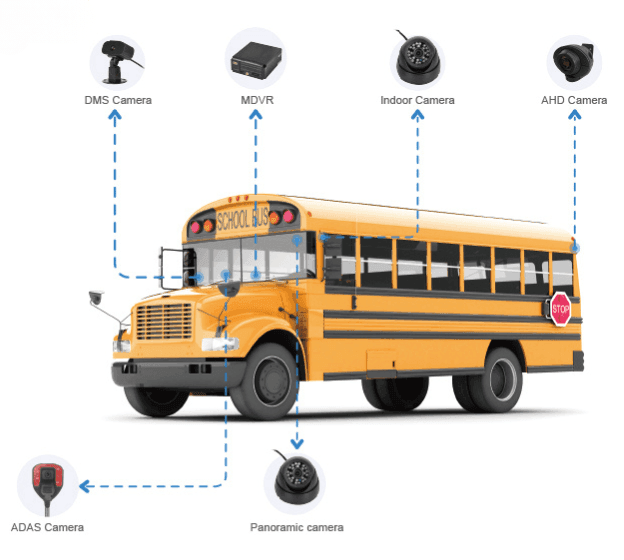
Evaluating a school bus GPS tracking system requires examining how physical edge devices verify passenger boarding, identify cabin hazards, and endure hostile automotive environments. Smart procurement prioritizes purpose-built hardware architectures capable of protecting vulnerable students while providing dispatch controllers with verified real-time data feeds. Selecting an under-engineered platform introduces unneeded liability across municipal routes.
Student safety begins at the vehicle entrance. Standard tracking units report when a bus reaches a street corner, yet they fail to confirm which individual student actually boarded or disembarked. Enterprise telematics units integrate onboard RFID card readers and barcode scanners, matching each student boarding scan with instantaneous satellite coordinates and automated time stamps.
Post-trip child safety inspections require strict technological enforcement to eliminate the devastating risk of sleeping pupils left inside parked vehicles. Electronic anti-trapping systems require the driver to walk down the central aisle to the rear cabin wall to deactivate an inspection button before the ignition can fully power down.
Connecting these physical safety switches directly to central school bus fleet management software creates a tamper-proof audit trail for school districts. Immediate visual indicators notify dispatchers if a driver attempts to exit the vehicle without completing the mandatory physical sweep. Such automated safety interlocks transform routine daily inspections into verified operational safeguards.
Traditional dashcams record collisions passively, storing video files on local memory cards that supervisors review only after an accident occurs. At BSJ Technology, we develop active video telematics units that process visual risks directly on the vehicle using dedicated neural processing units. Real-time machine vision identifies driver fatigue, smartphone usage, and seatbelt violations before dangerous behaviors escalate.
Multi-channel mobile digital video recorders expand visual coverage by combining interior dome cameras, exterior blind-spot sensors, and forward-looking collision warning optics. Deploying an enterprise-grade school bus GPS tracking system ensures that critical driving violations trigger short high-definition video uploads over cellular networks. Dispatchers immediately receive actionable visual context rather than ambiguous sensor alarms.
Route adherence directly affects child safety, driver punctuality, and municipal fuel consumption. Morning transit schedules encounter unpredictable road detours, winter weather conditions, and morning traffic congestion that disrupt planned timetable sequences. Telematics platforms must generate dynamic geofences around individual pickup stops rather than relying solely on static depot boundary markers.
Reliable school bus fleet management platforms leverage high-frequency location data to power passenger notification applications. Automated messaging systems alert parents several minutes before the bus arrives at their designated pickup stop, drastically cutting roadside waiting times during severe winter weather. Real-time visibility also minimizes anxious phone calls to school administrative offices during morning commutes.
Commercial school buses generate intense electrical noise during ignition cranking and everyday alternator cycles. Off-the-shelf tracking devices experience rapid hardware failure when exposed to severe voltage spikes, constant chassis vibrations, and extreme temperature variations. Robust onboard equipment must satisfy rigorous international automotive transient protection standards, supporting wide input ranges from 9V to 36V.
Engine diagnostic monitoring represents another vital hardware layer for preventing on-road mechanical breakdowns with children on board. Direct CAN bus integration captures real-time diagnostic trouble codes, cooling system temperatures, battery states, and brake lining wear. Spotting subtle mechanical abnormalities allows maintenance supervisors to rectify component fatigue before a bus stalls along an active route.
Our engineering team at BSJ Technology incorporates internal power-loss protection into our mobile hardware gateways using industrial supercapacitors. Sudden power disconnections during severe traffic collisions frequently corrupt local storage media when crash footage is needed most. Supercapacitors supply reserve electrical energy to finalize critical video writes and transmit emergency location beacons.
Purchasing directors often overlook hardware-software interoperability during early procurement tenders, inadvertently locking their districts into restrictive single-vendor ecosystems. Sourcing a vendor-neutral school bus GPS tracking system compatible with open protocols like JT/T 808 and MQTT gives fleet operators the freedom to transmit raw telemetry into any municipal routing or scheduling platform.
Modernizing student transit through BSJ Technology preserves municipal budgets by separating rugged onboard IoT hardware from proprietary software subscriptions. Open architecture protects initial public capital investments, enabling school transportation authorities to upgrade dispatch analytics, routing algorithms, or parental mobile interfaces without rewiring on-board vehicle harnesses.
Scalable school bus fleet management requires robust over-the-air firmware maintenance and remote diagnostic capabilities. Operations teams can calibrate camera angles, adjust driver warning thresholds, and inspect peripheral sensor communication from a central engineering dashboard, eliminating costly technician dispatches to remote bus yards.
Selecting pupil transit equipment demands comprehensive scrutiny of edge computing intelligence and physical durability. Procurement managers must confirm whether proposed hardware models feature sufficient peripheral expansion interfaces, such as RS232 and RS485 serial ports, to connect external student door sensors, digital stop-arm violation cameras, and breathalyzer interlocks.
Balancing student physical safety with predictable operational overhead represents the ultimate test of any commercial vehicle telematics deployment. Prioritizing edge safety processing, auditable student boarding verification, and open protocol compatibility ensures regional bus fleets deliver dependable transit services across years of demanding operation. Investing in purpose-built telematics hardware safeguards both public capital and young passengers.

BSJ Technology (SZSE: 301608) is a global provider of AI Video Telematics and Connected Fleet IoT solutions. Since 2009, BSJ has developed AI Dashcams, MDVR systems, and GPS tracking solutions for commercial fleets worldwide.