Choose your operating system to start
Student transportation requires consistent route visibility and a controlled way to respond when service does not run as planned. At route level, a school bus fleet management system can connect vehicle position with stops, arrival information, driver behavior, cabin video, vehicle status, and reporting. The objective is not simply to show a bus on a map; it is to give schools and transport operators a reliable operating record around pickup, travel, and drop-off.
Hardware selection therefore needs to reflect both daily dispatch and student-safety requirements. GPS devices, cameras, mobile connectivity, emergency inputs, storage, and software access must work together across different bus models and routes. Before rollout, a fleet deployment should define who receives notifications, who may view sensitive footage, and how route or device changes are administered when buses are reassigned.
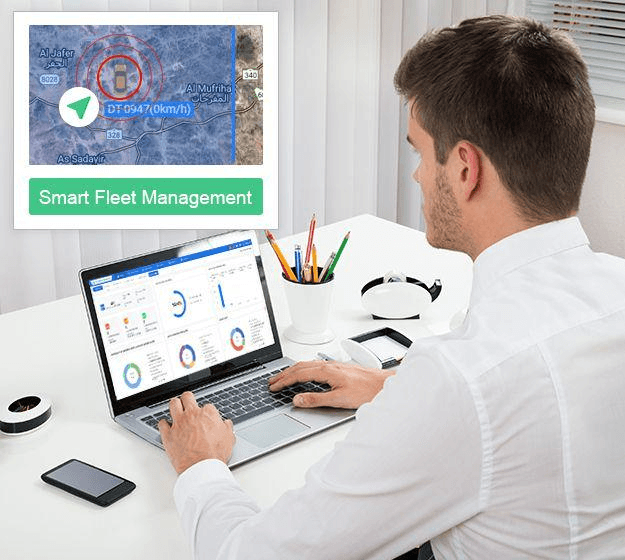
Accurate vehicle identity is the starting point for route visibility. Each unit should be associated with the correct bus, route, schedule, and operating status so dispatchers can distinguish a delayed vehicle from a device that is reporting under the wrong assignment. Geofences can represent schools, depots, and other defined stops, creating a consistent record of arrivals and departures. A connected school-bus solution may include app or SMS arrival notifications as part of the broader operating concept.
Those communications depend on reliable underlying route data. Operators should define how substitute buses, temporary route changes, missed GPS updates, and schedule adjustments are handled so external notifications do not continue using stale assumptions after the daily plan changes. Historical route data supports planning as well as live service. For route review, school bus fleet management software can organize driving hours, inspections, and student-related information where the project requires it.
Fleet managers can compare recurring delays, stop duration, vehicle utilization, and route exceptions, while schools can use the same verified records to investigate service questions without relying entirely on manual recollection. Network interruptions should be part of the test plan.
During daily service, buses may pass through tunnels, dense urban areas, or coverage gaps, so onboard equipment needs a defined strategy for buffering and forwarding data after communication returns. Dispatch should be able to distinguish a temporary reporting gap from a stopped vehicle or device fault before escalating an event unnecessarily.
Beyond route timing, driver-safety data helps explain how a journey unfolded. Our solution includes monitoring for speeding, harsh braking, and fatigue, with alerts that can support timely intervention. Those detections should be linked to policy and human review; a single event should not be treated as a complete conclusion without considering route conditions, severity, and any available video.
For school-transport deployments, our team at BSJ Technology plans cabin and road-facing video around the specific oversight needs of the operator. Interior cameras may provide evidence for passenger incidents, while forward video can support collision review. Camera placement, recording coverage, access permissions, and retention should be established before installation so the system supports legitimate safety purposes without undefined monitoring. Vehicle-health data can help protect route continuity.
Our solution can use engine status, brake condition, fuel levels, and other operating indicators as possible inputs to the wider workflow. Maintenance staff can use alerts or reports to prioritize inspection, but the project should confirm which data is available from each bus type and how it enters the platform. Emergency inputs and alert escalation need clear ownership.
A panic signal, serious driver event, or critical vehicle issue should reach the correct control-room role with vehicle, route, time, and status information. The response procedure should specify who contacts the driver, school, emergency service, or maintenance team and how the action is recorded for later review.
Bus hardware must be standardized enough for technicians to reproduce the installation. Camera positions, antennas, GPS units, power connections, storage media, and emergency inputs should have documented acceptance checks. Different vehicle models may require different kits, but each kit should still produce the same operational data and alert definitions after commissioning. Permissions deserve special attention because school transport can involve sensitive passenger information.
Administrators, transport contractors, safety staff, maintenance personnel, and family-facing services may need different levels of access. Role design should separate live dispatch information from video evidence and administrative controls, while export and retention rules should follow the operator's governance requirements. Our OEM/ODM and integration capabilities can support projects that need customized installation, branding, or compatibility with an existing school or fleet environment.
Testing should span several route types, bus models, and user roles, measuring location continuity, notification accuracy, camera coverage, event quality, remote administration, and support response before wider deployment. The school bus fleet management software used in the project should also preserve consistent route and vehicle identifiers when assignments change. A school-bus system should make route exceptions clearer without widening access to sensitive information beyond what each role needs.
In our student-transport work at BSJ Technology, we connect the school bus fleet management system with GPS, cabin and road video, driver events, vehicle status, notifications, and remote device administration. During route administration, school bus fleet management software must preserve consistent route and vehicle identities when assignments change, because family-facing messages and internal investigations depend on the same underlying records.
We recommend testing replacement buses, network gaps, camera permissions, and emergency workflows during the pilot. That preparation gives schools and operators a more dependable operating model for dispatch, safety, maintenance, and communication while keeping governance decisions under their own control.

BSJ Technology (SZSE: 301608) is a global provider of AI Video Telematics and Connected Fleet IoT solutions. Since 2009, BSJ has developed AI Dashcams, MDVR systems, and GPS tracking solutions for commercial fleets worldwide.