Choose your operating system to start
Student transportation places route execution and duty of care in the same operating window. A bus must arrive at the right locations, follow the planned service, support safe driving, and provide trustworthy records when an incident or complaint occurs. Across daily student routes, school bus fleet management can connect those responsibilities through location, route data, driver events, cabin visibility, vehicle condition, notifications, and reporting rather than treating safety and dispatch as separate systems.
The technology also serves several audiences. Dispatchers need current bus status, school administrators need accountable route records, maintenance teams need vehicle and device health, and families may rely on arrival information where such services are offered. A fleet deployment should define which data each group can access and which system is the authoritative source, especially when routes, substitute buses, or temporary service changes occur.
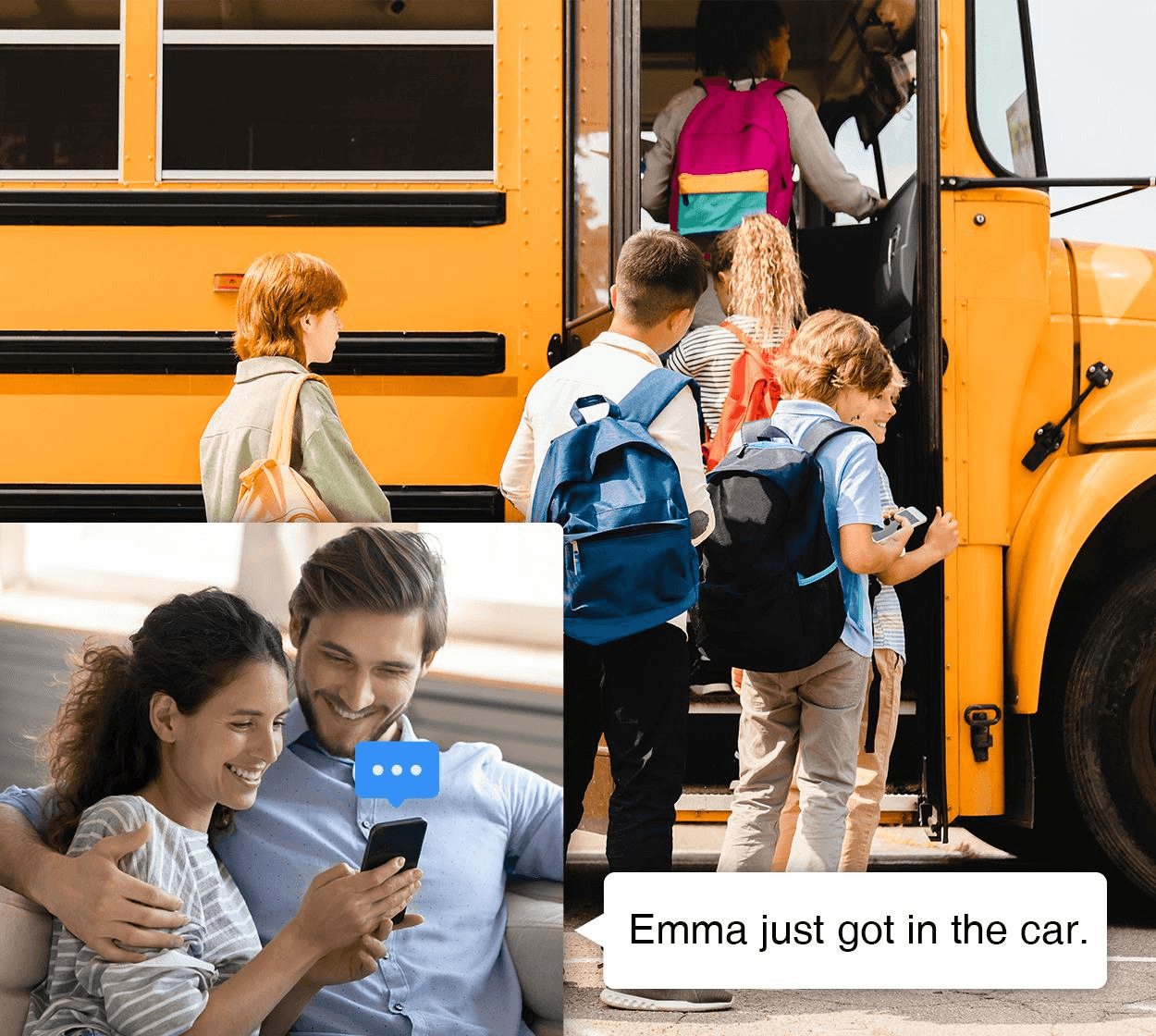
Accurate vehicle assignment is the foundation of a school bus fleet management system. Each bus should be associated with the correct route, schedule, driver where applicable, and device identity before service begins. Live position and geofences can then show depot departure, route progress, school arrival, and unexpected deviation without requiring dispatch to call drivers for routine status checks. Route exceptions need context and priority.
A five-minute delay can be minor on one run but affect a school start time or connection on another. The operating rules should define when a late arrival, unauthorized stop, route change, or prolonged dwell requires intervention. Historical route records can later reveal recurring delays or locations where schedules consistently fail to reflect real traffic conditions. Notifications should be derived from verified operational data.
If parents or schools receive estimated arrivals, the system must handle substitute buses, changed routes, temporary GPS outages, and unexpected stops in a controlled way. A wrong notification can create more confusion than no notification. Fleet teams should therefore define when external messages are generated, updated, or suppressed when the source data is uncertain. Route execution tells only part of the story; driver-safety data supplies additional context.
Speeding, harsh braking, fatigue, or distraction alerts may be available depending on the selected hardware. These events should be linked to the route, vehicle, time, and speed so supervisors can review them fairly. A safety alert is a prompt for investigation and coaching, not a complete explanation of what happened on the road.
Interior and road-facing video can help answer different questions. Cabin footage may provide context for passenger incidents, while road video can support collision or driving reviews. Reviewers should be able to retrieve the relevant period quickly and preserve the relationship between the clip and the vehicle record. Without consistent timestamps and identifiers, even good footage can become difficult to use during an investigation.
In our school-transportation work at BSJ Technology, we combine real-time tracking, driver-behavior information, vehicle-health visibility, video, alerts, and reporting through connected hardware. We manufacture trackers, AI dashcams, and MDVR systems and can support different camera arrangements or platform integrations through OEM/ODM work. The objective is to fit the hardware to the operator’s route and safety process. Privacy governance is essential because interior video may involve children and employees.
Schools, operators, and integrators need agreed rules for authorized access, purpose, retention, export, and deletion. Those decisions can affect storage sizing and software permissions, so they belong in the technical specification rather than being added after cameras are installed. Local legal and contractual requirements should guide the final policy. Incident review should produce a consistent record.
A harsh-braking event can be classified differently if video shows a pedestrian entering the road than if it shows avoidable driver behavior. Documenting the review outcome supports fair coaching and helps safety teams distinguish recurring risks from isolated events. Over time, confirmed patterns can be compared across routes or operating periods without relying on raw alert counts alone.
School fleets often include several depots, contractors, or replacement vehicles. Device naming, firmware versions, camera profiles, event definitions, and route associations should therefore be standardized. When a substitute bus takes over a run, administrators need a straightforward way to confirm that the correct device and vehicle are reporting under the correct service before students board. Maintenance is part of safety visibility.
A camera that stops recording or a tracker that goes offline creates a monitoring gap even if the bus itself remains roadworthy. Device-health alerts, remote diagnostics, and configuration tools can reduce unnecessary workshop visits, while technicians still need a physical inspection procedure for wiring, antennas, lenses, and replacement hardware. Monitoring equipment should be included in normal fleet maintenance planning.
Our global support and open integration approach can help school-bus solution providers connect our hardware with existing fleet or notification software. Customization is available when regional interfaces, accessories, branding, or firmware development require adaptation. Those changes should be validated in a controlled pilot with several routes and user roles so the school bus fleet management process remains consistent after rollout.
Student transportation requires evidence that is useful without losing sight of privacy and duty of care. For school-bus programs, our team at BSJ Technology supports tracking, onboard video, driver-safety information, vehicle status, and integration with the systems an operator already uses. For school operators, school bus fleet management becomes more dependable when route assignments, notification logic, camera permissions, emergency procedures, and maintenance responsibilities are written into the operating process before rollout.
For daily continuity, a school bus fleet management system should also handle substitute vehicles and route changes without creating misleading status information. When those controls are tested across several routes, schools and operators gain a consistent record for dispatch, safety review, family communication, and maintenance rather than separate data sets that have to be reconciled later.

BSJ Technology (SZSE: 301608) is a global provider of AI Video Telematics and Connected Fleet IoT solutions. Since 2009, BSJ has developed AI Dashcams, MDVR systems, and GPS tracking solutions for commercial fleets worldwide.