Choose your operating system to start
Selecting a telematics provider is not simply a matter of comparing GPS tracking features or choosing the device with the longest specification sheet. For commercial fleets, the more important question is whether the technology can support actual operating requirements over time. Hardware, connectivity, video, artificial intelligence, software, integrations, maintenance, and scalability all need to work together.
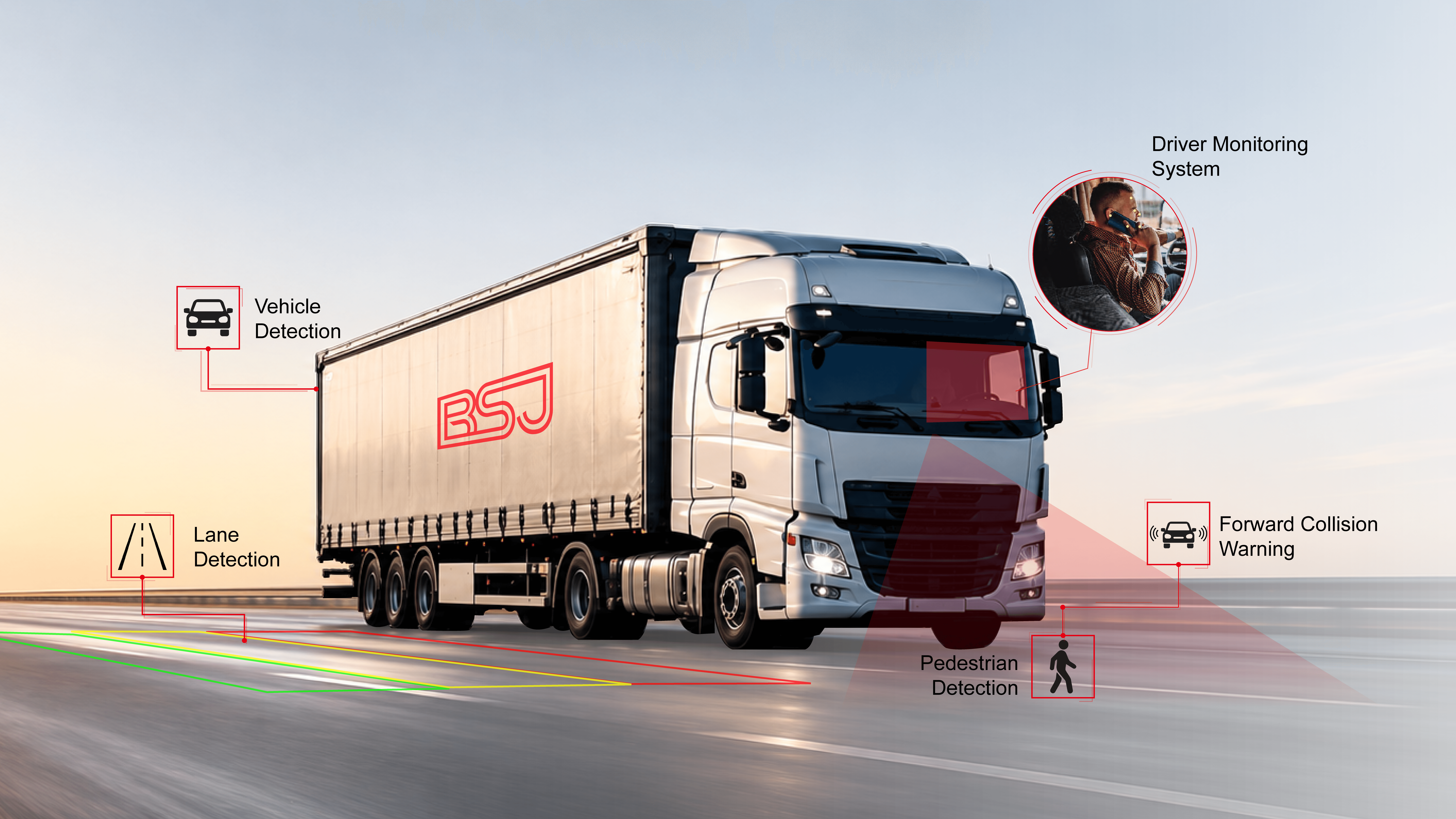
At BSJ, we believe fleet operators should therefore evaluate a provider through a series of practical questions before making a purchasing decision. A useful evaluation can help companies avoid fragmented systems and identify a technology partner that can support both current fleet requirements and future expansion.
Different fleets generate very different data and safety requirements. A last-mile delivery company may prioritize vehicle location, driver behavior, and delivery visibility, while a logistics operator may require multi-camera recording, ADAS, DMS, and centralized video management.
We recommend first defining the operating environment:
Your vendor should address your real-world operational needs instead of only offering off-the-shelf hardware packages.
GPS tracking provides the “where,” but video can provide the context behind what happened. This distinction becomes important when investigating collisions, unsafe driving, route deviations, or customer disputes.
When evaluating a fleet telematics company, buyers should examine whether location data and video events can be managed together. We design our connected fleet solutions around this principle, combining GPS tracking, video devices, AI-enabled safety functions, and fleet management tools to create a more complete operational picture.
The aim is to make information easy to interpret and act on.
Artificial intelligence has become an important part of modern vehicle monitoring, but “AI” can describe very different capabilities.
A buyer should ask:
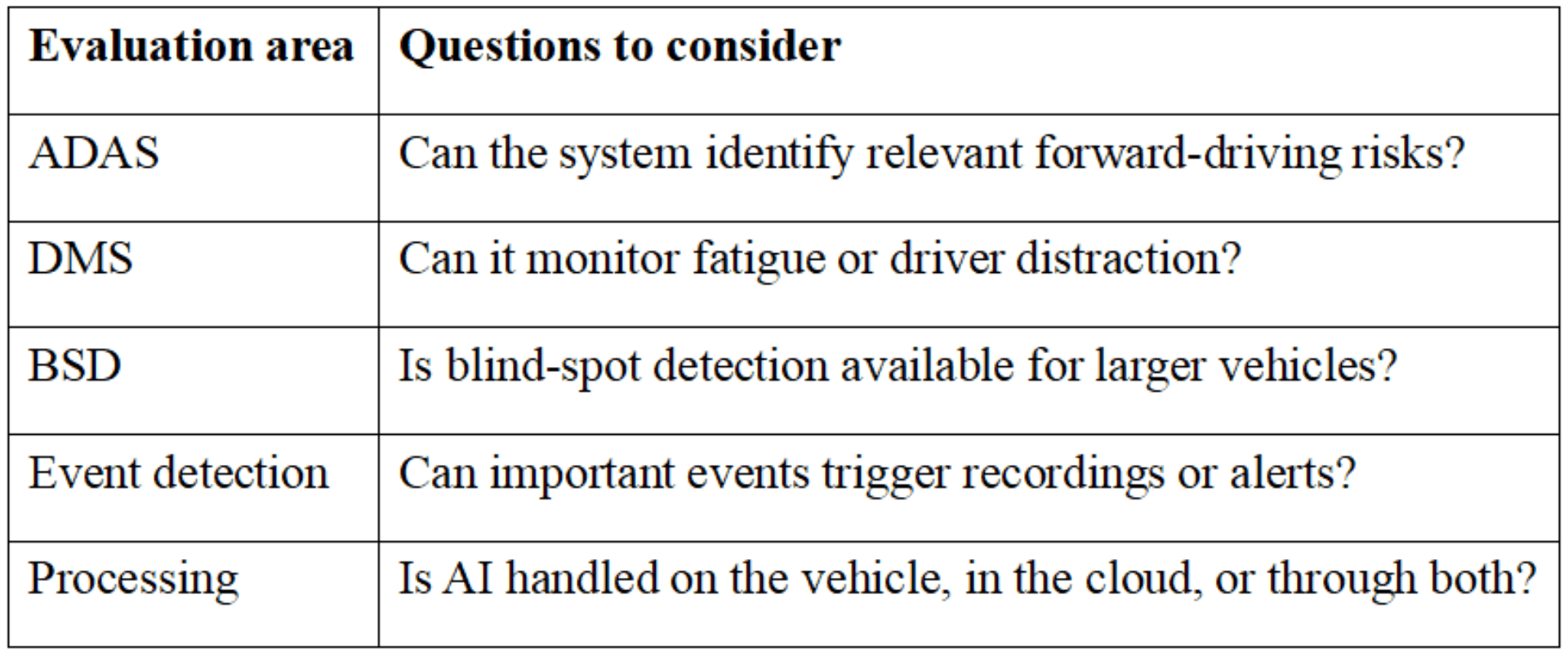
For example, our DR03 3-channel AI dashcam combines ADAS and DMS with multi-channel HD recording, 4G LTE CAT.4 connectivity, and multi-constellation GNSS. Its AI functions can identify risks such as lane departures, unsafe following distances, driver fatigue, and distraction.
This highlights why buyers must assess concrete AI capabilities, not vague marketing claims. The value of AI video telematics depends on whether the system can detect events that are genuinely relevant to the fleet.
Many fleet operators already use transportation management systems, GPS platforms, dispatch software, or third-party telematics applications. Replacing everything may be unnecessary and expensive.
Integration should therefore be discussed before purchasing hardware. Buyers can ask whether the provider supports APIs, third-party platforms, remote configuration, and standardized data exchange.
Built around an open-ecosystem philosophy, BSJ hardware integrates with third-party fleet-management environments. Tools including BSJ Configurator and BSJ FOTA Web support remote configuration and firmware updates, and our monitoring platform delivers live video, GPS tracking, event playback and fleet-status management.
A solution that works for 20 vehicles may not be suitable for 2,000 vehicles.
Large deployments introduce practical challenges involving device configuration, firmware updates, troubleshooting, data management, and replacement procedures. Buyers should ask how much of this work can be performed remotely.
We consider centralized device management an important part of fleet telematics infrastructure. Remote configuration and FOTA capabilities can reduce the need for technicians to visit individual vehicles whenever parameters or firmware need to be updated.
Fleet requirements rarely remain static. A company may begin with GPS tracking and later need driver monitoring, additional cameras, temperature sensors, multi-channel video, and AI video telematics.
A provider with a broader hardware portfolio can make this transition easier. Our portfolio includes GPS trackers, AI dashcams, AI MDVRs, cameras, and connected vehicle devices designed for different commercial applications. For example, our ED08R supports up to eight channels of 1080P or 720P video collection, real-time uploads, playback, and AI functions including ADAS, DMS, and BSD.
Such modularity lets fleet operators select hardware matched to vehicle types and operational needs, instead of forcing a one-size-fits-all configuration.
Installation is only the beginning of a telematics project. A more useful evaluation considers what happens during the following three to five years.
Ask about:
These factors can have a significant effect on the total cost of ownership and the long-term usability of the system.
For companies operating across borders, regional deployment experience matters. Different countries may involve different connectivity environments, vehicle types, platform requirements, and operating practices.
We work with commercial fleet applications across multiple markets and support OEM/ODM cooperation and third-party telematics integration. Our international presence also gives us opportunities to communicate directly with operators, integrators, distributors, and mobility technology providers.
One upcoming example is IAA Transportation 2026, taking place September 15–20 in Hannover, Germany. We will present connected fleet technologies covering AI video telematics, vehicle monitoring, GPS tracking, AI MDVR systems, and fleet IoT applications at Hall 12, Stand B74.

For fleet operators and technology partners, events like this also provide an opportunity to discuss integration requirements directly rather than evaluating specifications in isolation.
A thorough evaluation covers five key dimensions: hardware capability, AI functionality, platform integration, remote management, and long-term support.
At BSJ, we view fleet telematics as an interconnected technology ecosystem, not merely standalone tracking hardware. Our portfolio unites connected hardware, AI-video features, GPS tracking, fleet software tools and integration options built for commercial vehicles.
For buyers, one critical question stands out: Can your vendor sustain fleet support post-installation? With proven technology, integration tools, deployment resources and long-term service planning, BSJ acts as your sustainable technology partner — far more than just an equipment supplier.

BSJ Technology (SZSE: 301608) is a global provider of AI Video Telematics and Connected Fleet IoT solutions. Since 2009, BSJ has developed AI Dashcams, MDVR systems, and GPS tracking solutions for commercial fleets worldwide.