Choose your operating system to start
Public transportation involves much more than moving buses from one stop to another. At BSJ, we believe transit operators need to coordinate vehicles, drivers, routes, passenger safety, and operational data across an often complex network. A bus may be mechanically dependable, but fleet managers still need timely information to understand delays, unsafe driving, route deviations, or incidents inside the vehicle. This is where vehicle telematics can provide practical value by connecting different sources of fleet information within one operational framework.
For organizations managing public fleets, we believe technology should support decisions rather than simply generate more data. The right combination of tracking, video, driver monitoring, and analytics can give operators a clearer picture of what is happening on the road and help them respond more efficiently.
A bus management system should offer more than basic GPS positioning. Knowing where a vehicle is provides useful information, but fleet managers may also need to understand how the bus is being operated, what is happening inside the cabin, and whether the vehicle is following its assigned route.
We design our telematics approach around this broader requirement. Real-time tracking can give operators visibility into vehicle locations, while video and other connected technologies can add context to specific events. If a bus arrives late, for example, managers can investigate whether traffic, an unexpected stop, a route deviation, or another operational issue contributed to the delay.
Historical information can also be valuable. By reviewing recurring delays, driver behavior, route activity, and vehicle events, operators can identify patterns that may not be obvious from live monitoring alone. This makes a telematics platform useful not only for dispatching but also for longer-term fleet management and operational planning.
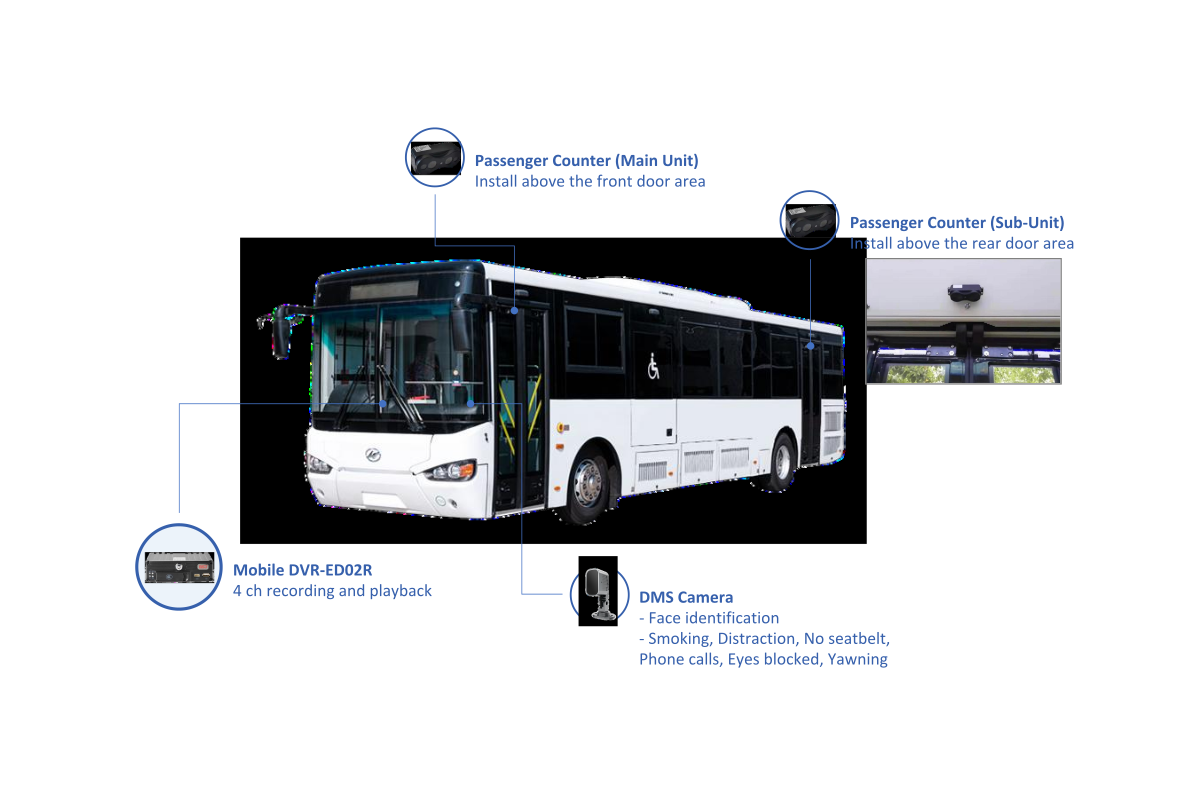
Safety is one of the most important areas where telematics can contribute to public transportation. Modern public transit solutions can bring together real-time tracking, onboard video, Driver Monitoring Systems, and Advanced Driver Assistance Systems to support a broader safety strategy.
We see the value in connecting these technologies rather than treating each one as an isolated function. A driver-monitoring alert, for example, can prompt a closer review of an operational event, while ADAS functions can provide additional information about conditions surrounding the vehicle. Cameras can then provide visual evidence when a transit operator needs to examine what occurred.
This approach can be particularly useful for large fleets. When numerous buses operate across multiple routes and shifts, manually supervising every vehicle becomes difficult. Connected systems can provide centralized visibility, helping management teams focus their attention on events that require investigation or intervention.
Public buses also create operational requirements that differ from many other commercial vehicles. A bus carries passengers throughout its service period, so operators may need visibility into both the road environment and the cabin.
We consider cabin monitoring an important element of modern fleet telematics because onboard cameras can support incident investigation, passenger-area monitoring, and review of events that may otherwise be difficult to verify. Video can provide useful context when operators need to understand what happened before, during, and after an incident.
However, we do not believe every fleet requires an identical hardware configuration. Bus models, operating conditions, regulations, and customer requirements can vary significantly. For B2B deployments, flexibility is therefore important. Hardware should be capable of adapting to different vehicle configurations and integration requirements rather than relying on a one-size-fits-all approach.
Integration is another factor we believe fleet technology buyers should examine carefully. Transit operators and system integrators may already use fleet management software, GPS platforms, or other third-party applications. Replacing an existing software environment can increase implementation costs and create unnecessary disruption.
Our open ecosystem approach is intended to support integration with third-party platforms, including solutions such as Wialon and GpsGate. We also provide hardware covering AI video telematics, MDVR, GPS tracking, and fleet IoT applications, allowing partners to develop broader fleet solutions around compatible hardware.
For a B2B customer, this matters because the telematics device is only one part of the overall system. Successful deployment also depends on software compatibility, data accessibility, technical support, configuration, and the ability to scale the system as fleet requirements grow.
A bus management system becomes more valuable when the information it collects can support actual management decisions. Location data, video records, driver information, and vehicle events can be reviewed together to provide greater operational context.
We believe this can help operators move beyond simply reacting to individual incidents. Historical data may reveal recurring route problems, repeated driver-behavior issues, or operational bottlenecks. These patterns can support more informed decisions about scheduling, training, fleet utilization, and day-to-day management.
Scalability is equally important. A pilot involving a few buses may have relatively simple requirements, but a larger deployment introduces greater demands for centralized management, remote configuration, communications, maintenance, and data handling. A telematics solution should therefore be evaluated not only for its initial functionality but also for how effectively it can support future fleet expansion.
We see public transit solutions as part of a wider transportation technology ecosystem rather than as standalone tracking products. Operators need a combination of visibility, safety monitoring, video evidence, system integration, and data management that fits their specific operating environment.
At BSJ Technology, we focus on AI video telematics, Fleet IoT, GPS tracking, and fleet management technologies, while also supporting OEM/ODM requirements and integration with third-party software. Our goal is to provide adaptable hardware and technical capabilities that can fit different project requirements rather than forcing every customer into the same deployment model.
Ultimately, we believe the strongest telematics architecture is one that makes fleet information easier to understand and more useful in daily operations. For public transportation operators, integrators, and technology providers, that means building a connected foundation that can support safety, fleet visibility, and operational efficiency as transportation networks continue to evolve.

BSJ Technology (SZSE: 301608) is a global provider of AI Video Telematics and Connected Fleet IoT solutions. Since 2009, BSJ has developed AI Dashcams, MDVR systems, and GPS tracking solutions for commercial fleets worldwide.