Choose your operating system to start
Mine fleets operate around heavy equipment, limited sight lines, changing haul roads, dust, vibration, long shifts, and work zones that may be far from conventional service infrastructure. Across remote haul operations, mining telematics can give dispatch and safety teams a more consistent view of where vehicles are, how they are moving, and what conditions surround abnormal events. That visibility is most useful when it reinforces site procedures rather than creating a separate control system.
For remote operations, a mining fleet management system should connect location, dispatch, driver state, vehicle condition, video, alarms, and historical evidence. Procurement teams need to consider rugged installation, intermittent communications, camera placement, maintenance access, and integration with existing mine systems. The technology has to remain usable through the operating conditions that make the site difficult in the first place.
Location data provides the base layer for haul-truck visibility. Dispatchers can review position, speed, route history, and geofence events to identify congestion, unexpected stops, restricted-zone entry, or route deviations. The useful map is not merely a display of moving icons; it reflects loading points, dumping areas, workshops, one-way routes, and exclusion zones that are already part of the mine's traffic-management plan. Real-time information can also support task coordination.
Our mining solution combines intelligent dispatching with GPS tracking so teams can respond to delays and manage movement across changing work areas. The mine should decide which decisions remain with trained dispatch personnel and which alerts can be automated, keeping site safety rules as the authority over any software recommendation. Historical movement data can reveal recurring bottlenecks and abnormal behavior.
Repeated long stops, route deviations, or speed patterns may point to road conditions, dispatch rules, operator habits, or mechanical issues. Analysts can compare these records with production schedules and maintenance history rather than treating every exception as an isolated event without operational context. Positioning performance should be tested where the mine is actually difficult.
Pits, high walls, processing structures, workshops, and remote roads can affect satellite visibility and communications. Pilot records should show where data is delayed, how onboard storage behaves, and how records are forwarded after connectivity returns so supervisors understand the difference between an operating event and a temporary reporting gap.
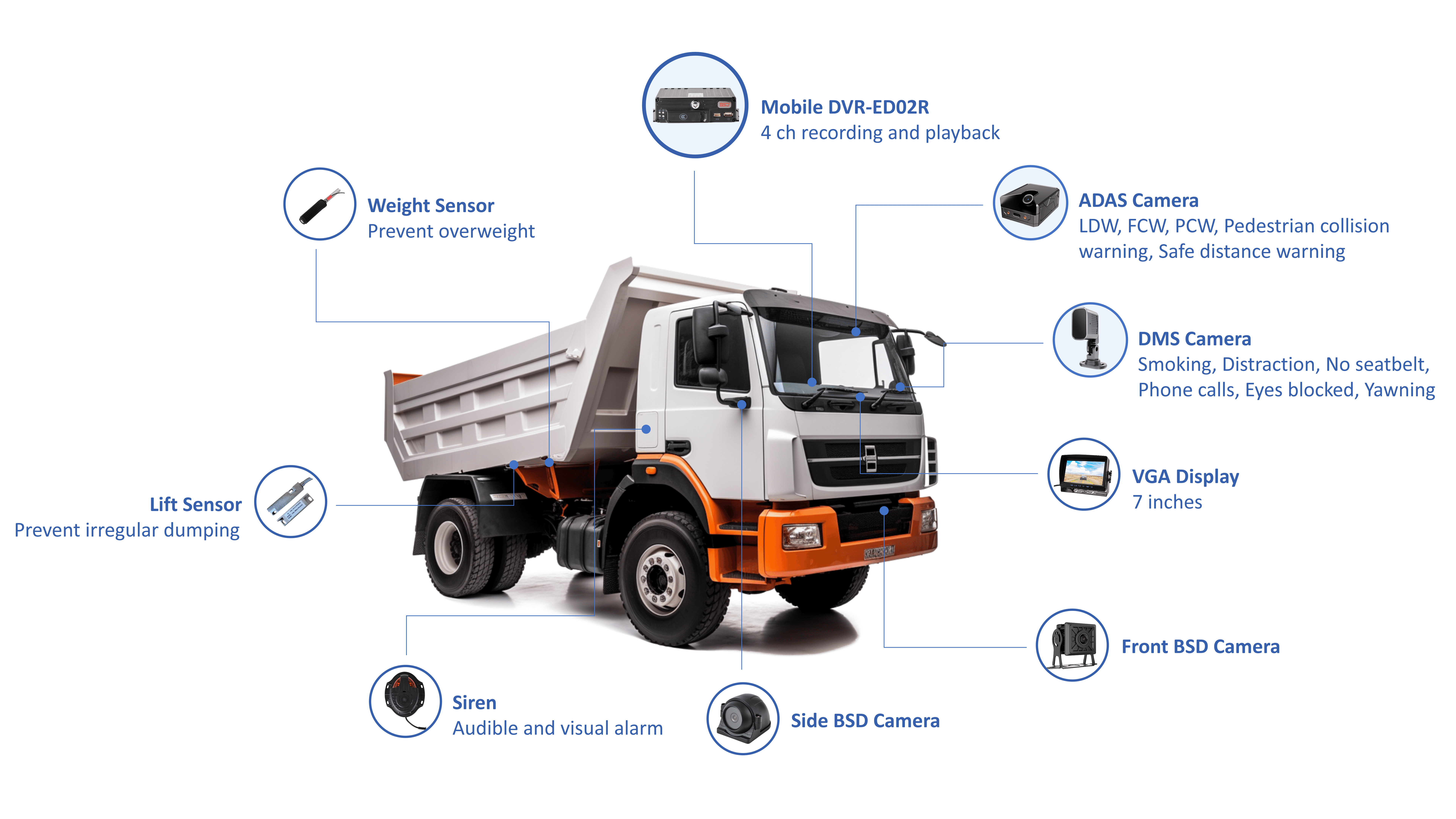
Large vehicles create blind-zone risk that location data alone cannot resolve. Our mining camera options can support driver-behavior monitoring and additional visibility around heavy equipment. Camera plans can cover forward, cabin, side, or rear areas according to vehicle geometry, and the pilot should check whether mounting positions remain useful under dust, vibration, low light, cleaning, and routine maintenance conditions.
Driver monitoring can identify fatigue, speeding, harsh braking, or other configured behaviors on hardware configured for those functions. In our mining projects at BSJ Technology, we treat those alerts as prompts for review rather than automatic disciplinary findings. Shift length, road condition, task urgency, and the associated video all provide context that helps safety teams decide whether coaching or another response is appropriate. Vehicle-health information can strengthen the same operating picture.
Our product architecture mentions engine temperature, brakes performance, tire pressure, and related indicators, together with diagnostic reports and maintenance alerts. A mining telematics deployment can use those records to connect abnormal movement or downtime with possible equipment condition, helping maintenance teams prioritize inspection rather than relying only on scheduled intervals. Incident evidence needs a controlled workflow.
Video clips, alarms, position history, driver records, and maintenance data should share timestamps and vehicle identifiers so investigators can reconstruct events efficiently. Access rights and retention periods should be established before deployment, especially when footage may involve employees, contractors, or site areas subject to security restrictions.
Design for Connectivity Gaps and Field Maintenance
Connectivity planning is essential for remote mines. The operating specification must define which functions continue locally when the network is unavailable, which events receive priority when communication returns, and how long data remains on the vehicle. Safety-critical warnings may need to operate at the edge rather than wait for a cloud response, while non-critical historical data can be synchronized later. Field maintenance must account for travel time and limited workshop access.
Remote diagnostics, configuration, and firmware management can reduce unnecessary service visits, but physical inspection procedures remain necessary for cameras, connectors, antennas, and wiring exposed to harsh conditions. Spare units and accessories should be planned around the site's actual replacement lead time rather than normal urban logistics. For integrators, our OEM/ODM and hardware engineering capabilities can support unusual power systems, camera layouts, accessories, or platform requirements.
Representative equipment should be used to validate those changes before broad rollout. A controlled configuration record helps ensure that later replacement units remain compatible with the mine's installation standard and software environment. Remote mines need a system that preserves context even when the network, road, and operating conditions change during the shift.
In our mining projects at BSJ Technology, we use mining telematics to connect truck movement, driver alerts, video, vehicle condition, and dispatch information without replacing the site's own safety authority. In daily mine operations, a mining fleet management system should help trained teams identify which events require intervention and which are normal consequences of the work cycle.
Rugged installation, local data continuity, camera coverage, and remote support all need to be proven in representative conditions. After those controls are documented, the mine gains a repeatable information layer that supports dispatch, investigation, maintenance, and coaching while keeping operational decisions with the people responsible for the site.

BSJ Technology (SZSE: 301608) is a global provider of AI Video Telematics and Connected Fleet IoT solutions. Since 2009, BSJ has developed AI Dashcams, MDVR systems, and GPS tracking solutions for commercial fleets worldwide.