Choose your operating system to start
Mining trucks operate in environments where road conditions, visibility, vehicle size, and traffic patterns can change continuously. Haul roads may include steep sections, sharp turns, dust, poor lighting, and mixed traffic involving trucks, excavators, service vehicles, and personnel. Under these conditions, collision prevention cannot depend on driver awareness alone. The technology installed on the vehicle must provide useful information without creating another source of complexity.
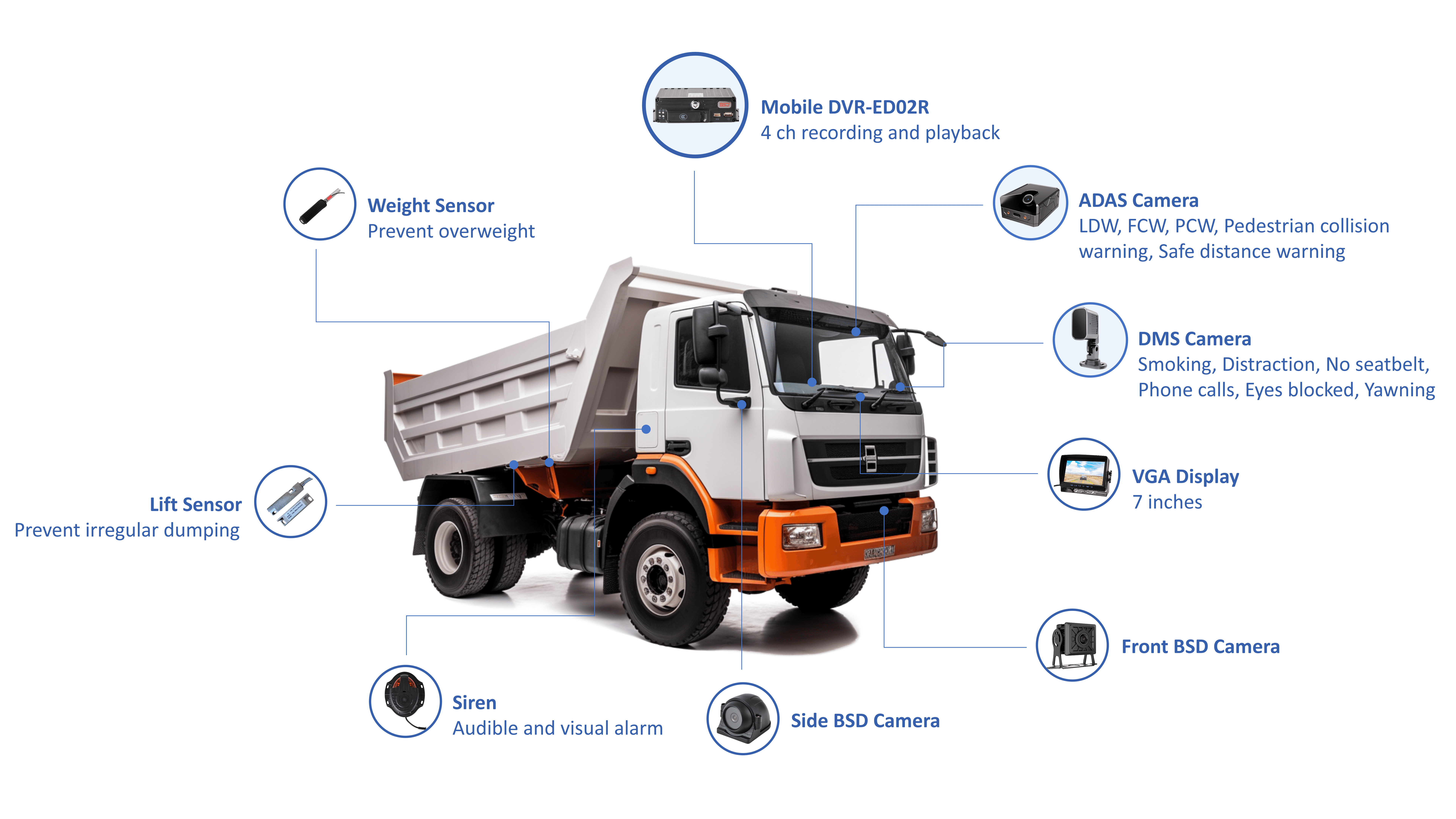
We approach mining safety as a combination of rugged hardware, positioning, vehicle data, cameras, driver monitoring, and timely alerts. A collision avoidance system should therefore be evaluated as a complete architecture rather than as a single camera or tracking device.
The first requirement is hardware capable of operating reliably in demanding mining conditions. Unlike standard passenger vehicles, mining trucks may experience continuous vibration, dust, temperature changes, and long operating cycles. Equipment selection should reflect these conditions.
For a practical deployment, the onboard hardware should support several functions:
Our mining solution is built around rugged IoT hardware combined with real-time monitoring and safety functions. The objective is not simply to identify the truck's location, but to connect vehicle status, driver behavior, alerts, and operational information in one system.
GPS does not detect every nearby obstacle, but it provides important operational context. A mining vehicle tracking system can show where each truck is operating, which route it is following, and how fast it is moving.
For mining dispatchers, this information can help identify unusual stops, route deviations, congestion, and potentially unsafe operating patterns. It also provides the location and time associated with an incident, making later investigation more structured.
Our mining truck solution uses real-time GPS tracking together with intelligent dispatching. The system is intended to help dispatchers understand truck positions, routes, and speeds while coordinating vehicle movement in a dynamic mining environment.
Camera selection is one of the most important parts of a mining collision avoidance deployment. A single forward-facing camera cannot eliminate every blind spot around a large haul truck.
The camera layout should be determined by vehicle geometry and the specific risk areas. Depending on the truck and application, useful coverage can include:
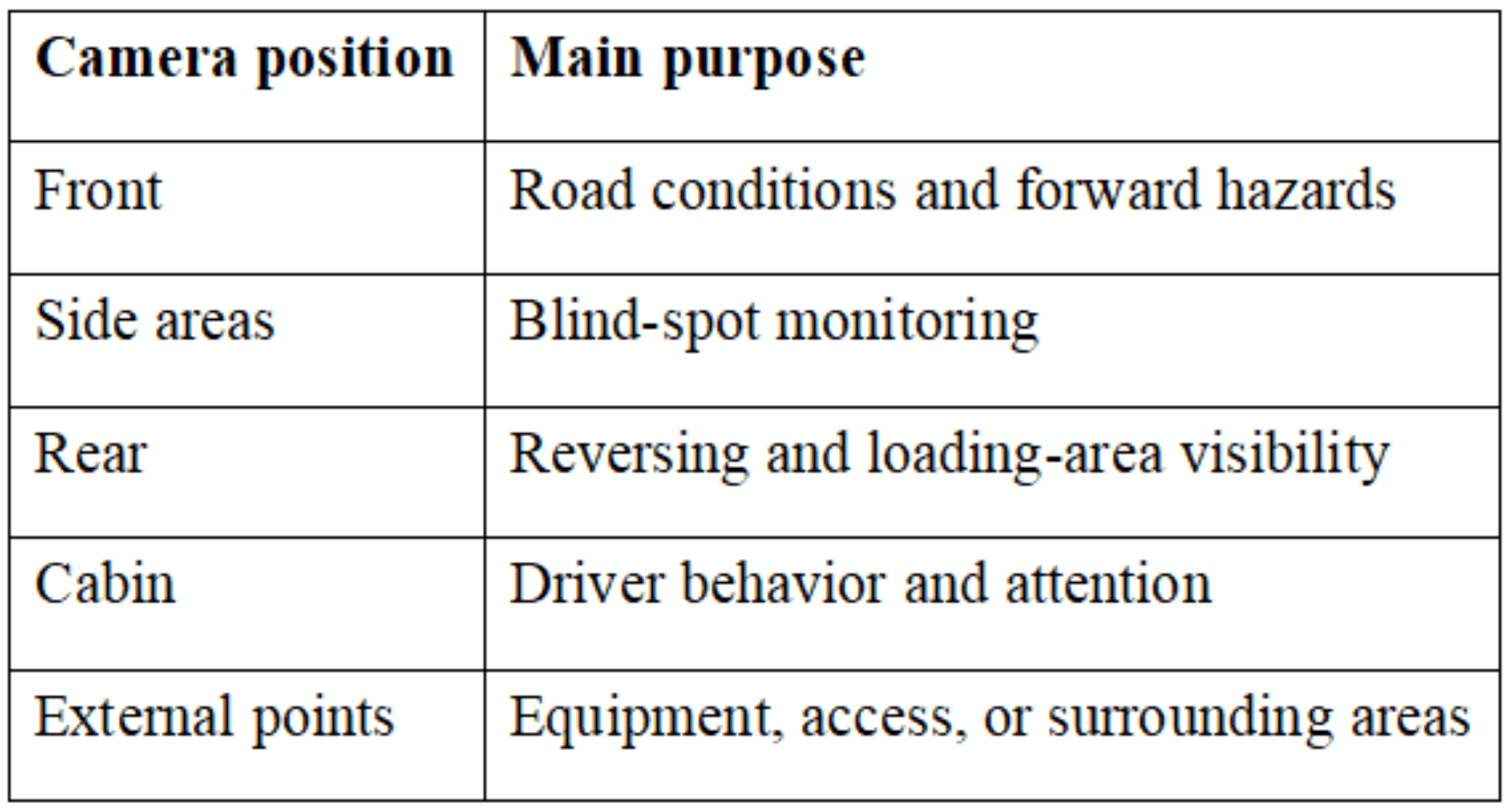
We also provide external vehicle cameras designed for harsh operating environments. For example, our square waterproof camera supports 1080P/720P AHD video, infrared night vision, and an IP67 waterproof and dustproof rating. Its rugged design makes it suitable for extending vehicle surveillance into areas that standard cabin cameras cannot cover.
Camera placement should always be considered together with viewing angle, mounting height, lighting, and the areas that remain hidden from the driver's position.
Video becomes more useful when the system can identify relevant safety events. In mining operations, driver fatigue, distraction, harsh braking, and speeding can all contribute to elevated risk.
Our mining vehicle tracking system combines driver behavior monitoring and AI-enabled cameras to help address blind spots and provide instant safety alerts. It also highlights monitoring of fatigue, harsh braking, and speeding.
This is where AI contributes differently from conventional recording. A recording system preserves evidence, while an intelligent system can help identify an event that deserves attention.
Our wider video telematics portfolio also supports ADAS and DMS technologies. For example, BSJ AI dashcams can combine forward-facing road monitoring with driver monitoring, depending on the hardware configuration.
Collision avoidance is closely connected to vehicle condition. Mechanical problems can create safety risks even when the driver is behaving correctly.
Our mining truck solution includes vehicle health monitoring and predictive maintenance functions. The solution can monitor information such as engine temperature, brake performance, and tire pressure, with diagnostic reporting designed to help identify developing problems.
This creates another important connection:
Vehicle condition → Safety risk → Alert → Maintenance or operational response
A telematics system that combines these stages can provide more useful information than a standalone tracking device.
The final component is the management layer. Cameras, GPS devices, vehicle inputs, and alerts generate large quantities of information, but mining teams need a practical way to organize it.
A fleet management system mining deployment should allow managers to view vehicles, monitor safety events, review routes, and respond to warnings from one operational environment.
We provide tools for device configuration, remote firmware updates, GPS monitoring, video management, event playback, and fleet status visibility. This centralized approach can also make a large mining deployment easier to maintain because devices do not always need to be accessed physically for routine configuration or software updates.
There is no universal camera arrangement for every mine. Open-pit haulage, quarry operations, underground transport, and mixed-use industrial sites can have different visibility and connectivity requirements.
Before deployment, we recommend evaluating:
At BSJ Technology, our fleet management system mining brings together GPS tracking, driver behavior monitoring, vehicle diagnostics, safety alerts, intelligent dispatching, and camera-based monitoring for mining applications.
The right collision avoidance architecture is therefore not defined by one camera specification. It is the result of matching rugged hardware, camera coverage, positioning, vehicle information, AI-based safety functions, and fleet management software to the actual risks of the mining site.

BSJ Technology (SZSE: 301608) is a global provider of AI Video Telematics and Connected Fleet IoT solutions. Since 2009, BSJ has developed AI Dashcams, MDVR systems, and GPS tracking solutions for commercial fleets worldwide.