Choose your operating system to start
A mining operation may run haul trucks, excavators, bulldozers, graders, water trucks, and maintenance vehicles across the same site. However, each machine follows a different operating pattern and presents different monitoring requirements. Applying one uniform tracking configuration can leave gaps in operational visibility, equipment status, and safety oversight.
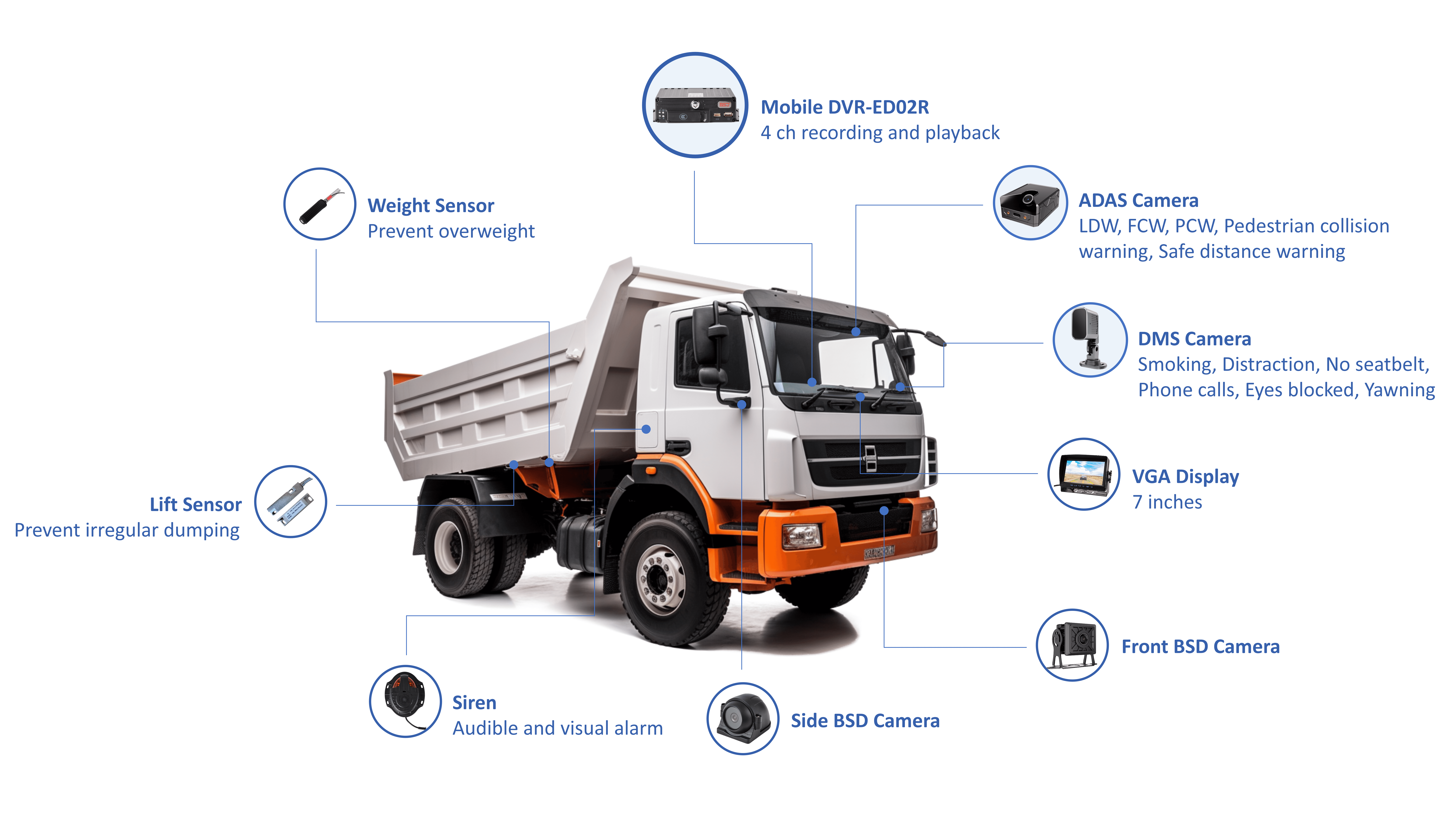
Effective mine fleet management connects equipment-specific data into a coordinated operating picture. At BSJ Technology, we focus on vehicle telematics hardware that helps solution providers and mine operators connect tracking, video monitoring, and available vehicle data to their existing fleet management workflows.
The first step is to identify what each equipment category needs to report. Haul trucks may require location history, route monitoring, driver-facing video, and selected vehicle diagnostics. Excavators may need camera coverage around working zones, while graders and water trucks may benefit from visibility into movement along designated roads.
A fleet inventory should document machine type, operating area, power supply, available vehicle interfaces, and existing onboard equipment. These details help determine whether a unit needs a GPS tracker, an AI dashcam, a mobile digital video recorder (MDVR), or additional sensors. Role-based configurations avoid unnecessary hardware while addressing the requirements of different machines.
GPS coordinates show where a vehicle is, but they do not necessarily explain why it has stopped. A stationary haul truck could be waiting in a loading queue, undergoing inspection, or experiencing a mechanical issue. Each situation calls for a different operational response.
Useful monitoring combines location history with geofences, route definitions, timestamps, and available vehicle data. Dispatchers can compare vehicle movements against loading areas, dump points, planned routes, and shift assignments to identify unusual delays or deviations. Where supported by the platform, these events can be flagged for review rather than treated as automatic proof of a problem.
For mixed fleets, this context helps supervisors interpret equipment activity without assuming that every vehicle follows the same schedule or production cycle.
Heavy equipment creates different visibility challenges because cab positions, machine dimensions, attachments, and working movements vary. A camera arrangement suitable for a haul truck may not reveal critical areas around an excavator or bulldozer. Camera selection and mounting should therefore reflect machine geometry and the hazards identified by the site.
AI video hardware can provide event detection or driver-monitoring functions when supported by the installed system. Depending on the configuration, these may include fatigue indicators, distracted driving, or unsafe driving behavior. Camera views and alert settings should be tested under actual working conditions, including dust, vibration, low light, and routine cleaning.
Mining safety management also requires a defined response to detected events. Site teams should know who receives alerts, how video and location records are reviewed, and when an incident must be escalated. Telematics supports safety procedures but does not replace operator training, traffic controls, equipment inspections, or on-site supervision.
A machine appearing on the tracking map is not necessarily ready for work. Maintenance teams need to distinguish an operating vehicle from one awaiting inspection, repair, or scheduled service. Where compatible interfaces or sensors provide relevant information, telematics may collect selected engine data, temperature readings, or tire-pressure measurements.
Available signals vary according to equipment manufacturer, model, interface, and installed hardware. Mixed fleets may consequently require different data mappings and monitoring configurations. Unsupported measurements should never be assumed to be available.
Connecting supported readings with service records and maintenance workflows gives teams more context for prioritizing inspections. Alerts should trigger verification under the appropriate procedure rather than be treated as definitive diagnoses.
Mining sites may include remote haul roads, deep pits, workshops, and areas with inconsistent cellular coverage. Testing representative routes and operating zones helps establish where live updates are available and how devices handle communication interruptions. Data storage, event transmission, and video retrieval behavior should be verified against the selected hardware specifications.
Platform integration introduces another requirement. Existing dispatch, maintenance, and fleet systems may expect specific protocols, data fields, and event formats. Confirm interface requirements, device identification rules, and the treatment of delayed or missing data before expanding deployment.
We develop and manufacture vehicle telematics hardware for connected fleet applications, including GPS tracking devices, AI video products, and MDVR systems. Through our OEM/ODM services, we can evaluate project-specific mounting arrangements, hardware configurations, and integration requirements according to technical feasibility and agreed scope.
A pilot involving only similar haul trucks can conceal problems that emerge when different machine types enter the system. Select representative assets with different power arrangements, onboard interfaces, camera requirements, and operating locations.
Define measurable acceptance criteria before installation. Verify location visibility in key areas, camera coverage of intended zones, alert relevance, availability of supported diagnostic data, and successful transfer of records into the target platform. Document installation settings and device configurations so subsequent deployments can reproduce validated results.
Use pilot findings to identify machines requiring different hardware, revised alert thresholds, or additional integration work. Effective mining safety management depends on testing response procedures alongside devices, rather than leaving operational responsibilities unresolved until rollout.
A successful mine fleet management architecture gives dispatchers, maintenance teams, and safety personnel a coordinated view while preserving equipment-specific monitoring requirements. Shared location data establishes where assets are; video and available diagnostics add context for interpreting activity and prioritizing action.
At BSJ Technology, we work with telematics distributors, platform providers, system integrators, and OEM/ODM customers to address connected fleet hardware requirements.
Start by defining the decisions the mine needs to make, mapping the data each equipment category can provide, and validating the complete configuration in the field. This creates a practical foundation for coordinating heterogeneous mining fleets without assuming every machine performs the same job or faces the same risks.

BSJ Technology (SZSE: 301608) is a global provider of AI Video Telematics and Connected Fleet IoT solutions. Since 2009, BSJ has developed AI Dashcams, MDVR systems, and GPS tracking solutions for commercial fleets worldwide.