Choose your operating system to start
Disconnected fleet data means dispatchers, drivers, and maintenance teams work from different pictures of the same fleet—with location, driver habits, and vehicle health trapped in isolated systems. As a result, a truck can miss a delivery window while the dispatcher has no idea why until it's too late.
The consequences show up as real costs:
● Late deliveries from unplanned route deviations
● Unexpected breakdowns with no maintenance warning
● Disputes over cargo condition or driver conduct with no evidence
● Rising insurance premiums after unverified incidents
The global commercial telematics market was valued at $76.40 billion in 2024 and is projected to reach $334.80 billion by 2033, growing at a 15.92% CAGR, according to IMARC Group. Therefore, fleets that stay disconnected are competing against operators who already see their trucks, drivers, and data in one place.
Real-time GPS tracking answers the question dispatch always asks first: where is the truck right now? Because location updates stream continuously instead of arriving in batches, dispatchers can adjust routes, reassign loads, and give customers accurate ETAs without calling the driver.
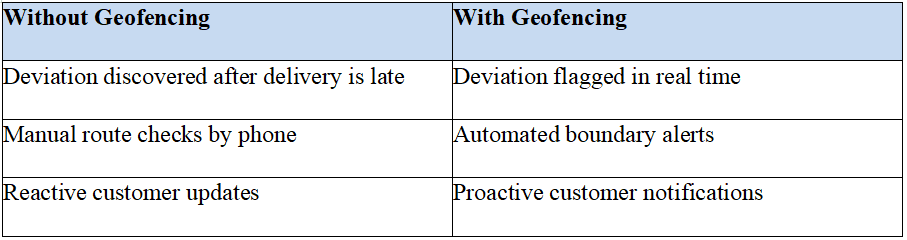
Geo-fencing adds a second layer. It draws a virtual boundary around an approved route or delivery zone, so the moment a truck exits that zone, the system triggers an alert automatically.
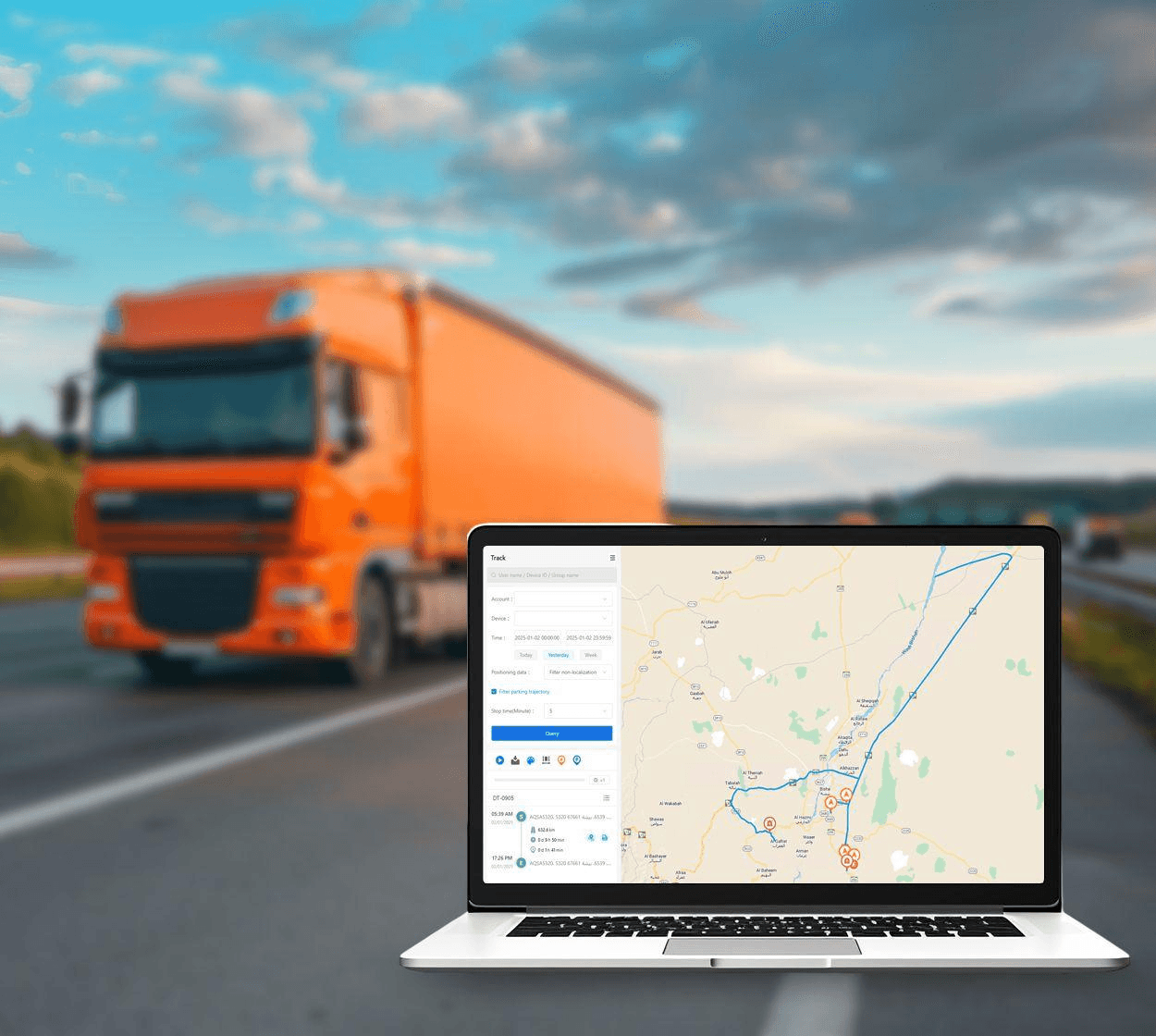
An alert reaches the fleet manager's phone or dashboard within moments of a route deviation. This matters because unauthorized detours are often the first sign of theft, an unsafe shortcut, or unapproved personal use of the vehicle. For example, a fleet running a fixed delivery corridor can set geofences around each stop and receive an instant flag if a truck drifts off course, letting the manager call the driver before a small deviation becomes a missed delivery.
Vehicle health monitoring reduces breakdowns by flagging engine, tire, and fuel problems before a truck gets stranded. Because a roadside failure costs far more than a scheduled repair, catching the warning signs early keeps freight moving and protects the delivery schedule.
This works because onboard sensors continuously report metrics like engine temperature, tire pressure, and fuel consumption back to a central platform. When a reading falls outside the normal range, the system sends a maintenance reminder instead of waiting for a driver to notice something is wrong.
● Engine diagnostics flag rising temperatures or fault codes early
● Tire pressure monitoring reduces blowout risk on long hauls
● Fuel consumption tracking exposes leaks, theft, or inefficient driving
● Automated maintenance reminders replace guesswork with a schedul
Driver behavior monitoring works by tracking specific, measurable events, such as harsh braking or speeding, rather than judging a driver's overall style. This distinction matters for truck fleet management because it turns coaching conversations into data-backed feedback instead of subjective criticism.
Speeding events, hard braking, and sudden maneuvers each carry accident and maintenance-cost implications. However, the goal isn't punishment. It's giving drivers specific, actionable feedback so they can adjust before a habit turns into an incident.
As a result, fleets that act on this data typically see fewer accidents, lower wear on brakes and tires, and reduced fuel waste from aggressive driving. Logistics fleet management solutions that combine this behavioral data with GPS and vehicle health information give managers one complete view instead of three separate reports to reconcile.
BSJ Technology brings GPS tracking, driver behavior monitoring, vehicle health data, and video surveillance into one connected logistics fleet management system built for heavy commercial vehicles. This matters because a fleet manager shouldn't need four separate logins to answer one question about a single truck.
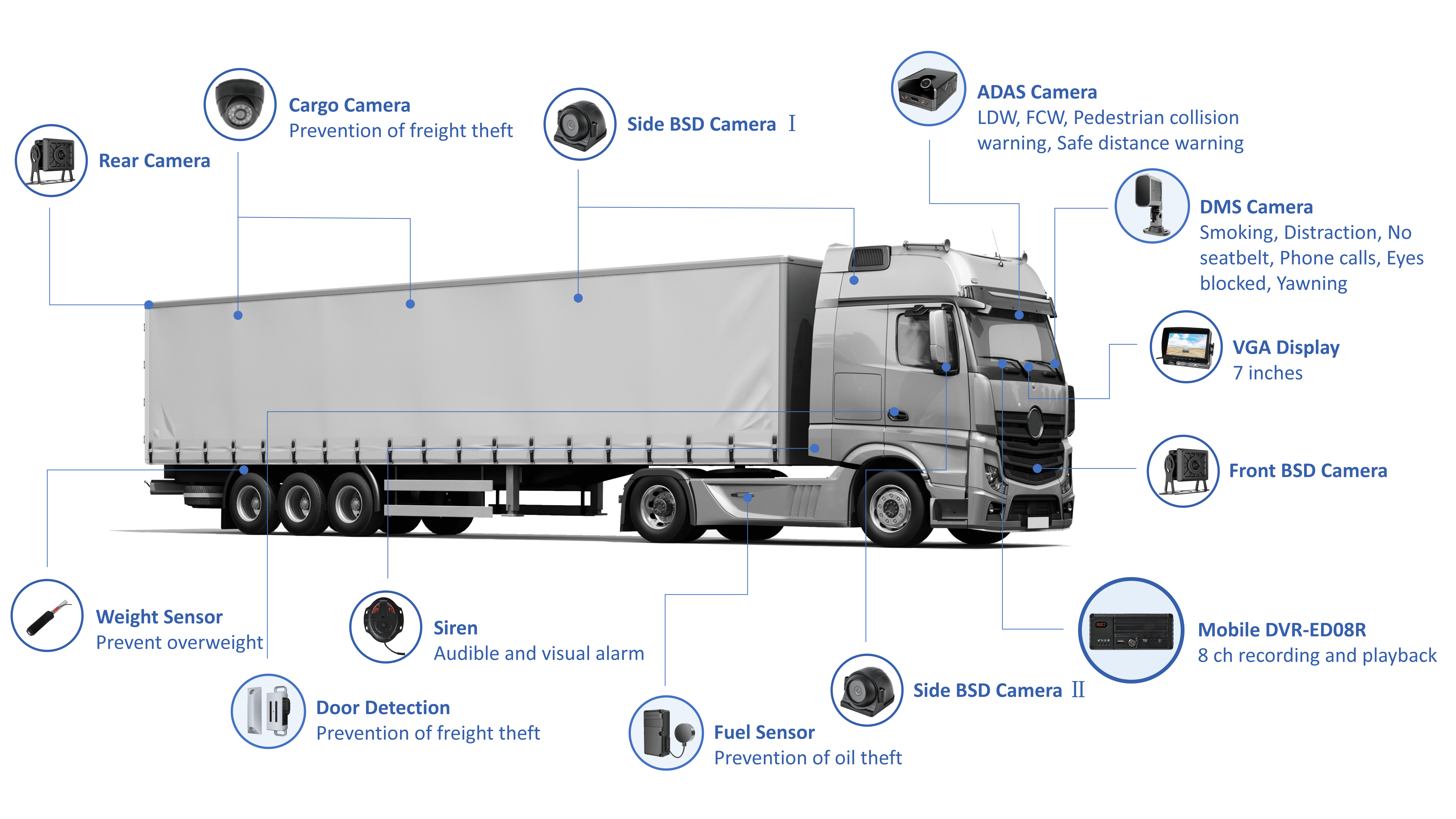
The video component uses in-vehicle multi-channel digital video recorders (MDVR) alongside AI dashcams. Advanced Driver Assistance System (ADAS) alerts warn drivers before a collision happens, while Driver Monitoring System (DMS) technology catches fatigue and distraction as it occurs. Every second of footage is stored and retrievable, giving fleet managers video evidence for insurance claims and incident investigations.
A BSJ client managing multiple commercial vehicles noticed unexplained fuel level drops across the fleet, despite standard security measures already in place. Repeated losses were driving up operating costs and creating downtime from missing fuel.
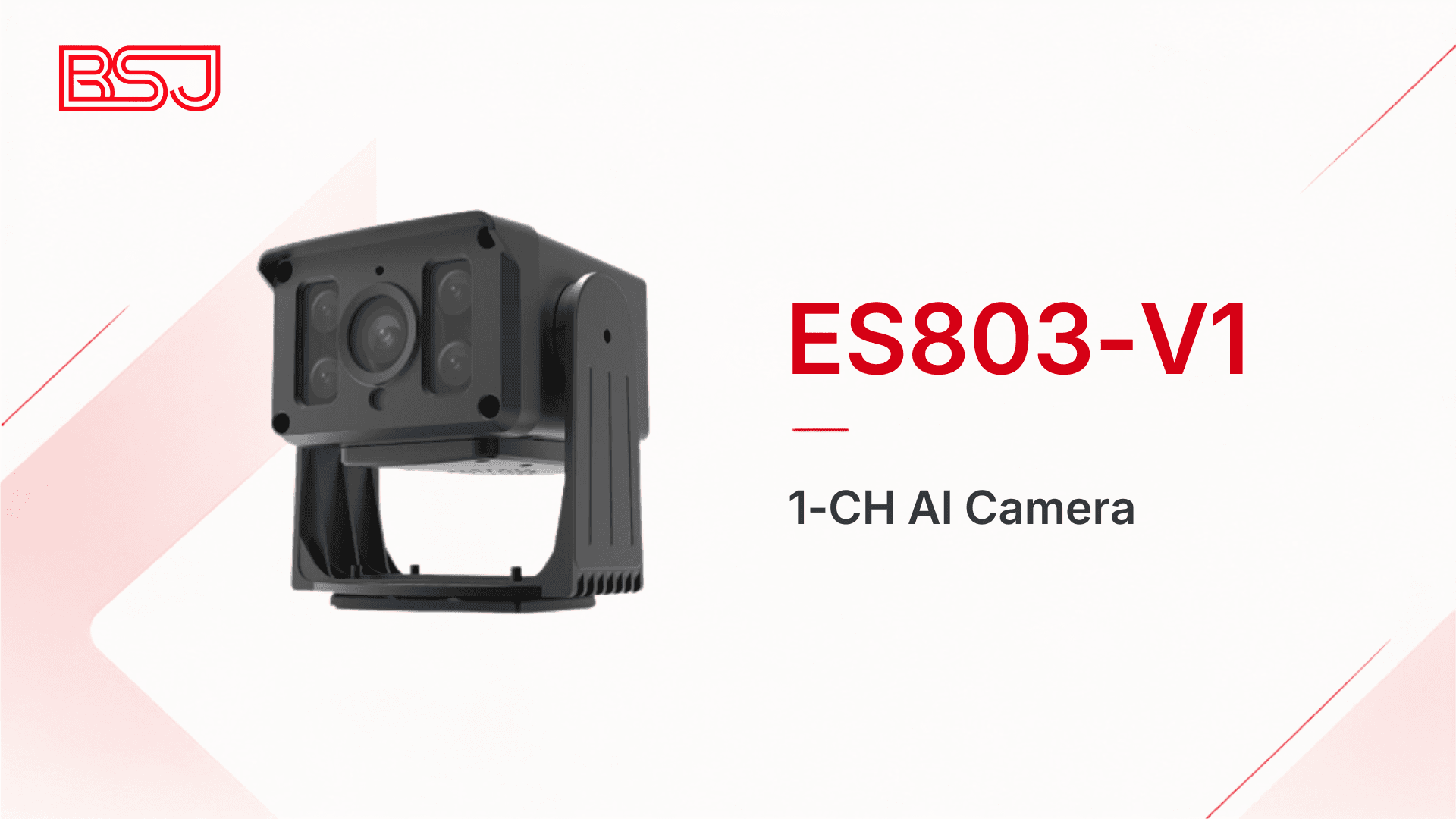
The client installed BSJ's ES803 AI camera, which combines AI-powered humanoid and fence-alarm detection with real-time alerts, 1080P HD recording, and remote GPS and 4G monitoring. When the camera detected a person tampering with the vehicle, it alerted the fleet manager's device immediately.
Ultimately, the client captured a thief stealing fuel in the act, stopped further losses, and saved thousands of dollars in potential fuel costs.
Connecting trucks, drivers, and fleet data isn't about adding more dashboards. It's about replacing separate, disconnected tools with one system that shows location, driver behavior, vehicle condition, and video evidence together. Fleets that make this shift catch problems earlier, resolve disputes faster, and give dispatch a real-time view instead of a delayed one.
Visit BSJ Technology to see how a connected logistics fleet management setup could fit your operation.

BSJ Technology (SZSE: 301608) is a global provider of AI Video Telematics and Connected Fleet IoT solutions. Since 2009, BSJ has developed AI Dashcams, MDVR systems, and GPS tracking solutions for commercial fleets worldwide.