Choose your operating system to start
Long-haul and regional fleets share the road but not the same operating rhythm. A cross-country truck may spend hours between controlled stops, while a regional vehicle can complete several customer legs in one shift. For mixed-route operations, logistics fleet management has to support both patterns by connecting route visibility, driver-safety events, vehicle condition, cargo evidence, and remote device control without forcing the same alert strategy on every route.
For fleet operators, the system should make exceptions easier to find rather than generate more data for teams to inspect. GPS, AI video, MDVR recording, sensors, and maintenance information are useful only when each signal can be tied to a vehicle, trip, driver, and response workflow. The procurement task is therefore to define how dispatch, safety, claims, maintenance, and customer-service teams will use the information at different stages of a journey.
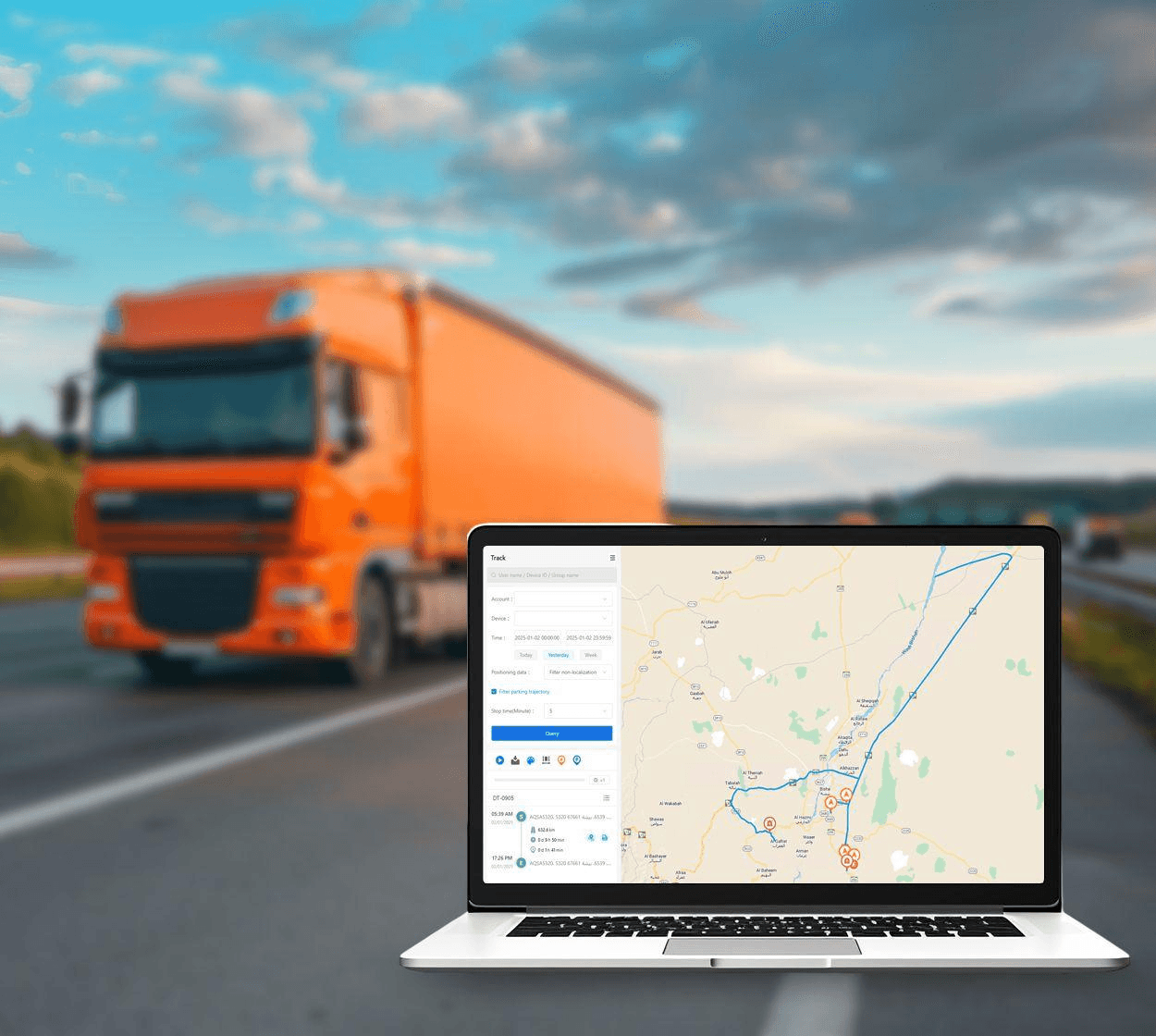
Long-haul dispatch often needs stable route progress, geofence events, extended stop visibility, and communication continuity across wide areas. Regional operations may emphasize rapid turnaround, customer time windows, repeated depot visits, and more frequent route changes. A logistics and fleet management design can use the same hardware ecosystem while applying different alert thresholds, reporting intervals, and escalation rules to each operating pattern. Update frequency should follow the business decision.
A high-risk or high-value route may justify frequent positions, while slower reporting can be enough for low-risk segments and reduce communications cost. Video introduces a similar tradeoff: critical event clips may need immediate upload, but continuous footage can remain on local storage. Modeling data use during a pilot prevents cellular and cloud costs from becoming an unexpected scaling problem. Geofences are most useful when they represent real business locations and constraints.
Depots, customer sites, parking areas, restricted zones, and approved corridors can create automatic arrival, departure, or deviation events. When these records are linked with transport jobs, dispatch can compare planned and actual execution without asking drivers for constant manual updates. Historical patterns can also reveal routes that repeatedly create excessive dwell time. Vehicle status adds another operational layer.
Engine-related information, tire pressure, fuel consumption, or other supported signals can help fleets investigate reliability and maintenance needs before a breakdown interrupts a delivery. Not every sensor fluctuation deserves an alarm; thresholds and diagnostic rules need validation on the actual truck classes and duty cycles used by the fleet.
AI video can reduce review workload when it is configured around meaningful risk. DMS may identify fatigue or distraction, and ADAS may detect configured road hazards. Safety teams should decide which events require immediate intervention, which belong in later coaching, and which need human verification before action. Alert precision matters because excessive notifications can reduce trust in the system even when the underlying hardware is functioning correctly.
In our logistics engineering work at BSJ Technology, we develop AI dashcams, GPS trackers, and multi-channel MDVR systems for connected fleet projects. Our logistics solution work combines location, driver behavior, vehicle information, live or recorded video, and remote management. Our integration model also supports third-party platforms, which is useful for distributors and solution providers that want to add our hardware without replacing the software environment their customers already use.
Cargo and claims workflows have different evidence needs. A road-facing clip can help explain a collision, while cabin, side, rear, or cargo-area views may support theft investigation, loading disputes, or damage claims. The chosen camera layout should reflect those risks rather than add channels without purpose. Retention periods, event upload, user permissions, and export procedures should be documented so evidence remains available when needed. Driver coaching should use reviewed events rather than raw counts.
A regional urban route exposes a driver to more braking and traffic interaction than a quiet motorway run, so simple comparisons can be misleading. Managers can classify confirmed behavior, normalize by exposure where appropriate, and track repeated patterns over time. That makes logistics fleet management a tool for process improvement rather than a mechanism for indiscriminate scoring.
Scaling starts with installation repeatability. Wiring, power protection, antennas, camera positions, firmware versions, SIM profiles, and commissioning tests should be standardized by vehicle type. A technically successful pilot can still become expensive if every depot installs the equipment differently. Clear build sheets and acceptance records give field technicians and support engineers a shared reference when a device behaves unexpectedly. Open integration becomes equally important when a fleet serves several customers or countries.
Stable identifiers and event definitions allow telematics data to connect with transport-management systems, customer portals, BI tools, or third-party fleet platforms. The hardware layer does not need to replace those applications; it needs to provide predictable data and a support path when an interface changes or a customized field is required. Our OEM/ODM capability can support projects that need branded firmware, accessory changes, hardware adaptations, or specific platform behavior.
We also emphasize controlled delivery, quality processes, and international technical support. Those strengths should be incorporated into project governance through samples, change approval, version control, and acceptance testing, particularly when a logistics and fleet management program is being rolled out through multiple integrators. Long-haul and regional fleets do not need identical workflows, but they do need a common technical foundation.
In our logistics projects at BSJ Technology, we connect route visibility, AI video, vehicle information, remote device management, and third-party integration so each operating model can be configured without rebuilding the entire system. Logistics fleet management should help staff identify the exceptions that matter on a long route while still supporting denser regional schedules and depot activity.
When logistics and fleet management requirements are translated into measurable pilot criteria, the buyer can set different alert and reporting policies on top of the same controlled device architecture. That separation makes later expansion easier to manage and keeps local operating differences from turning into incompatible hardware deployments.

BSJ Technology (SZSE: 301608) is a global provider of AI Video Telematics and Connected Fleet IoT solutions. Since 2009, BSJ has developed AI Dashcams, MDVR systems, and GPS tracking solutions for commercial fleets worldwide.