Choose your operating system to start
Last-mile delivery looks simple from the customer’s perspective: a package leaves a distribution center and arrives at its destination. At BSJ, we see the opposite : the final stage of transportation can be one of the most difficult parts of fleet operations. Delivery vans make frequent stops, operate in congested areas, and often work under strict time expectations. Drivers need to manage traffic and parking while dispatchers need to know whether vehicles are progressing as expected. This combination makes visibility increasingly important for businesses managing local delivery operations.
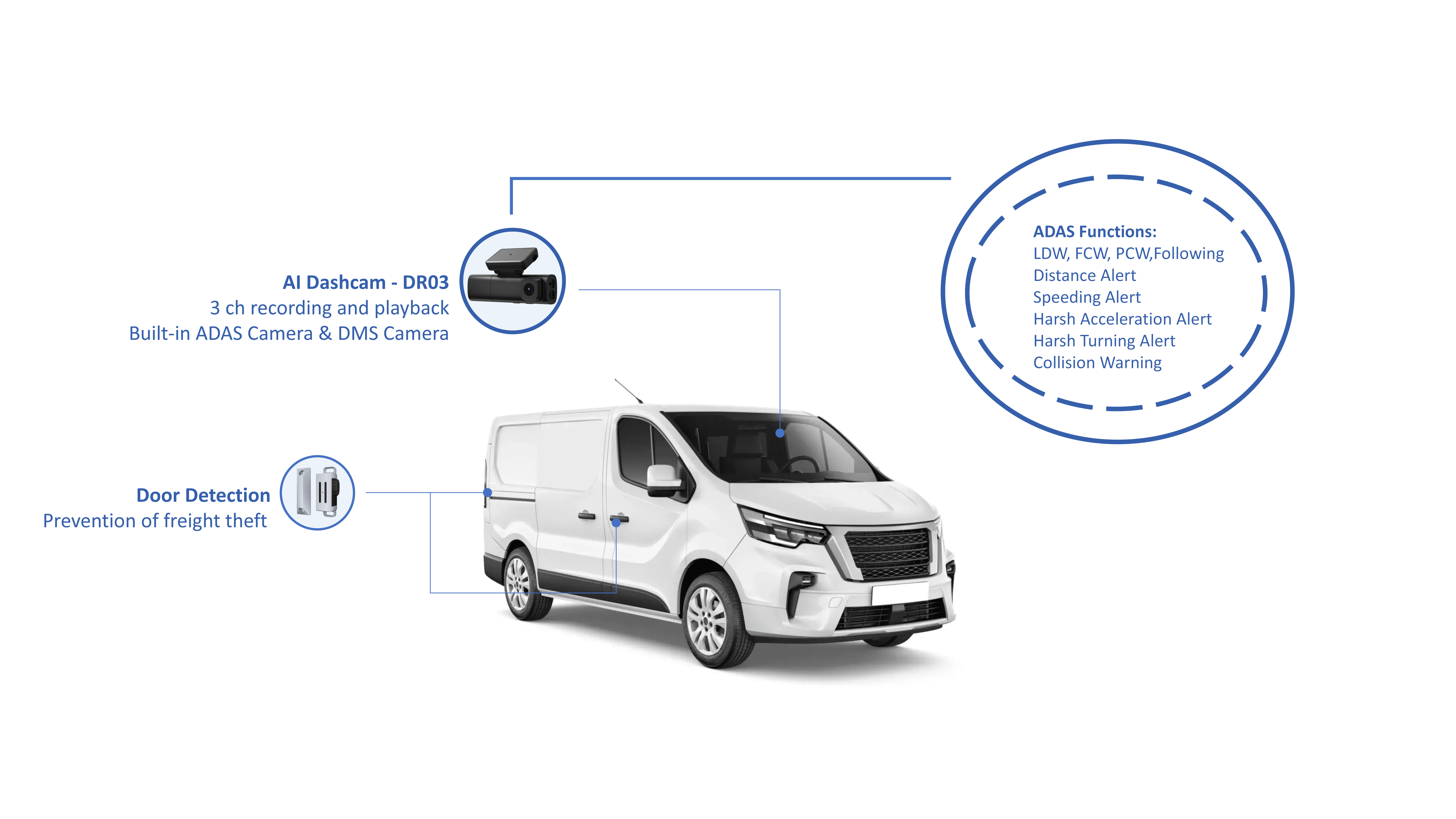
We approach this challenge through connected telematics, combining GPS tracking, video, driver monitoring, and fleet data so managers can understand what is happening across their vehicles without depending entirely on manual communication.
Why Last-Mile Fleets Need Better Visibility
For a delivery business, vehicle utilization affects much more than transportation. A delayed vehicle can affect several subsequent stops, while inefficient routing can reduce the number of deliveries completed during a shift.
A modern delivery fleet management approach can provide continuous information about vehicle location, route progress, and driver activity. We consider this especially useful for small-van fleets because these vehicles frequently operate in dense urban environments where travel times can change quickly.
Instead of waiting for a driver to call about a delay, dispatchers can use live location information to see vehicle activity as it develops. Route histories can also help managers compare actual journeys with planned operations and identify recurring inefficiencies.
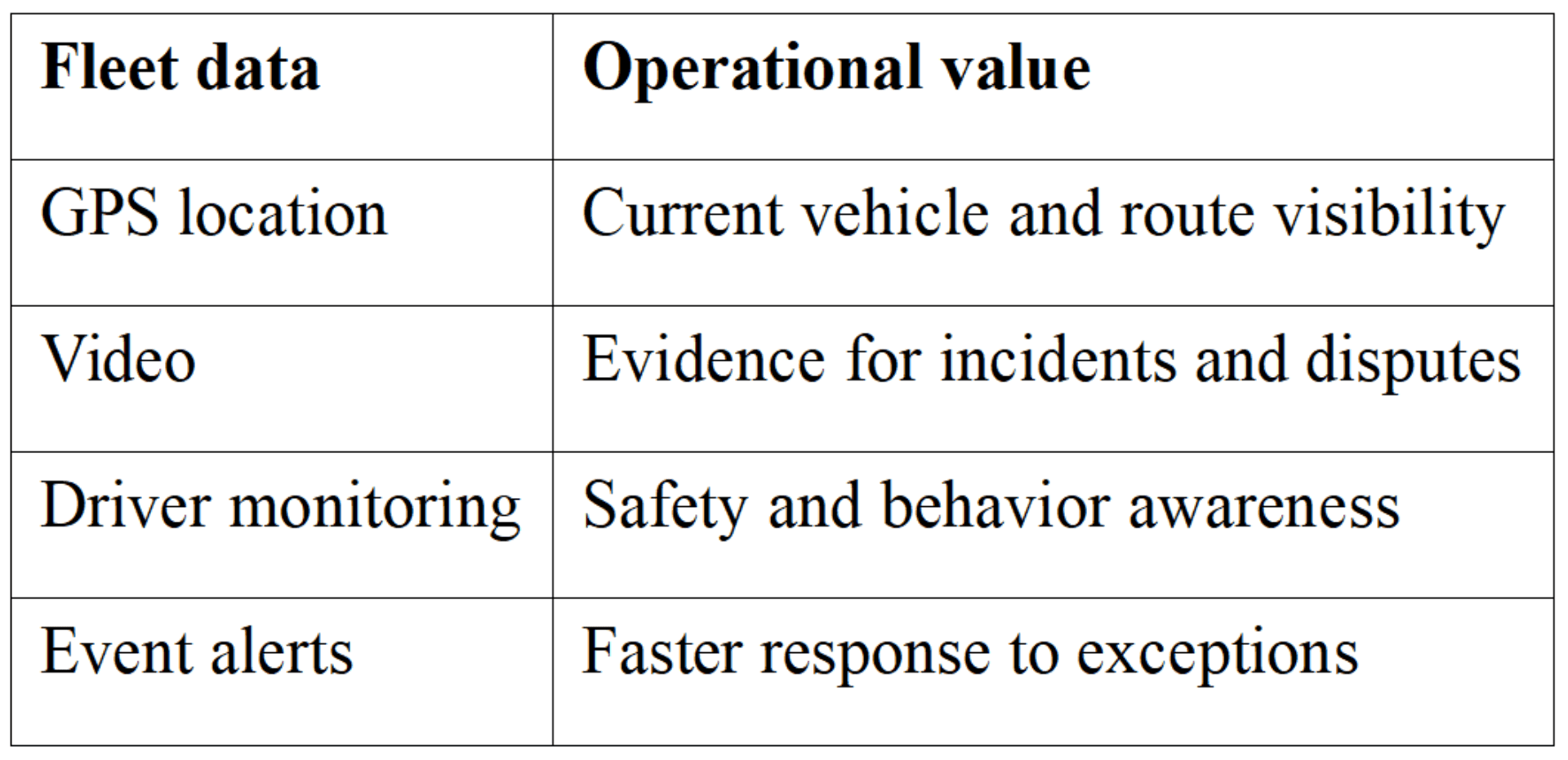
The practical workflow can be summarized simply:
We see GPS as the foundation of a connected delivery fleet, but location alone does not provide enough context for every operational issue.
Our small-van fleet solution combines real-time GPS tracking with cloud-based fleet management. Managers can monitor vehicles, review routes, and maintain visibility across delivery activity. For operations with multiple vans, centralizing this information can reduce the amount of time spent checking individual vehicles or contacting drivers for routine status updates.
A delivery vehicle tracking system also makes historical data useful. After a delivery shift, managers may want to understand where delays occurred, how long vehicles remained at particular locations, or whether a driver repeatedly deviated from planned routes. Reviewing these patterns can help businesses refine schedules and operating procedures.
For us, the important point is that tracking should support a broader workflow rather than function as a standalone map.
Location data can tell a manager that a vehicle stopped, but it cannot necessarily explain why. Was there a traffic incident? Did the driver encounter an unexpected obstruction? Was there a customer-related dispute?
This is where video adds another layer of visibility, a key component of delivery fleet management. We provide AI dashcam and video telematics technologies that can support live monitoring, event recording, and incident review. For last-mile operators, recorded footage can provide useful evidence when investigating collisions, unsafe driving, cargo-related disputes, or customer complaints.
AI functions can also reduce the need to review every minute of footage manually. Driver Monitoring System capabilities can identify issues such as fatigue or distraction, while Advanced Driver Assistance System functions can provide alerts related to driving risks.
We believe the value comes from connecting these capabilities. A safety alert becomes more useful when managers can identify the associated vehicle, location, and video evidence instead of searching through disconnected systems.
Drivers are central to last-mile performance. They make frequent decisions about speed, stopping, parking, and navigation, often under considerable schedule pressure. Fleet managers therefore need information that supports safer and more consistent driving without turning every trip into a manual supervisory exercise.
We use driver-monitoring technologies to help provide this visibility. Information about fatigue, distraction, and driving events can give fleet managers a basis for reviewing behavior and identifying areas where coaching may be useful.
This is particularly relevant for businesses with growing fleets. As the number of vehicles increases, managers cannot realistically observe every driver directly. Connected telematics can help prioritize attention by highlighting events that may require review.
At the same time, we believe driver data should be interpreted in context. A single alert does not necessarily describe an entire driving pattern. Historical information provides a more useful foundation for evaluating recurring behavior and operational risks.
Small-van operators may begin with a limited number of vehicles, but their technology requirements can change as delivery volumes increase. A telematics system should therefore remain practical as fleet size, vehicle types, and software requirements evolve.
Our portfolio includes GPS trackers, AI dashcams, and MDVR systems for different commercial transportation applications. We also support remote device management through our software ecosystem, helping operators configure devices, maintain deployments, and manage firmware more efficiently.
Integration is another consideration for B2B customers. Many delivery businesses already use fleet-management or logistics software. We support an open ecosystem approach and integration with third-party platforms, allowing new telematics hardware to work within broader technology environments instead of requiring every customer to replace existing systems.
At BSJ Technology, we focus on AI video telematics, GPS tracking, Fleet IoT, and connected hardware for commercial transportation. We also support OEM and ODM cooperation, enabling system integrators and fleet technology providers to adapt hardware to different project requirements.
For last-mile operations, we believe effective fleet visibility comes from combining several types of information. GPS helps managers understand where vehicles are. Video provides context when incidents occur. Driver monitoring adds information about safety and behavior. Together, these capabilities form the backbone of a powerful delivery vehicle tracking system and create a more complete operational picture.
Ultimately, a successful last-mile strategy is not simply about knowing where every van is. It is about giving delivery businesses enough reliable information to manage routes, respond to exceptions, investigate incidents, and support drivers. By connecting these functions within one telematics environment, businesses can build a more informed approach to daily delivery operations while keeping the technology practical for future fleet growth.

BSJ Technology (SZSE: 301608) is a global provider of AI Video Telematics and Connected Fleet IoT solutions. Since 2009, BSJ has developed AI Dashcams, MDVR systems, and GPS tracking solutions for commercial fleets worldwide.