Choose your operating system to start
On September 11, 2026, BSJ Technology, Escort Monitoring Systems and PILOT Telematics came together in Jakarta for the Building Smart Telematics Solutions: Practical Fuel, Fleet & Equipment Monitoring Workshop.
Bringing together telematics professionals, system integrators and technology partners, the full-day workshop explored how sensors, GPS tracking hardware and telematics platforms can work together to address real-world fleet and equipment monitoring challenges.
From fuel monitoring and loss prevention to equipment tracking, temperature monitoring and transport operations, the sessions moved beyond basic GPS tracking to demonstrate how connected data can become actionable fleet intelligence. Through technical presentations, live demonstrations and hands-on integration, participants had the opportunity to see the complete journey from sensors to connected hardware, and from data to fleet intelligence.
More than a technical workshop, the event provided a platform for practical knowledge sharing, solution exploration and deeper collaboration across the telematics ecosystem.
The technical sessions covered three complementary perspectives on connected telematics, with each focusing on a different layer of the solution.
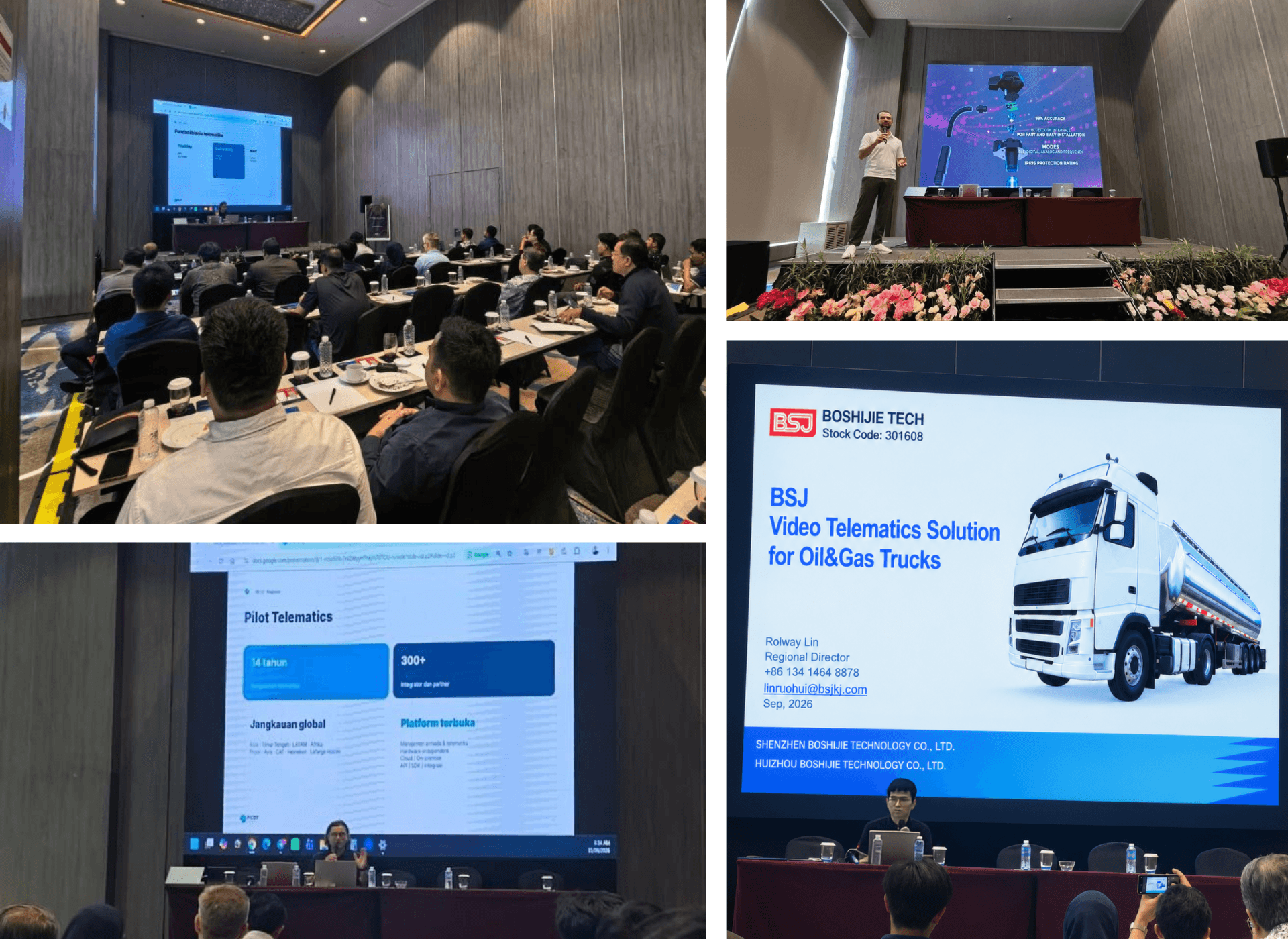
Escort Monitoring Systems opened the technical sessions with Fuel Monitoring Solutions & Best Practices, focusing on the role of accurate sensor data in fuel management.
The session covered sensor technologies and their applications, along with important considerations such as sensor selection, installation, calibration, configuration and diagnostics. Rather than looking at fuel level as an isolated measurement, the discussion explored how businesses can monitor events such as refueling, fuel removal and actual consumption by combining sensor data with operational information.
The session also highlighted applications across different stages of the fuel lifecycle, from storage and transportation to vehicles, generators and equipment. By combining physical measurements with operational data, businesses can gain greater visibility into fuel movement and identify potential discrepancies or abnormal events.
Next, BSJ Technology focused on GPS Tracking Hardware & Sensor Integration, introducing two solutions for connected vehicle applications: C02G and KG-27.
The C02G is a 2G + 4G Cat.1 high-voltage tracker designed for stable vehicle connectivity. It supports multi-constellation GNSS, a 9–90V wide voltage input, ACC detection and oil-circuit cut-off, while also supporting Configurator and FOTA WEB for device management.
The KG-27 provides a broader connectivity foundation for applications requiring external sensor integration. In addition to 2G + 4G Cat.1 and GNSS, it supports LoRa sensor connectivity and multiple external interfaces, including 1-Wire, RS485, RS232 and ADC. It also supports remote cut-off, intelligent status alerts and blind-spot data storage.
Together, these products illustrated how GPS tracking hardware can act as a connection point between vehicles, sensors and telematics platforms. Instead of relying on location data alone, additional operational data can be collected and transmitted to support more complete fleet and equipment monitoring.
The third technical session, led by PILOT Telematics, focused on how connected data can be transformed into fleet intelligence.
The presentation explored how data from GPS devices, sensors and connected systems can be brought together within a telematics platform and transformed into dashboards, alerts, reports and other operational tools.
Different scenarios—including diesel generator monitoring, concrete delivery and retail distribution—were used to demonstrate the broader role of telematics platforms. The focus moved from simply knowing where a vehicle or asset is to understanding what is happening, whether operations are on track, and where action may be required.
Together, the three sessions illustrated a clear workflow:
Sensors measure → GPS hardware connects → The platform contextualizes → Businesses act on the data.
The workshop then brought these concepts into several practical scenarios, showing how connected telematics can address challenges across different operations.
For fuel monitoring, connected sensor and GPS data can help businesses track fuel activity across storage, transportation, vehicles, generators and equipment.
The same connected approach can support transport and delivery operations. For example, drum rotation data can provide additional visibility into concrete mixer activity, while temperature sensors can help monitor refrigerated transport alongside vehicle location and time information.
For diesel generators and critical equipment, the combination of fuel, runtime, electrical and environmental data can help provide a more complete view of equipment status and operational conditions.
Beyond the presentations, the workshop included a Hands-On Installation & Integration Session, where participants could explore the practical steps involved in building a connected telematics solution—from sensor installation, calibration and configuration to GPS tracker integration and data mapping within the platform.
The day also concluded with a Live Demonstration: Complete Telematics Solution in Action, illustrating the flow from sensor data collection and GPS tracking to platform dashboards, alerts and reports.
These practical sessions reinforced an important point: building an effective telematics solution is not simply about choosing individual devices. Reliable measurement, connectivity and data integration all need to work together to turn field information into useful operational insight.
For system integrators, this connected approach creates opportunities to go beyond standalone GPS tracking and develop solutions around specific customer needs.
Whether the goal is to monitor fuel, track equipment, support delivery operations or protect temperature-sensitive cargo, combining sensors, GPS hardware and telematics platforms makes it possible to build solutions around real operational challenges.
The Jakarta workshop provided an opportunity for BSJ Technology, Escort Monitoring Systems and PILOT Telematics to share their respective technologies and demonstrate how these complementary capabilities can work together within the wider telematics ecosystem.
Ultimately, the workshop highlighted a simple but important direction for fleet and equipment management: better data creates better visibility, and better visibility enables smarter decisions.
From sensors in the field to actionable insights on the platform, this connected approach provides a practical foundation for smarter fleet and equipment management.
Connected telematics combines GPS tracking hardware, sensors and telematics platforms to collect, transmit and contextualize vehicle, equipment and operational data. Instead of relying on location data alone, connected telematics can provide additional information such as fuel activity, temperature, equipment status and operational events.
GPS tracking hardware can act as a connection point between vehicles, external sensors and telematics platforms. Sensor data is collected through supported interfaces or wireless connectivity, transmitted through the tracking device, and then made available to the telematics platform for monitoring, alerts and reporting.
Sensor integration connects physical measurements—such as fuel level, temperature, equipment activity or other operational data—with GPS and fleet management systems. This allows businesses to combine location information with operational data for more complete fleet and equipment monitoring.
By combining fuel sensors, GPS tracking and telematics platforms, businesses can monitor fuel activity across vehicles, generators, equipment, storage and transportation. The integrated data can help identify events such as refueling, fuel removal, consumption or potential discrepancies.
Sensor and GPS integration can support a range of applications, including fuel monitoring, equipment and machinery tracking, transport and delivery operations, diesel generator monitoring, and temperature monitoring for refrigerated transport.
GPS tracking primarily provides information about where a vehicle or asset is and how it moves. Additional sensors can provide information about what is happening operationally—for example, fuel activity, temperature or equipment status. Combining these data sources can create a more complete view of fleet operations.
A telematics platform brings together data from GPS devices, sensors and connected systems, then turns that information into dashboards, alerts, reports and other operational tools. This helps businesses move from raw field data toward actionable fleet intelligence.
BSJ Technology provides GPS tracking hardware for connected vehicle and equipment applications. The C02G supports 2G + 4G Cat.1 connectivity, multi-constellation GNSS, 9–90V wide-voltage input and ACC detection, while the KG-27 adds LoRa sensor connectivity and interfaces including 1-Wire, RS485, RS232 and ADC for applications requiring external sensor integration.
System integrators can combine sensors, GPS tracking hardware and telematics platforms according to specific customer requirements. The process can include sensor selection, installation, calibration, device configuration, GPS tracker integration and platform-side data mapping, allowing solutions to be adapted to different fleet and equipment applications.
BSJ Technology provides GPS tracking hardware and sensor integration capabilities that can connect vehicles, sensors and telematics platforms. This enables system integrators and solution providers to build connected solutions for applications such as fleet monitoring, fuel management, equipment tracking, transport operations and temperature monitoring.
Looking to build or enhance your telematics solutions?
Get in touch with BSJ Technology to explore GPS tracking hardware, sensor integration and flexible solutions for your customers and operations.

BSJ Technology (SZSE: 301608) is a global provider of AI Video Telematics and Connected Fleet IoT solutions. Since 2009, BSJ has developed AI Dashcams, MDVR systems, and GPS tracking solutions for commercial fleets worldwide.