Choose your operating system to start
Asset tracking has long been a cornerstone of fleet management, logistics, and enterprise operations. Traditionally, organizations focused on answering a straightforward question:
"Where is my asset?"
For many years, GPS trackers successfully fulfilled this need by providing reliable location visibility for vehicles and valuable assets.
However, the market is evolving rapidly.
Recent industry research indicates that future growth will increasingly come from applications beyond traditional vehicle tracking, while demand continues to rise for integrated solutions that combine hardware, connectivity, cloud platforms, and artificial intelligence.
This shift represents more than market expansion—it reflects a fundamental change in how businesses define the value of connected assets.
Location data remains essential, but it is no longer sufficient on its own.
Modern fleet operators and enterprise customers are asking more sophisticated questions:
These questions cannot be answered by GPS positioning alone.
They require a broader ecosystem where connected devices continuously generate meaningful operational intelligence.
A recent market outlook published by Counterpoint Research highlights several trends shaping the future of the asset tracking industry, including:
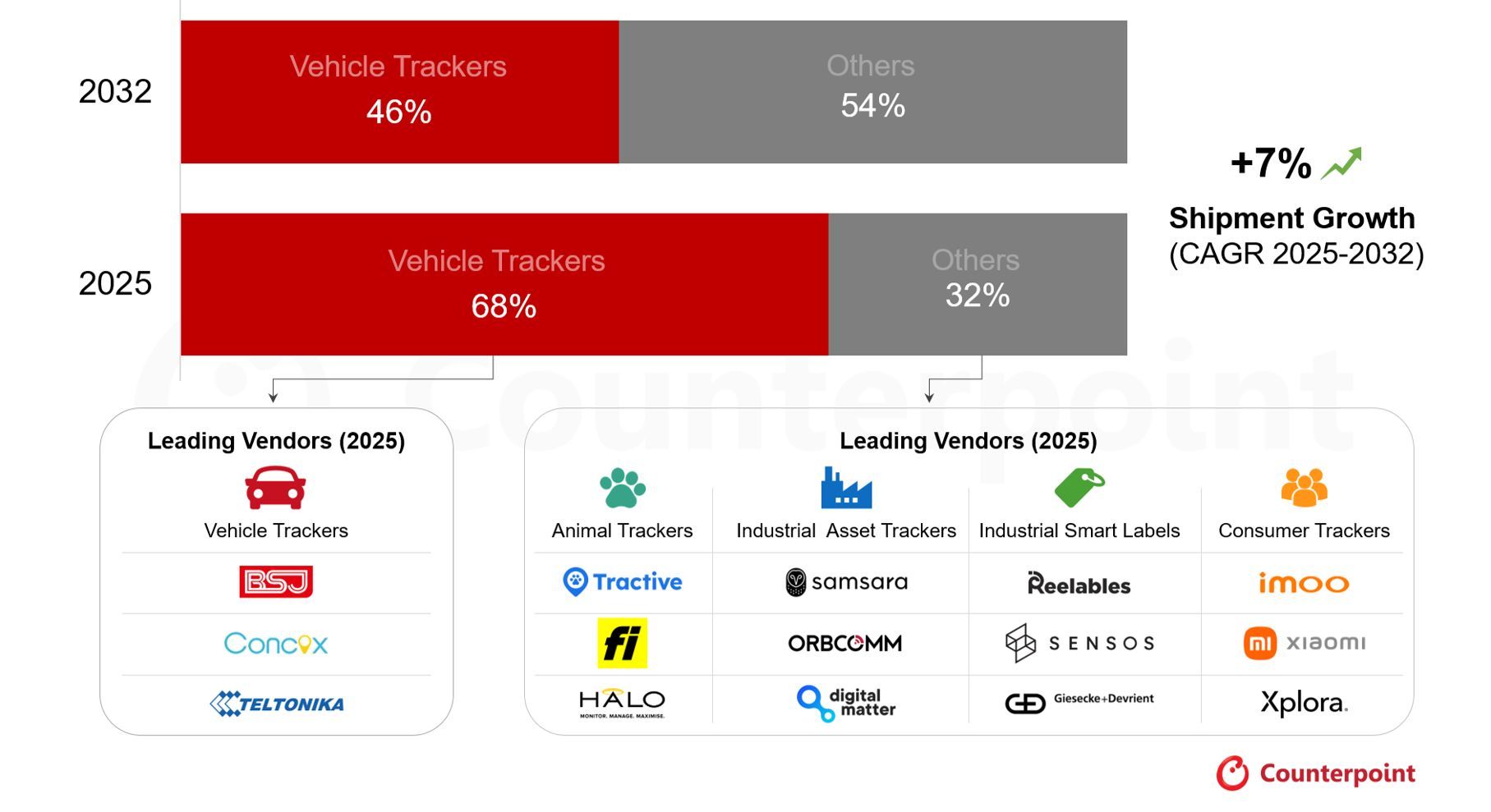
These observations reinforce a direction that many fleet technology providers and enterprise customers are already experiencing across global markets.
Rather than viewing asset tracking as a standalone hardware purchase, organizations increasingly evaluate complete digital ecosystems capable of supporting long-term operational intelligence.
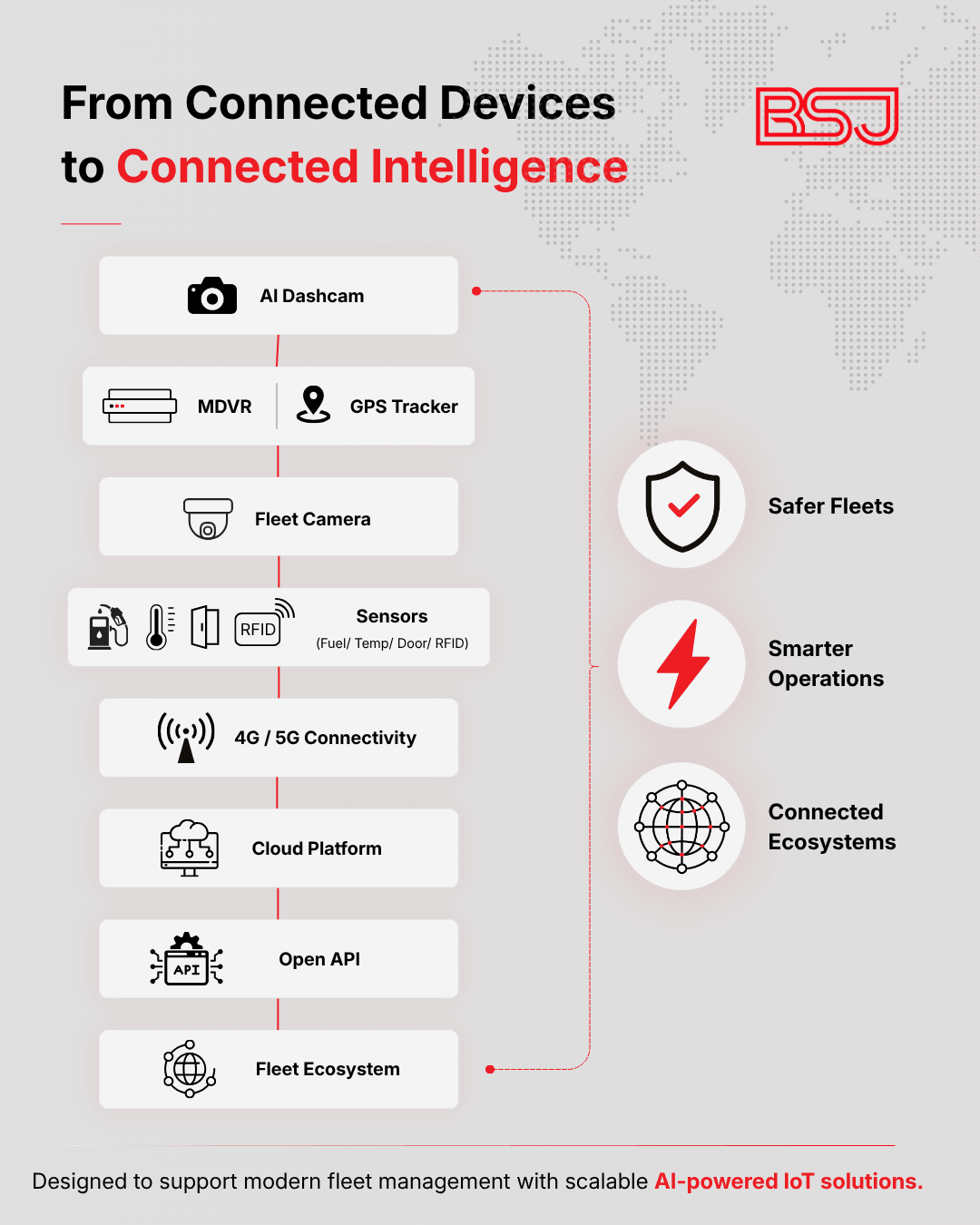
One of the most significant industry shifts is the transition from individual connected devices to integrated intelligent ecosystems.
Instead of deploying isolated hardware components, organizations increasingly seek solutions that bring together:
When these technologies operate together, data becomes significantly more valuable than location information alone.
The result is improved visibility, stronger operational control, and faster, data-driven decision-making.
Artificial intelligence is becoming a core capability within modern fleet management.
Beyond recording incidents, AI-enabled systems can assist organizations by supporting:
As AI continues to mature, fleet management is evolving from reactive monitoring toward proactive decision support.
The objective is no longer simply collecting more data—it is helping organizations make better operational decisions.
At BSJ, we believe the future of fleet technology will not be defined by how many devices are connected.
It will be defined by how intelligently connected data can improve safety, efficiency, and operational performance.
Across conversations with fleet operators, system integrators, and technology partners worldwide, we continue to observe three consistent priorities:
1. AI-Driven Decision Making
Customers increasingly expect intelligent insights rather than raw data.
2. Open Ecosystems
Businesses prefer flexible platforms capable of integrating with existing fleet management software and enterprise systems.
3. Scalable Connected Solutions
The market is moving toward complete ecosystems that combine AI video telematics, cloud connectivity, sensors, and software into a unified solution.
These trends align closely with the industry's broader digital transformation.
The future of asset tracking extends far beyond simply locating vehicles or equipment.
Connected assets are becoming intelligent sources of operational data, enabling businesses to improve safety, optimize efficiency, reduce costs, and make more informed decisions.
As the industry continues to evolve, collaboration between hardware manufacturers, software providers, AI technologies, and connectivity platforms will become increasingly important.
Organizations that embrace connected intelligence—not just connected devices—will be better positioned to succeed in the next generation of fleet management.
✔ Asset tracking is evolving from location monitoring to operational intelligence.
✔ AI, cloud platforms, and open integration are becoming essential components of modern fleet ecosystems.
✔ Businesses increasingly value complete connected solutions over standalone hardware.
✔ The future belongs to intelligent, scalable, and integrated fleet technologies.
BSJ is an AI Video Telematics Manufacturer & Connected Fleet IoT Solutions Provider, helping fleet operators and solution partners build safer, smarter, and more connected transportation ecosystems through AI dash cameras, MDVR systems, GPS tracking, IoT devices, and open integration technologies.

BSJ Technology (SZSE: 301608) is a global provider of AI Video Telematics and Connected Fleet IoT solutions. Since 2009, BSJ has developed AI Dashcams, MDVR systems, and GPS tracking solutions for commercial fleets worldwide.