Choose your operating system to start
From September 15–20, BSJ Technology joined IAA TRANSPORTATION 2026 in Hannover, Germany, bringing our AI Video Telematics and Connected Fleet Solutions to one of the leading international events for commercial vehicles, transportation, and mobility.
At Hall 12, Stand B74, we had the opportunity to connect with fleet operators, system integrators, distributors, technology providers, and industry professionals from different markets. More importantly, the exhibition gave us a chance to have direct conversations about the challenges fleets are facing today and where connected vehicle technology is heading next.
For BSJ, IAA was about more than showcasing technology. It was about listening, exchanging ideas, and understanding how fleet operators and technology partners are approaching real-world requirements.
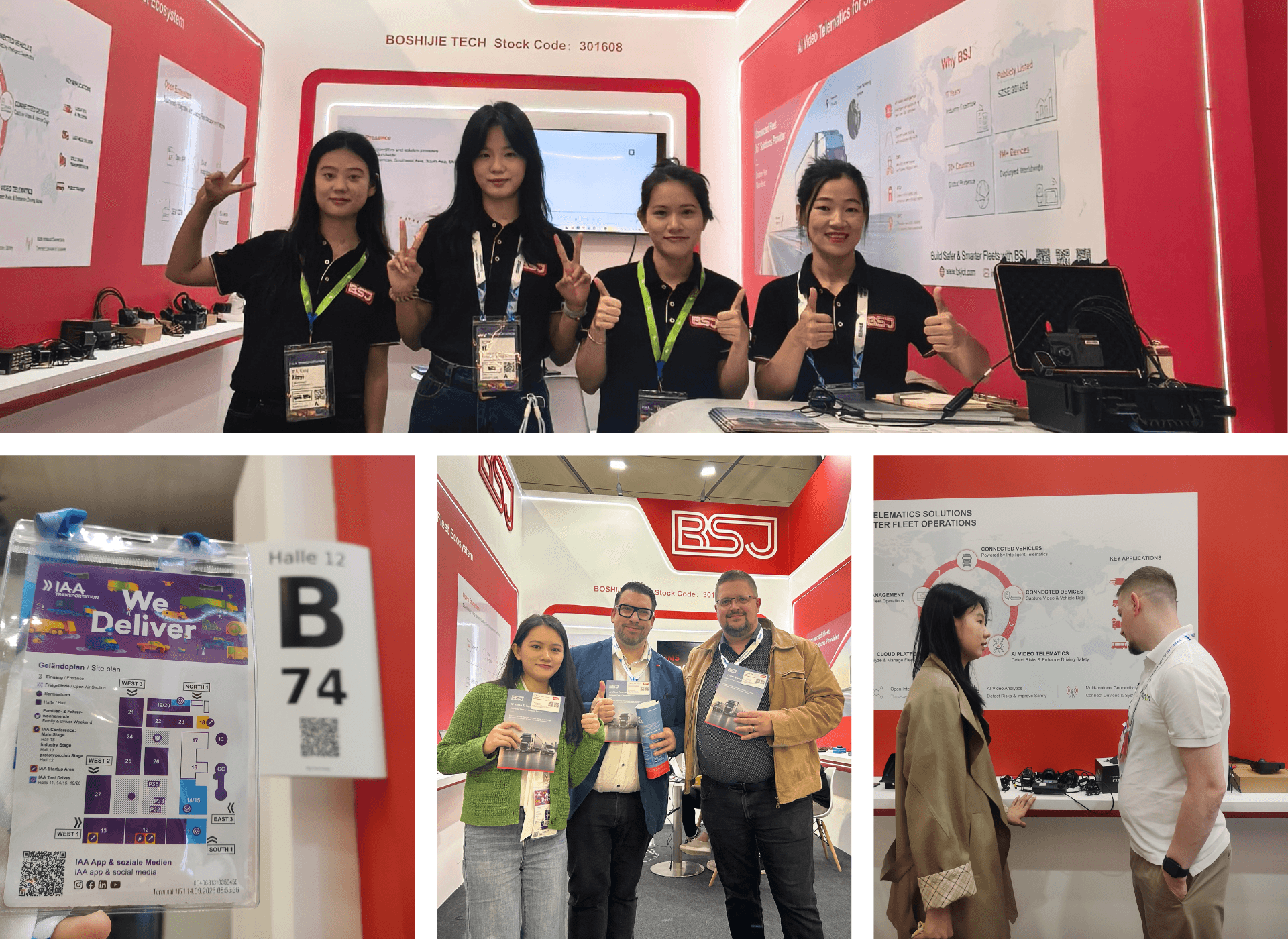
Across the conversations at our booth, several topics came up repeatedly: fleet visibility, driver safety, vehicle security, video monitoring, asset tracking, sensor integration, and connectivity with existing fleet management platforms.
As fleets become more connected, GPS tracking remains an important foundation, but operators are increasingly looking for a broader view of what is happening across their vehicles and operations.
Location data can show where a vehicle is. Video can provide visual context around an event. Sensors can add information about vehicle or asset conditions. When these different sources of data are connected through a fleet platform, they can provide a more complete picture of fleet operations.
This shift from individual data points toward connected fleet intelligence was one of the themes reflected throughout our conversations at IAA.
At IAA TRANSPORTATION 2026, BSJ showcased a range of AI Video Telematics and connected vehicle solutions designed around practical fleet requirements.
Among the solutions that attracted particular interest were the EH27 Low-Power AI Vehicle Security Camera and DR03 3-Channel AI Dashcam.
The EH27 focuses on vehicle security and remote monitoring, combining configurable fuel-event detection, AI-based human detection, visual evidence capture, 4G connectivity, and low-power AOV monitoring. It is designed to help fleet operators maintain visibility around parked vehicles and investigate abnormal events remotely.
The DR03 takes a broader approach to AI Video Telematics, combining 3-channel video recording with ADAS and DMS, 4G connectivity, GNSS positioning, and platform-ready capabilities such as remote configuration and FOTA.
The interest around these solutions also reflected a wider industry trend: fleets are looking for technologies that address specific operational challenges while still fitting into a connected fleet ecosystem.
One of the key takeaways from IAA was that fleet technology is becoming increasingly interconnected.
Video, GPS, vehicle data, and sensors each provide a different layer of information. The challenge is no longer simply collecting more data, but making that data useful within the operational workflow.
For example, video can help provide evidence when an incident occurs, while GPS tracking adds location and route context. Sensors can provide additional information about fuel, temperature, doors, or other vehicle and asset conditions.
When these technologies work together, fleet operators can move from simply monitoring vehicles to gaining a more complete understanding of what is happening across their operations.
This is where AI Video Telematics and connected fleet IoT can play a practical role — connecting vehicles, devices, data, and fleet management systems into a more integrated workflow.
Another recurring topic at IAA was integration.
Many fleet operators and solution providers already have established telematics or fleet management platforms. For them, adopting new hardware is not simply about adding another device. The technology also needs to work within an existing ecosystem.
That makes connectivity, open protocols, API integration, remote configuration, FOTA, and third-party platform compatibility increasingly important.
BSJ approaches connected fleet technology with this ecosystem in mind, supporting integration between connected vehicle devices and fleet management platforms. BSJ devices can also work with third-party telematics platforms, helping solution providers build on their existing technology environment rather than starting from scratch.
Every fleet has different operating conditions, vehicle types, business models, and priorities.
A logistics fleet may focus on driver safety and video evidence. A fleet managing high-value vehicles may place greater emphasis on vehicle security and asset visibility. System integrators and telematics providers may be more focused on device compatibility, APIs, and scalable deployment.
These differences were reflected in the conversations we had throughout IAA.
Instead of looking for a single solution for every fleet, the discussions focused more on how connected technologies can be combined and adapted to specific operational requirements.
For BSJ, these conversations are an important part of understanding where the industry is heading and how our technology can continue to evolve with the needs of fleet operators and solution providers.
IAA TRANSPORTATION 2026 brought together companies and professionals across the commercial vehicle and transportation ecosystem, creating a valuable environment for technology exchange and industry dialogue.
For BSJ, the exhibition was an opportunity to connect with the market, understand real-world fleet challenges, introduce our approach to AI Video Telematics and connected fleet technology, and explore potential cooperation with companies across different markets.
The conversations at IAA will continue to inform how we develop practical, scalable solutions for connected vehicles, fleet visibility, safety, security, and data integration.
Thank you to everyone who visited BSJ Technology at Hall 12, Stand B74, shared your ideas, and took the time to talk with our team.
The exhibition may be over, but the conversations continue.
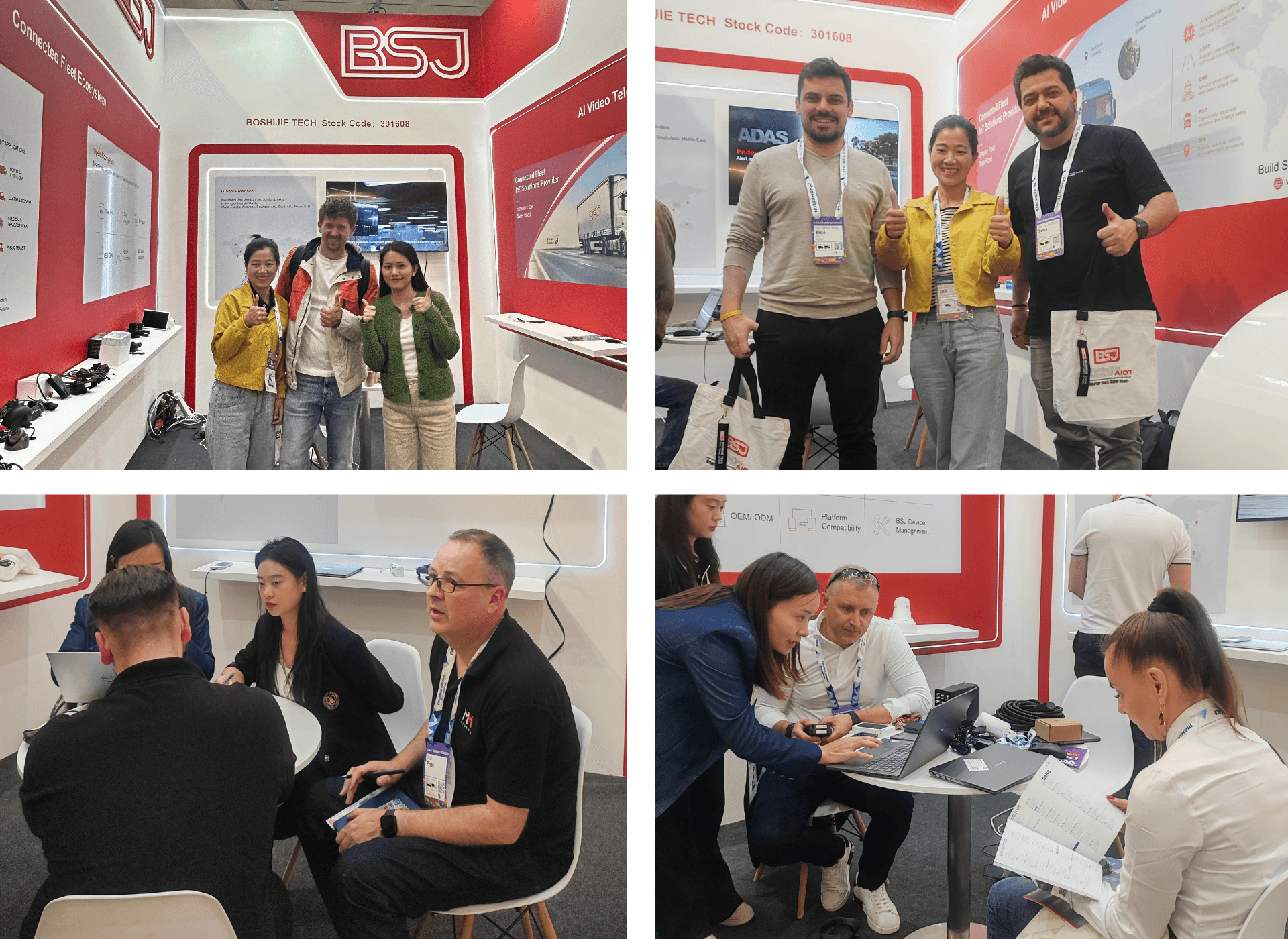
BSJ Technology showcased its AI Video Telematics and Connected Fleet IoT solutions, covering vehicle video, GPS tracking, fleet monitoring, and connected devices for commercial fleet applications. The exhibition also provided an opportunity to discuss integration, customization, and different approaches to connected fleet management.
BSJ Technology offers a broad range of connected vehicle and fleet IoT products, including AI Dashcams, MDVR Systems, GPS Trackers, Fleet Cameras, and Fleet Sensors. These solutions can be used across different fleet and vehicle applications, depending on operational requirements.
Yes. BSJ Technology supports OEM and ODM projects, combining in-house R&D and manufacturing capabilities with flexible product and solution development. This allows partners to work with BSJ on customized hardware, branding, and application requirements.
Yes. BSJ devices support open protocols and integration with third-party telematics and fleet management platforms. BSJ currently works with platforms including Wialon, RedGPS, Uffizio, Pilot, and others, allowing its hardware to be incorporated into existing fleet management ecosystems.
In addition to connected vehicle hardware, BSJ provides a broader fleet technology ecosystem, including the BSJ Monitoring System, Configurator, and FOTA Web Platform. These tools support fleet visibility, device configuration, remote management, and firmware updates throughout the device lifecycle.
The conversations from IAA don't have to end with the show.
Whether you are looking for AI Video Telematics, GPS tracking, connected vehicle devices, fleet IoT, or a customized integration solution, our team is available to discuss your requirements.
Tell us about your fleet, your current platform, or the challenge you are looking to solve — and let's explore the possibilities together.

BSJ Technology (SZSE: 301608) is a global provider of AI Video Telematics and Connected Fleet IoT solutions. Since 2009, BSJ has developed AI Dashcams, MDVR systems, and GPS tracking solutions for commercial fleets worldwide.