Choose your operating system to start
Mining fleet deployment is not simply a matter of installing GPS trackers on haul trucks. Open-pit mines and remote extraction sites involve changing haul roads, heavy equipment interactions, limited visibility, long operating shifts, and communication gaps. A successful deployment must connect vehicle movements, equipment condition, and safety-related events to the decisions made by dispatchers and site supervisors.
We approach mining telematics as a hardware-led deployment process. At BSJ Technology, our focus is vehicle tracking, AI video telematics, and connected fleet hardware that can be integrated into existing operational systems. The objective is to collect reliable field data and make it useful within the mine's established workflows.
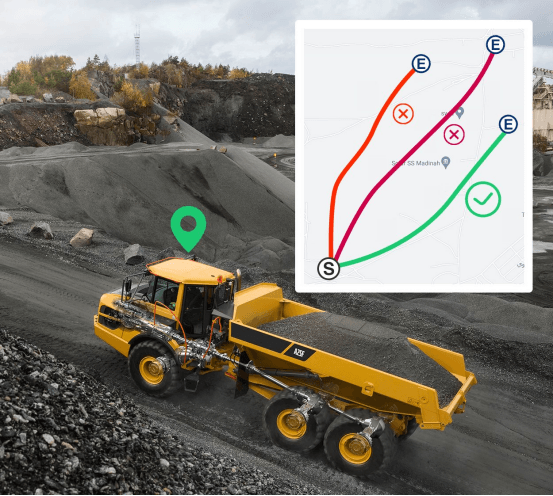
Start by documenting how vehicles move through the site. Haul trucks, loaders, excavators, maintenance vehicles, and fuel-service vehicles have different operating patterns and monitoring requirements. Loading areas, dumping points, workshops, access roads, and restricted zones should be identified before the tracking configuration is designed.
A fleet management system in mining should reflect these actual routes and work areas rather than relying on a generic road map. Dispatch teams can then use vehicle positions and configured geofences to review unexpected stops, route deviations, and congestion around loading or dumping points.
The site assessment should also identify the decisions the system must support. Dispatchers may need to coordinate truck availability, maintenance teams may require vehicle-status information, and safety supervisors may need footage of specific driving events. Defining these requirements early prevents unnecessary equipment installations.
Mining vehicles operate under demanding conditions that can affect electronic equipment. Dust, vibration, temperature variation, moisture, and electrical fluctuations should be considered when selecting tracking devices, cameras, wiring, and mounting accessories.
GPS trackers establish vehicle location and movement history. AI dashcams can add road-facing video and supported driver-monitoring functions, while mobile digital video recorder (MDVR) systems support multi-camera installations where additional views are required. Vehicle interfaces and compatible sensors can provide diagnostic or operating data when the selected hardware supports them.
For mining safety management, camera placement deserves particular attention. Large vehicles can have substantial blind areas around their sides and rear, especially during turning, reversing, and close-range maneuvering. The installation plan should identify which areas require observation and whether additional cameras or blind-spot detection functions are appropriate.
Equipment selection should follow a documented installation specification. Confirm power requirements, supported interfaces, environmental suitability, storage capacity, and camera compatibility before fitting devices across the fleet.
Once the hardware is installed, configure the platform around the mine's operating workflow. Dispatchers need to distinguish vehicles that are moving, waiting, loading, unloading, or undergoing maintenance, where the available data supports those classifications.
GPS positions and historical routes provide the foundation for reviewing vehicle movements. Additional vehicle signals can improve operational context, but the available information depends on the device, vehicle interface, and integration configuration. The system should not label a vehicle as available merely because its tracker reports a location.
A fleet management system in mining becomes more useful when dispatch rules reflect site procedures. For example, an unexpected stop may require a radio check, while congestion near a loading point may prompt dispatch to coordinate vehicle movements. Software can surface relevant information, but authorized personnel should retain control over operational decisions.
Location data alone cannot explain every hazardous event. A truck may approach another vehicle too closely, a driver may show signs of fatigue, or a reversing maneuver may create a risk that requires investigation. Video and supported AI functions can provide additional evidence for reviewing these situations.
ADAS can warn of selected forward-road hazards, while DMS can identify supported indicators of fatigue or distraction. Suitable camera arrangements may also help monitor blind spots. Exact detection capabilities depend on the installed hardware and configuration, so they should be verified before deployment.
Effective mining safety management requires more than generating alerts. Define who receives each notification, which events require immediate intervention, how footage is retrieved, and how follow-up actions are documented. Alerts should support site safety procedures rather than replace direct observation, radio communication, or established emergency protocols.
Remote mine sites may have uneven network coverage. Before rollout, test data transmission in representative operating areas, including haul routes and work zones where connectivity may be limited. Confirm which information remains available locally and what happens to uploads when the connection is interrupted.
Integrators should also verify communication protocols, vehicle identifiers, event timestamps, and video-retrieval methods. Connecting telematics hardware to an existing platform can reduce duplication, but compatibility must be established for the specific devices and software involved.
At BSJ Technology, we support connected fleet deployments using GPS trackers, AI dashcams, MDVR systems, and integration options for third-party platforms. Our hardware-focused approach also accommodates OEM/ODM projects that require customized device configurations or interfaces. Device management and remote firmware updates can support fleet-wide maintenance where the selected products provide those functions.
Choose a representative group of vehicles for the initial deployment. Include the vehicle types, installation conditions, and operating routes that best reflect the wider fleet. Test location reporting, camera coverage, event notifications, data retrieval, and integration with dispatch workflows during actual operations.
Use the pilot findings to correct mounting problems, refine alert settings, and resolve missing or inconsistent data. Establish standard installation records and configuration procedures before expanding to additional vehicles. These controls make replacement installations and future fleet expansion easier to manage.
A fleet management system in mining should ultimately fit the mine's traffic patterns, equipment requirements, communications environment, and safety procedures. A structured rollout—from site assessment and hardware selection to workflow testing and fleet-wide deployment—provides a practical way to build that fit.
With suitable vehicle telematics hardware and clearly assigned operational responsibilities, we at BSJ Technology help mining operators and B2B integration partners establish a connected foundation for dispatch visibility and safety monitoring.

BSJ Technology (SZSE: 301608) is a global provider of AI Video Telematics and Connected Fleet IoT solutions. Since 2009, BSJ has developed AI Dashcams, MDVR systems, and GPS tracking solutions for commercial fleets worldwide.