We're here to help. Reach out for any inquiries about our products, services, or partnerships.
Choose your operating system to start
Managing a van fleet involves more than assigning vehicles and checking their locations. Delivery operations also require route coordination, driver communication, schedule adjustments, and journey reviews. When these activities are managed separately, dispatchers may struggle to maintain an accurate overview of daily operations.
At BSJ Technology, we focus on connected vehicle technologies that help businesses improve fleet visibility and organize transportation activities. Integrating GPS tracking with delivery management allows operators to connect vehicle movements with dispatch decisions, making daily delivery workflows easier to monitor and coordinate.
Why Should Van Tracking Be Connected With Delivery Management?
Delivery management involves several activities, including vehicle allocation, route planning, driver coordination, and delivery progress monitoring. A GPS-based van fleet management approach adds vehicle location information to these processes.
For example, a dispatcher may assign several delivery stops to one van. However, the original schedule does not show whether the vehicle has reached each destination or encountered an unexpected delay. A connected tracking system gives managers additional information to review vehicle movements and coordinate with drivers.
This is particularly relevant for companies operating vans across multiple delivery areas. Instead of relying entirely on phone updates, dispatchers can refer to tracking information when reviewing vehicle positions and adjusting daily assignments.
The purpose of van fleet management is not simply to collect location records. It is to make vehicle information useful for practical decisions, from dispatch coordination to journey reviews.
What Information Should a Van Tracking System Provide?
Vehicle location is the foundation of fleet monitoring, but delivery teams often need more information to understand daily vehicle activity. The appropriate configuration depends on fleet size, operating conditions, and the management platform being used.
A van tracking system can support several important monitoring activities:
Each function addresses a different management requirement. GPS positioning supports dispatch decisions, while route history helps managers review completed journeys. Geofence notifications can also provide useful information when vehicles reach designated delivery areas.
Before selecting equipment, businesses should confirm which functions are supported by the hardware and software. This helps prevent a mismatch between operational expectations and actual system capabilities.
How Can GPS Tracking Improve Delivery Coordination?
Once vehicle location data is available, dispatchers can use it to review delivery progress and respond to unexpected situations. This is particularly useful when several vans operate across different customer locations.
For example, if a vehicle remains stationary longer than expected, the operations team can check its location and contact the driver. Geofence notifications can also help identify when a van enters or leaves a designated delivery area.
A practical workflow includes:
A well-configured van tracking system connects these activities with vehicle monitoring. However, location data should always be considered alongside traffic conditions, customer availability, and loading requirements.
How Do AI Dashcams Support Van Fleet Operations?
GPS tracking explains where a vehicle travels, but it does not provide a complete picture of driving conditions. Video telematics adds another information layer by combining vehicle positioning with camera footage and driver safety monitoring.
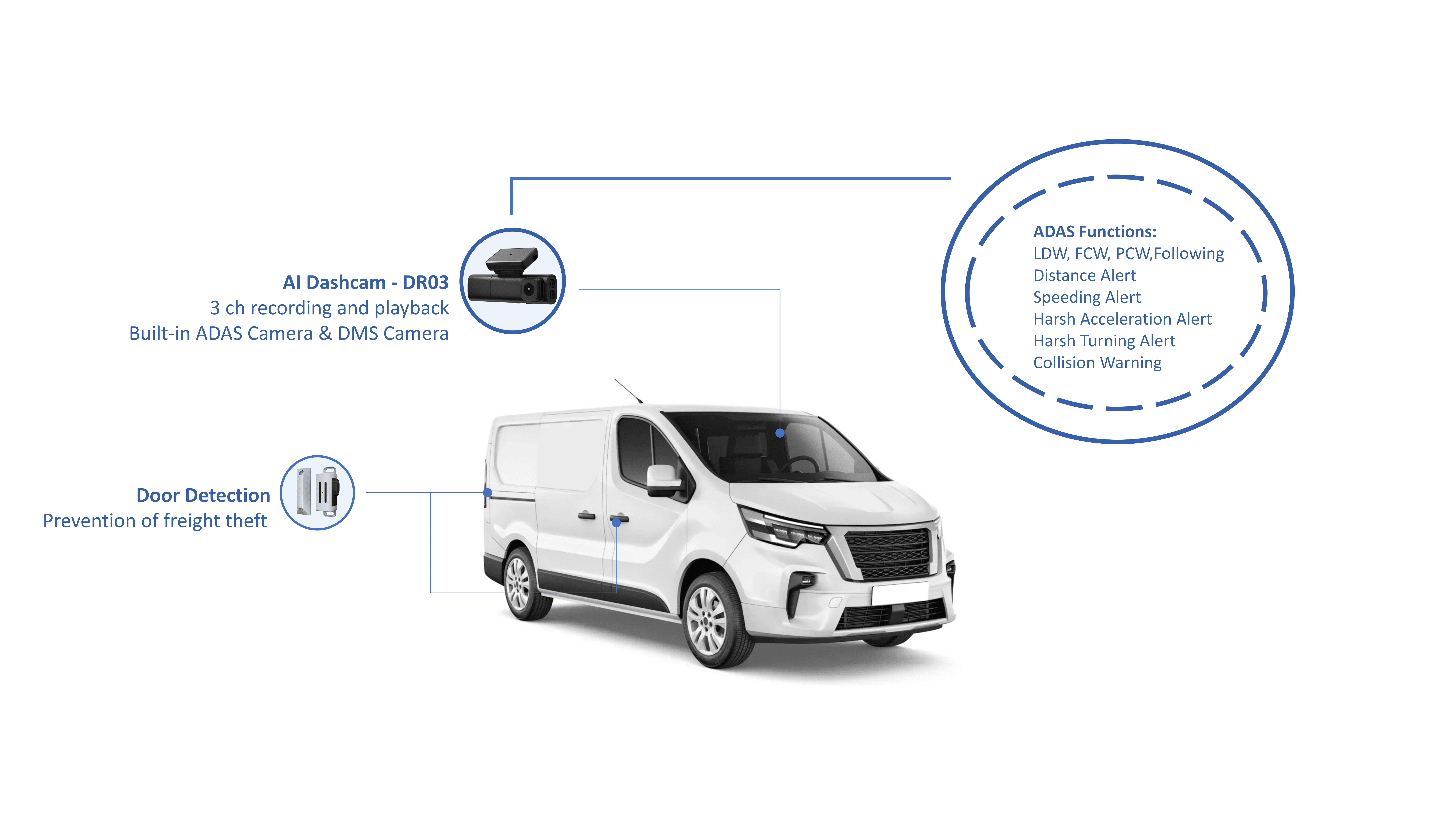
Our small van solution integrates AI dashcams, real-time GPS tracking, and cloud-based fleet management. Its documented capabilities include ADAS and DMS functions for identifying driver fatigue, phone use, seatbelt violations, and other driving risks. Video recordings also support incident reviews and cargo-related investigations.
These functions complement everyday delivery management in different ways. GPS information supports dispatch coordination, while video footage provides additional context when investigating road incidents or cargo disputes.
When evaluating a van fleet management solution, businesses should consider camera coverage, recording requirements, data storage, and access permissions. The selected configuration should reflect the vehicle structure and the actual monitoring requirements of the delivery operation.
What Should Businesses Consider Before Deployment?
A connected tracking system needs to fit existing business processes. Before selecting equipment, companies should review their fleet size, dispatch procedures, software environment, and future expansion plans.
Several factors deserve attention:
At BSJ Technology, we develop connected hardware solutions for commercial fleet applications, covering AI dashcams, GPS tracking devices, and related telematics equipment. We also support third-party platform integration and provide OEM/ODM customization to accommodate different project specifications and deployment needs.
Connecting vehicle tracking with delivery management is ultimately about making information more useful. With an appropriate van fleet management setup, delivery operators can improve vehicle visibility, coordinate dispatch activities, and build more organized monitoring procedures. Explore our solutions through BSJ Technology.

BSJ Technology (SZSE: 301608) is a global provider of AI Video Telematics and Connected Fleet IoT solutions. Since 2009, BSJ has developed AI Dashcams, MDVR systems, and GPS tracking solutions for commercial fleets worldwide.