We're here to help. Reach out for any inquiries about our products, services, or partnerships.
Choose your operating system to start
School transportation involves several coordinated activities, from vehicle dispatch and route planning to driver supervision and student pickup arrangements. When multiple buses operate across different routes, transportation managers need reliable information to understand vehicle movements and organize daily services. At BSJ Technology, we provide connected fleet technologies that help school transportation operators monitor vehicles, coordinate routes, and improve operational visibility through GPS tracking and fleet management solutions.
Why Is GPS Tracking Important in School Transportation?
School bus operations follow repeated routes, but daily conditions can change because of traffic, road closures, weather, or schedule adjustments. Without current vehicle information, dispatch teams may depend on calls from drivers to understand where buses are and whether services are progressing as planned.
A school bus fleet management approach connects vehicle location data with dispatch activities. GPS devices provide real-time bus positions and route information, allowing school administrators and fleet operators to review movements during service. This visibility can also support arrival notifications through an app or SMS when the system is configured to provide them.
For operators managing several routes, the value is not limited to seeing a bus on a map. Location information can help identify delays, confirm whether a vehicle has reached a designated area, and provide a shared reference for communication between dispatchers and school staff.
How Should GPS Data Be Connected With Daily Route Operations?
GPS tracking becomes more useful when it is linked to route assignments and operating procedures. Before buses leave the depot, each vehicle should be associated with its assigned route and the relevant service schedule. This gives dispatchers a reference for interpreting location updates during the journey.
A school bus fleet management system can support this workflow by bringing vehicle positions and route information into one monitoring process. Teams can use the information to review route progress, identify unexpected deviations, and coordinate responses when a bus is delayed.
A practical process includes:
These steps help make route oversight more consistent across different services. Dispatch teams can interpret location updates against planned stops and daily transportation requirements.
How Can Notifications Improve Communication?
Vehicle tracking can also support communication with parents and school administrators. BSJ's school bus solution describes app or SMS notifications about arrival times, alongside real-time location and route information. These updates can help families prepare for pickup and reduce uncertainty about a bus's progress.
Notification settings should reflect the actual route and the information available from the tracking system. Operators need to decide which events should trigger a message, who receives it, and how updates are handled when a route changes or a replacement vehicle is assigned.
A school bus fleet management system should therefore be considered part of a wider communication workflow, not only as a tracking interface. Dispatchers, school administrators, and families may need different levels of information. Defining those roles in advance helps keep communication relevant and manageable.
How Do Driver Monitoring and Vehicle Health Data Support Safety?
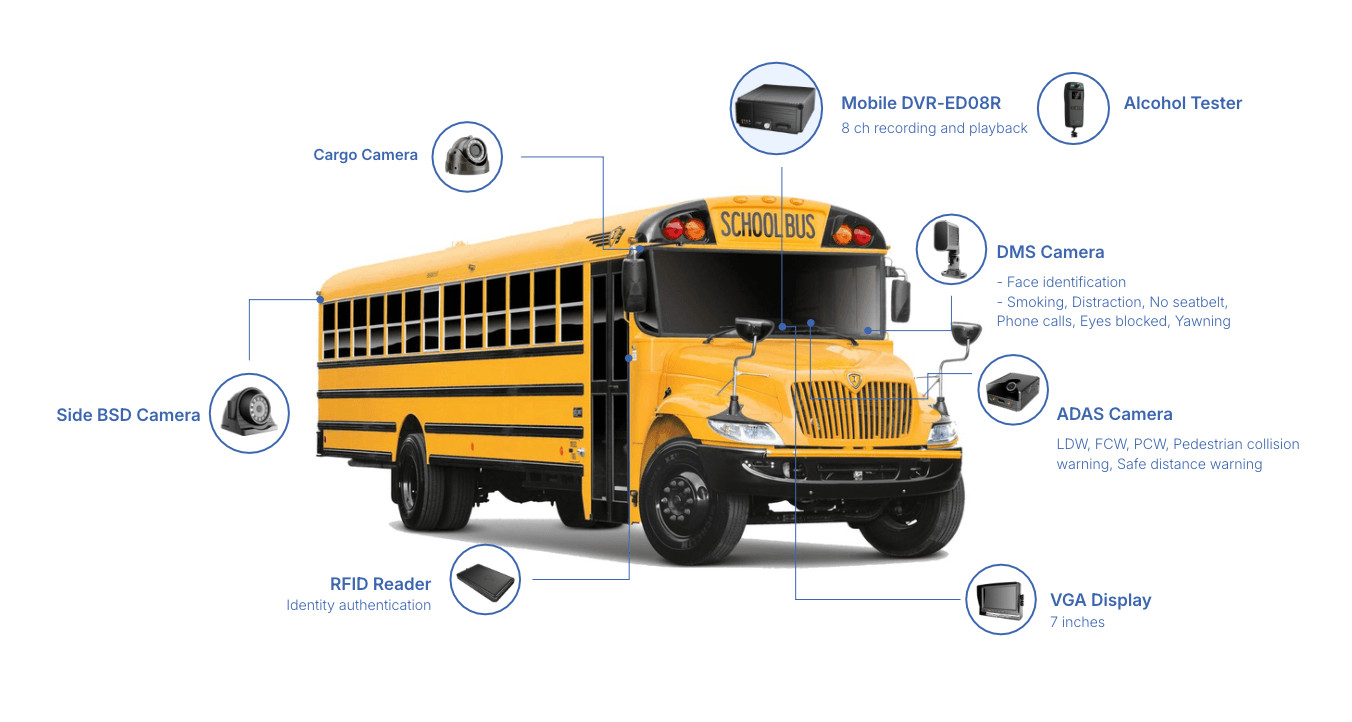
Location data explains where a bus is, while driver and vehicle information can help managers understand other aspects of an operation. BSJ's official school bus solution includes driver behavior monitoring for speeding, harsh braking, and fatigue. It also describes interior cameras as an additional source of oversight.
The same solution includes vehicle health monitoring for information such as engine status, brake condition, and fuel levels. Reviewing these indicators can help maintenance teams identify issues that require inspection and plan preventive maintenance around vehicle availability.
These functions complement GPS tracking rather than replacing routine safety procedures. Operators should define how alerts are reviewed, who follows up with drivers, and how maintenance concerns are recorded. Consistent review procedures make the collected information more useful for operational decisions.
What Should Operators Check Before Deployment?
Before introducing a new tracking setup, operators should review route structures, fleet size, existing software, and the responsibilities of each team. They should also confirm which features are included in the selected devices and platform, since available functions depend on the final configuration.
Reporting is another important consideration. BSJ's school bus solution describes automated reports covering driver working hours, vehicle inspections, and student boarding records. Operators should determine how these records fit their internal processes and applicable local requirements.
Our school transportation solution combines GPS tracking, driver behavior monitoring, vehicle health information, and operational reports. At BSJ Technology, we help transportation teams coordinate daily routes and review vehicle activity. These capabilities also support more timely updates for parents. Explore our BSJ Technology solutions for school bus fleet management.

BSJ Technology (SZSE: 301608) is a global provider of AI Video Telematics and Connected Fleet IoT solutions. Since 2009, BSJ has developed AI Dashcams, MDVR systems, and GPS tracking solutions for commercial fleets worldwide.