Choose your operating system to start
The best telematics company for a fleet depends on what the business needs to monitor, manage, and improve. Some providers focus on integrated fleet management platforms, combining GPS tracking, driver safety, vehicle data, and operational workflows. Others specialize in video telematics, vehicle connectivity, telematics hardware manufacturing, or solutions designed for integration with existing fleet software.
For fleet operators seeking an integrated software and hardware ecosystem, companies such as Geotab, Samsara, Verizon Connect, and Motive are worth evaluating according to their product scope and regional availability.
For telematics service providers (TSPs), system integrators, distributors, and businesses developing their own fleet solutions, a dedicated hardware manufacturer may be a better fit. BSJ Technology, for example, focuses on AI dashcams, mobile digital video recorders (MDVRs), GPS trackers, and connected fleet IoT hardware, with OEM/ODM cooperation and third-party platform connectivity.
There is no single provider that is best for every fleet. The right choice depends on whether you need a ready-to-use fleet management system, specialized video safety capabilities, configurable hardware, manufacturing cooperation, or a combination of these requirements.
Telematics companies use connected technologies to collect, transmit, process, and apply information from vehicles and mobile assets. Depending on their business models, they may provide GPS tracking devices, vehicle data connectivity, AI-powered cameras, fleet management software, driver safety tools, analytics, or complete fleet solutions.
The term telematics company therefore covers several types of businesses. Understanding these differences is an important first step when comparing providers.
| Provider Type | Core Focus | Best Suited For |
|---|---|---|
| Integrated fleet management platforms | GPS tracking, vehicle data, driver workflows, reporting, and operational management | Fleets looking for a centralized fleet management system |
| Video telematics and fleet safety providers | Dashcams, video evidence, driver monitoring, and safety analytics | Fleets prioritizing driver safety and incident investigation |
| Telematics hardware manufacturers | GPS trackers, AI dashcams, MDVRs, sensors, and connected vehicle devices | TSPs, system integrators, distributors, and solution providers |
| OEM/ODM manufacturing partners | Customized hardware, product development, manufacturing, and branding cooperation | Businesses building or expanding their own telematics product portfolios |
| Specialized software and integration providers | Data integration, fleet applications, APIs, and industry-specific workflows | Businesses connecting vehicles, devices, and operational systems |
These categories are not mutually exclusive. Some companies provide hardware and software together, while others specialize in one layer of the telematics ecosystem.
For buyers, the important question is not simply which company has the most features. It is which provider's capabilities match the intended deployment, existing technology environment, and long-term business model.
The companies below represent different approaches to fleet telematics. This is a practical overview of selected providers, not a definitive ranking based on market share, customer satisfaction, or independent performance testing.
Product availability, integrations, regional coverage, and service terms can vary. Buyers should verify the latest details directly with each provider.
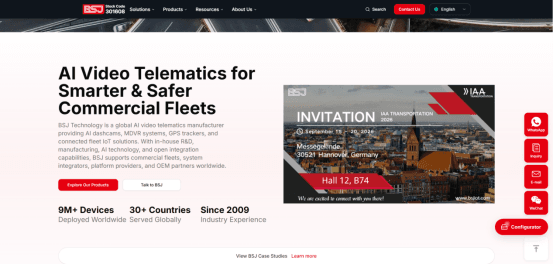
Best suited for: Telematics service providers, system integrators, distributors, and fleet technology businesses seeking connected vehicle hardware and manufacturing cooperation.
BSJ Technology is an AI video telematics manufacturer and connected fleet IoT solutions provider established in 2009. Its portfolio includes AI dashcams, MDVR systems, GPS trackers, fleet cameras, and connected vehicle IoT devices for commercial fleet applications.
BSJ's business model combines vehicle hardware development and manufacturing with support for third-party platform connectivity. Its product range addresses applications in which fleets or technology providers need to combine video, positioning, connectivity, and vehicle data.
Key areas to evaluate include:
For example, BSJ's EH26 is a two-channel AI dashcam integrating video recording, ADAS and DMS functions, 4G LTE communication, and GNSS positioning. Its ED02R-V2 is a four-channel AI MDVR designed for multi-camera vehicle monitoring, with supported AI safety functions including ADAS, DMS, and BSD.
These examples illustrate why hardware selection should be based on the vehicle application, required camera configuration, connectivity, and safety functions rather than a generic product label.
BSJ may be particularly relevant when a buyer needs to source connected vehicle hardware while retaining an existing fleet platform, developing a branded product line, or working with a manufacturing partner. The exact fit depends on the required specifications, certification, integration, and commercial terms.
What to verify before choosing BSJ: Product-level specifications, supported cellular bands, certifications for the target market, camera and storage configurations, integration requirements, OEM/ODM scope, and deployment support.
Official website: www.bsjiot.com/en
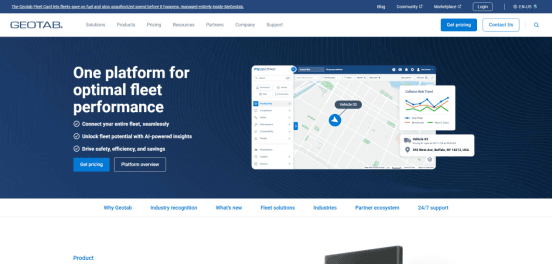
Best suited for: Fleets and organizations seeking vehicle data, fleet analytics, integrations, and a platform that can support varied operational requirements.
Geotab provides fleet telematics technology centered on vehicle data, fleet visibility, analytics, and its MyGeotab platform. Its ecosystem supports the use of telematics data across fleet operations and connected applications.
Geotab is worth evaluating when a fleet needs to bring vehicle information together, develop data-driven workflows, or connect telematics capabilities with other business systems.
Important evaluation areas include device compatibility, data availability, platform functionality, integration requirements, and the level of support available in the target market.
What to verify: Compatibility with the fleet's vehicles and devices, required platform features, integration costs, and regional service arrangements.
Official website: www.geotab.com
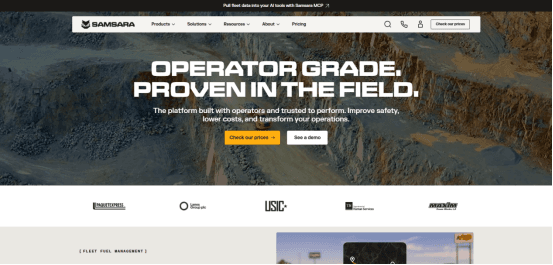
Best suited for: Organizations looking to bring fleet visibility, safety, equipment monitoring, and operational workflows into a connected technology environment.
Samsara offers connected operations technology for fleets and other physical operations. Its portfolio includes vehicle telematics, video-based safety capabilities, and tools designed to help organizations monitor operations and act on connected data.
Its integrated approach can be relevant to businesses that prefer to manage multiple fleet functions through a coordinated platform rather than assemble every component independently.
Buyers should assess whether the platform's available features, supported devices, integrations, deployment model, and commercial structure fit their operational environment.
What to verify: Regional availability, integration requirements, hardware and subscription costs, and whether the platform supports the fleet's specific workflows.
Official website: www.samsara.com

Best suited for: Businesses evaluating vehicle tracking, fleet visibility, safety tools, and operational management capabilities.
Verizon Connect provides fleet management and connected vehicle solutions. Its offering includes GPS tracking, vehicle and driver visibility, reporting, and selected safety and maintenance-related capabilities.
For organizations that need to monitor vehicle activity and improve day-to-day fleet coordination, Verizon Connect is one option to include in a broader vendor assessment.
As with other providers, the most appropriate solution depends on the vehicles being managed, the workflows required, the operating region, and the available service package.
What to verify: Local product availability, supported devices, feature coverage, integration options, and total deployment costs.
Official website: www.verizonconnect.com
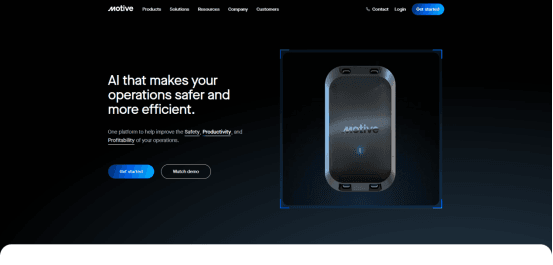
Best suited for: Fleets evaluating integrated vehicle telematics, video-based safety, and tools for managing driver and vehicle operations.
Motive offers fleet technology that combines telematics with capabilities such as vehicle monitoring, video-based safety, and operational workflows.
Its connected approach can be relevant to organizations that want to link vehicle information and video evidence to fleet safety and management processes.
When comparing Motive with other providers, buyers should consider the availability of the required features in their region, compatibility with their vehicles, integration needs, and the overall cost of the proposed deployment.
What to verify: Regional coverage, device and software requirements, relevant compliance features, and support arrangements.
Official website: gomotive.com
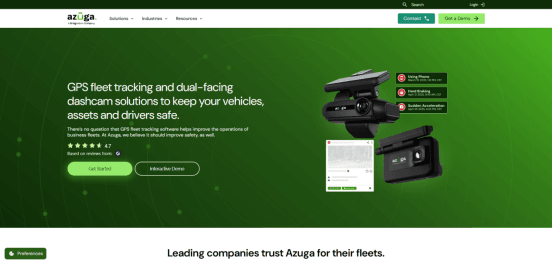
Best suited for: Organizations evaluating GPS fleet tracking and driver-oriented fleet management features.
Azuga is a fleet technology provider associated with GPS tracking and driver-focused fleet management capabilities.
For buyers considering this category, relevant evaluation points include vehicle visibility, driver behavior monitoring, reporting, usability, and the suitability of available services for the intended fleet size and operating region.
The best fit should be determined through a comparison of actual product packages and deployment requirements rather than brand recognition alone.
What to verify: Current product availability, supported hardware, regional service coverage, and the functions included in the selected package.
Official website: www.azuga.com
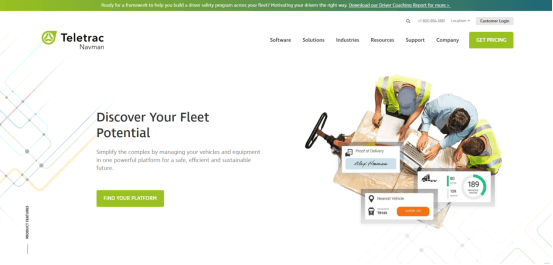
Best suited for: Organizations evaluating fleet and asset visibility, vehicle utilization, and operational management capabilities.
Teletrac Navman provides fleet and asset management technology for businesses that need greater visibility into their vehicles and equipment.
Its solutions are worth considering when vehicle and asset tracking, fleet operations, and related reporting are important parts of the purchasing decision.
Buyers should evaluate how the available solutions fit their industry, operating geography, fleet composition, and existing systems.
What to verify: The capabilities available in the target market, vehicle and asset compatibility, integration options, and service requirements.
Official website: www.teletracnavman.com
The providers above should not be treated as interchangeable. Their areas of emphasis and delivery models differ, and some overlap across multiple categories.
The following table summarizes the main evaluation dimensions. It is a guide to understanding business models, not a feature-by-feature product scorecard.
| Company | General Area of Focus | Key Evaluation Question |
|---|---|---|
| BSJ Technology | AI video telematics hardware, connected vehicle IoT, OEM/ODM manufacturing | Does the hardware and manufacturing model fit our product, integration, and deployment needs? |
| Geotab | Vehicle data, fleet telematics, platform ecosystem | Can the platform provide the data, flexibility, and integrations we require? |
| Samsara | Connected operations and integrated fleet management | Can its connected tools support our fleet and operational workflows? |
| Verizon Connect | Fleet tracking and operational visibility | Does the available package cover our tracking, reporting, and fleet management requirements? |
| Motive | Fleet telematics, video safety, connected operations | Does the combined solution meet our safety and vehicle management needs? |
| Azuga | GPS tracking and driver-focused fleet tools | Are its tracking and driver management features appropriate for our fleet? |
| Teletrac Navman | Fleet and asset management | Does the solution suit our vehicle and asset operations? |
The right comparison depends on the purchasing decision. A fleet operator looking for an integrated management system may prioritize platform workflows, reporting, and support. A telematics service provider building its own offering may instead prioritize device specifications, integration flexibility, manufacturing capability, and supply continuity.
These are different procurement requirements, even though both buyers may search for the same term: top telematics companies.
Before selecting a provider, define what the project needs to achieve. The following questions can help narrow the shortlist.
If your business needs a ready-to-use system for fleet visibility, reporting, and operational workflows, start by evaluating the available platform solutions.
If you already operate a fleet management platform—or provide telematics services to customers—you may need compatible hardware rather than another complete software ecosystem.
In that case, assess device specifications, communication protocols, integration support, and the extent to which the hardware fits your existing architecture.
Video telematics requirements vary significantly by application.
A fleet may need a basic road-facing camera, a dual-channel AI dashcam, or a multi-channel MDVR that supports several cameras around a vehicle. Some applications also require ADAS, DMS, BSD, event-triggered recording, remote video access, or specific storage configurations.
Before comparing products, document:
This approach makes it easier to determine whether a product is suitable for the intended vehicles and operating conditions.
Replacing an existing platform can introduce migration costs, operational disruption, and additional training requirements.
If you plan to retain your current software, confirm whether the proposed hardware supports the required protocols, APIs, data fields, and video functions. Do not assume that general compatibility automatically means every feature will work through every integration.
Ask for a product-specific compatibility confirmation and, where appropriate, a proof of concept before large-scale deployment.

Standard products can suit buyers who need established configurations for a defined application.
OEM/ODM cooperation may be more relevant when a business wants to develop its own product line, apply its branding, adapt hardware to specific requirements, or work with a manufacturing partner over the long term.
When evaluating an OEM/ODM partner, consider:
The term OEM/ODM alone does not define what a supplier can deliver. Buyers should confirm the exact scope, responsibilities, costs, and timelines in writing.
A solution suitable for one vehicle type or country may not be suitable for another.
Confirm that the devices support the required power supply, connectivity bands, installation environment, camera configuration, and local regulatory requirements. For international deployments, also assess language support, after-sales arrangements, replacement procedures, and the ability to manage multiple device configurations.
A pilot deployment can help identify compatibility or operational issues before a wider rollout.
The initial device price is only one part of the overall investment.
Depending on the solution, the total cost may include hardware, installation, data connectivity, software subscriptions, integration, training, maintenance, replacement devices, and ongoing technical support.
Compare providers using the same deployment assumptions and evaluation period. This provides a more meaningful basis for decision-making than comparing hardware prices or monthly subscriptions in isolation.
A specialized hardware manufacturer can be particularly relevant when a business has its own software platform, customer base, or service delivery model.
For example, a telematics service provider may want to add AI video telematics to an existing GPS tracking service without replacing its current platform. A system integrator may need different camera configurations for trucks, buses, or specialized vehicles. A distributor may want a branded device portfolio supported by a manufacturing partner.
In these situations, the buyer's needs extend beyond purchasing a device. They may also require product selection assistance, configuration, integration coordination, documentation, customization, and long-term supply planning.
BSJ Technology is one provider to evaluate for these requirements. Its portfolio spans AI dashcams, MDVR systems, GPS trackers, and connected fleet IoT hardware, with OEM/ODM cooperation and support for selected third-party platform integrations.
The key is to assess BSJ against the specific project requirements—not to assume that every product, integration, or customization is available by default.
A useful first step is to prepare a technical requirements list covering the vehicle type, camera channels, AI functions, connectivity, storage, platform integration, certification, and expected deployment volume. This gives the manufacturer a clear basis for confirming product fit and identifying any customization needs.
Learn more about BSJ Technology's connected fleet hardware and solutions.
Several technology and procurement themes are relevant when evaluating telematics providers over the coming years.
AI-enabled cameras can support driver monitoring, road-facing event detection, and video-based incident investigation. The value depends on the capabilities of the selected device, the quality of event detection, and how alerts and video evidence are used within the fleet's operational processes.
Fleet technology increasingly involves data from multiple devices and systems. Integration requirements should therefore be considered early, including which data is available, how frequently it is transmitted, and whether video and event information can be accessed through the intended platform.
Different fleets have different vehicle types, camera requirements, connectivity conditions, and budgets. Configurable hardware portfolios and clearly defined integration options can help businesses select devices that suit their applications rather than forcing every use case into a single configuration.
For TSPs, distributors, and solution providers, hardware sourcing can affect product availability, customization, quality management, and long-term service delivery.
When selecting a manufacturing partner, businesses should assess engineering resources, production processes, quality controls, certification support, customization arrangements, and continuity of supply. These factors should be verified through supplier documentation and project-level discussions.
These themes do not mean that one provider or delivery model will suit every business. They reinforce the importance of matching technology choices to real operational and commercial requirements.
The answer depends on the type of solution required. Geotab, Samsara, Verizon Connect, and Motive are examples of providers to evaluate for fleet management, vehicle telematics, or connected operations. BSJ Technology is an option to evaluate when the requirement centers on AI video telematics hardware, connected fleet IoT devices, and OEM/ODM manufacturing cooperation. The most suitable provider depends on the project scope, region, integration requirements, and budget.
A telematics platform primarily provides software and services for collecting, viewing, analyzing, and using fleet data. A telematics hardware manufacturer develops or supplies connected vehicle devices such as GPS trackers, AI dashcams, and MDVR systems. Some businesses provide both hardware and software, while others specialize in one area. Buyers should identify which layer they need and verify how the different components will work together.
Evaluate video and AI capabilities, camera configuration, connectivity, storage, vehicle compatibility, certification, manufacturing quality, and integration support. If you are buying for an existing fleet platform, confirm that the required device functions are supported by the intended integration. For larger deployments, a pilot test can help validate performance under real operating conditions.
OEM/ODM telematics hardware refers to manufacturing cooperation for connected vehicle devices, potentially including branding, product customization, design, engineering, or other agreed services. The exact scope differs by supplier and project. Buyers should confirm minimum order quantities, intellectual property arrangements, certification responsibilities, product change procedures, quality requirements, and supply terms before committing.
Yes, some telematics devices can connect to third-party platforms, but compatibility depends on the device, communication protocol, platform support, and required features. Basic GPS data connectivity does not necessarily mean that video streaming, AI events, remote configuration, or firmware updates are all supported. Confirm compatibility for the exact product and use case before deployment.
It can be, depending on the project. A fleet operator that needs a complete management platform may prefer an integrated solution. A fleet operator with an existing platform, or one working through a TSP or system integrator, may benefit from sourcing compatible hardware separately. The choice depends on who will provide the software, integration, installation, and ongoing support.
Use a consistent evaluation framework covering required features, device and vehicle compatibility, platform integration, deployment support, regional availability, certification, total cost of ownership, and supplier capabilities. Separate confirmed specifications from marketing claims, and request documentation or a proof of concept for critical requirements. A provider should be shortlisted because it fits the intended application, not simply because it appears on a generic “top companies” list.
The top telematics companies are not necessarily the same for every buyer. Fleet operators may prioritize integrated management tools, driver safety, and operational visibility. Telematics service providers, system integrators, and distributors may place greater emphasis on hardware compatibility, product flexibility, manufacturing cooperation, and integration with their existing systems.
BSJ Technology focuses on AI video telematics hardware and connected fleet IoT solutions, including AI dashcams, MDVR systems, GPS trackers, and OEM/ODM manufacturing cooperation. For organizations evaluating these capabilities, the next step is to confirm product specifications, platform compatibility, customization scope, and deployment requirements against the intended application.
The best decision is the one supported by a clear set of requirements, verifiable product information, and a realistic assessment of long-term operating needs.
Explore BSJ Technology: AI Video Telematics Hardware and Connected Fleet IoT Solutions

BSJ Technology (SZSE: 301608) is a global provider of AI Video Telematics and Connected Fleet IoT solutions. Since 2009, BSJ has developed AI Dashcams, MDVR systems, and GPS tracking solutions for commercial fleets worldwide.