We're here to help. Reach out for any inquiries about our products, services, or partnerships.
Choose your operating system to start
Transporting temperature-sensitive goods requires more than keeping refrigerated vehicles on schedule. Food, pharmaceutical products, and other sensitive cargo may be affected by temperature changes, delivery delays, or unexpected access to the cargo compartment. For fleet operators, monitoring these conditions throughout a journey is an important part of managing transportation quality.
A practical monitoring workflow connects cargo conditions with vehicle location, driver activity, and trip records. Instead of treating temperature monitoring as a separate task, businesses can use connected telematics to understand what happened during transportation and identify events that may require attention.
Why Should Cold Chain Monitoring Cover the Entire Journey?
Temperature-sensitive cargo needs to be monitored during loading, transportation, stops, and delivery. Manual inspections can provide useful readings at specific moments, but they may not show changes that occur between checks.
A connected cold chain fleet management approach helps operators monitor temperature and humidity while also reviewing vehicle location and journey information. This wider view can help teams identify when a deviation occurred and determine whether it needs further investigation.
For example, if a refrigerated truck records a temperature change during a delivery stop, managers can review the vehicle's location and trip timeline. This information may help them understand whether the event was associated with loading, unloading, a long stop, or another operating condition.
The monitoring process should begin with clear requirements. Different cargo types and customer contracts may have different temperature ranges and reporting expectations, so operators should define these before configuring the system.
How Should Temperature and Humidity Data Be Collected?
Reliable monitoring depends on suitable sensors and a clear data collection process. Temperature readings need to represent the cargo environment as accurately as the vehicle configuration allows. Sensor placement, compartment layout, and airflow should therefore be considered during installation.
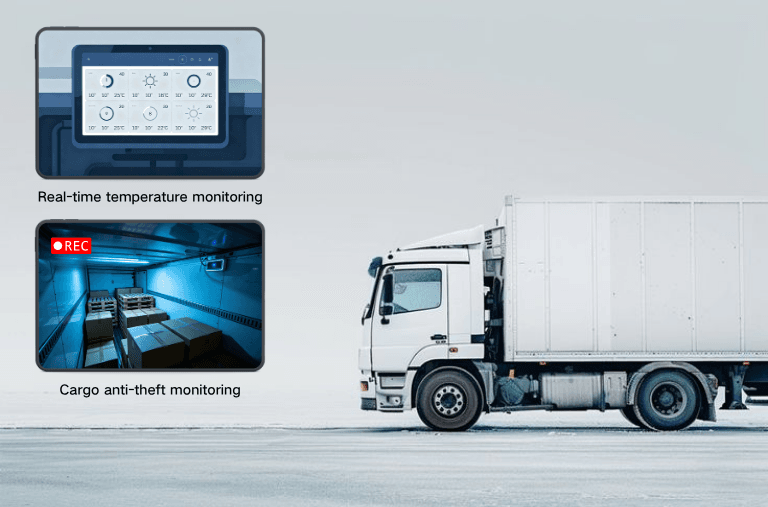
BSJ's cold-chain solution supports temperature and humidity monitoring across up to four independent temperature zones, with published temperature accuracy of ±0.5°C. This can help fleets monitor different areas of a refrigerated vehicle where separate readings are needed.
A practical setup should include several steps:
A cold chain fleet management solution should also support a clear response process. A brief temperature fluctuation may have a different operational meaning from a sustained deviation. Alert thresholds and notification responsibilities should reflect the cargo requirements and the fleet's working procedures.
How Does GPS Tracking Add Context to Cargo Monitoring?
Temperature readings become more useful when they are connected with vehicle location and trip history. A sensor can indicate that a temperature deviation occurred, but GPS data helps managers establish where and when it happened.
Combining these information sources allows operators to review events in relation to routes, stops, and delivery activities. If similar temperature changes occur repeatedly at a particular location, managers can investigate whether loading procedures, waiting times, or other operational factors may be involved.
At BSJ Technology, we offer cold-chain monitoring solutions that integrate temperature and humidity data with vehicle tracking and relevant cargo protection functions. These capabilities help fleet operators assess transportation conditions and identify events that may require further attention.
Video can also provide useful context when an incident involves cargo access or handling. Integrated cargo monitoring cameras and fuel anti-theft sensors can support the review of relevant security events. These functions should be configured according to the vehicle, cargo, and project requirements.
How Can Driver Safety and Trip Records Support the Workflow?
Cargo condition is closely connected to transportation activity. Driver fatigue, distraction, or a road incident may affect delivery schedules and create additional operational risks.
AI-powered Driver Monitoring System functions can help detect driver fatigue, distraction, and seatbelt violations. Advanced Driver Assistance Systems can provide alerts related to potential road risks. When these functions are considered alongside cargo and GPS information, managers can review a journey from several operational perspectives.
Trip records are equally important. Temperature data, video footage, and GPS location can be brought together to support journey traceability. This information may help operations teams investigate delivery issues, review unusual events, and prepare records for internal or customer review.
A well-planned cold chain fleet management solution should therefore consider not only data collection, but also how records are accessed, stored, and used by different teams.
Building a Monitoring Process That Fits Fleet Operations
A successful monitoring workflow depends on the relationship between sensors, vehicle devices, communication, and management procedures. Before expanding deployment, operators should test sensor readings, alert delivery, data continuity, and the process for handling abnormal events.
At BSJ Technology, we provide connected fleet IoT hardware and solutions for refrigerated transportation, including GPS tracking, AI-powered cameras, MDVR systems, and temperature-humidity monitoring. Our goal is to help commercial fleets connect cargo information with vehicle activity and trip records.
For logistics companies, fleet operators, and telematics solution providers, BSJ Technology can support projects with hardware options and integration capabilities. By defining monitoring requirements and response procedures before deployment, businesses can build a more organized approach to cold chain fleet management.

BSJ Technology (SZSE: 301608) is a global provider of AI Video Telematics and Connected Fleet IoT solutions. Since 2009, BSJ has developed AI Dashcams, MDVR systems, and GPS tracking solutions for commercial fleets worldwide.