Choose your operating system to start
Oil and gas vehicles often travel between depots, loading areas, field sites, customer locations, and remote roads where direct supervision is limited. An oil and gas fleet management system can support site safety by showing where a vehicle is, whether it follows the expected route, and what safety or security events occur during the trip. Location becomes more useful when it is connected with driver, video, and sensor information.
A practical oil and gas vehicle tracking system should therefore support more than map tracking. Tankers and service vehicles may require route control, fatigue monitoring, road-risk warnings, fuel sensing, cargo protection, video evidence, and historical reports. The buyer's task is to define which signals require immediate response and which are mainly useful for later review, compliance, or loss investigation.
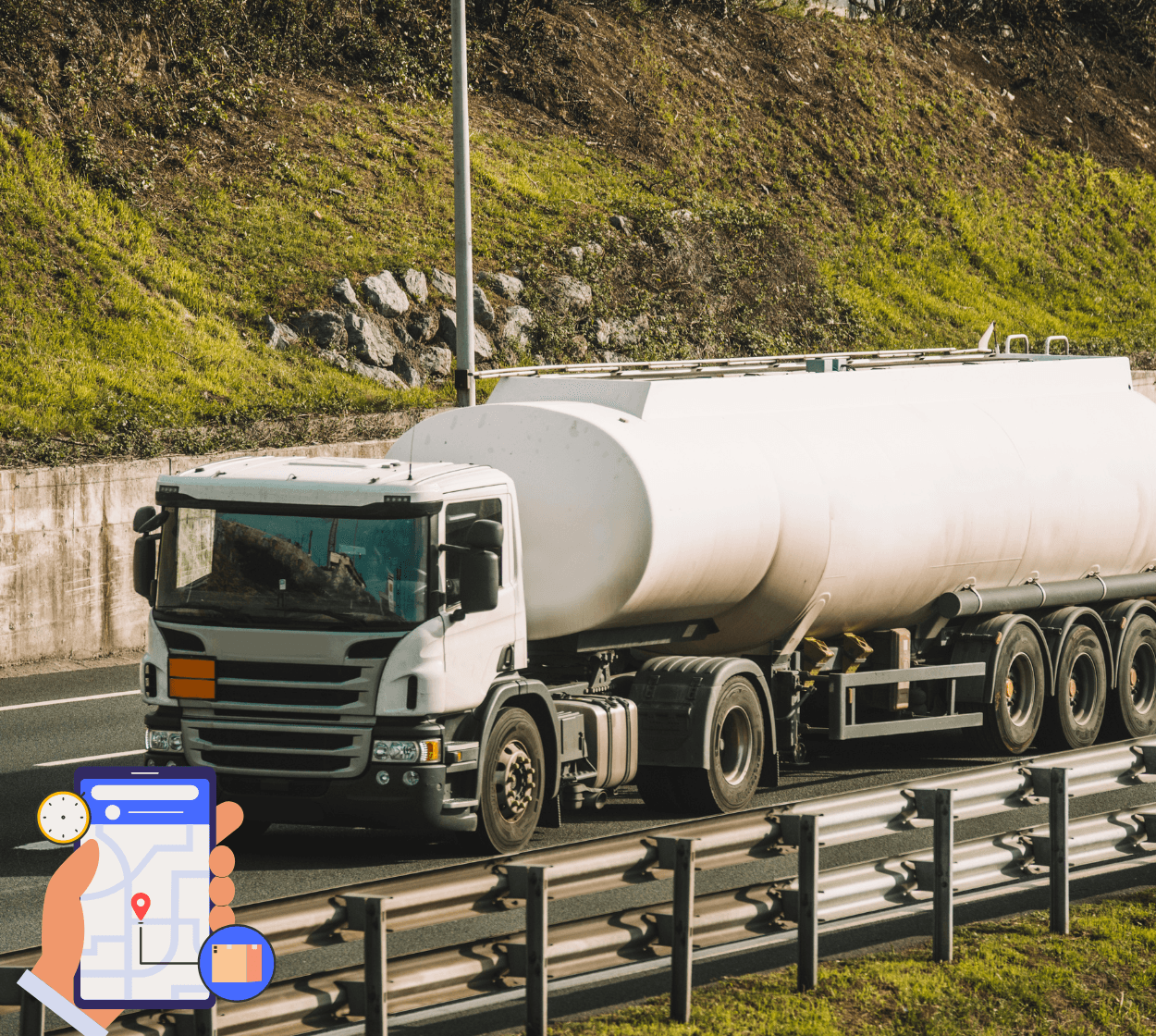
Field geofences can represent depots, loading points, restricted areas, customer sites, or sections of a field operation. Entry, exit, unauthorized stops, and route deviations can then be compared with approved assignments. The value of these alerts depends on local rules: a stop that is normal during loading may be unacceptable on an isolated road or in a high-risk area outside the planned route. Speed and movement history can add further context.
Dispatchers can identify repeated overspeed, unusual detours, extended idling, or a vehicle that has stopped unexpectedly. The response should reflect the environment and cargo rather than apply one threshold to every trip. A tanker carrying hazardous material may justify different escalation from a support vehicle moving within a controlled facility. Remote-site communications need realistic expectations.
Cellular coverage may vary across long routes, so the device should preserve important information during outages and forward it after reconnection. Operators should also distinguish a communications gap from an actual vehicle problem, because unnecessary emergency calls can distract supervisors and drivers while a genuine monitoring gap still needs follow-up. Vehicle identities and assignments must stay synchronized when tractors, trailers, drivers, or routes change.
A control room should be able to confirm which device is reporting for the current trip. Clear assignment processes prevent historical data from being associated with the wrong driver or cargo movement, which is especially important when records later support safety investigations or customer documentation.
Driver monitoring can add an early-warning layer on long and repetitive routes. Our oil-and-gas solution can include DMS functions for fatigue, distraction, smoking, seatbelt compliance, and phone use, together with ADAS functions for lane departure, forward-collision risk, and pedestrians. Each fleet should select the functions that match its risk policy and local operating rules. In our oil-and-gas work at BSJ Technology, we use video to provide context around an alert.
A sudden maneuver may be caused by unsafe driving, an obstacle, road conditions, or an emergency response. Reviewing the road and driver views with the same timestamp gives supervisors a stronger basis for classification than relying on a numeric event alone, while also preserving evidence for later incident review. Fuel sensing can support both cost control and security. Our fuel-monitoring workflow can flag abnormal fuel-level changes and unauthorized extraction for review.
When a fuel change is linked with time, position, ignition state, route, and nearby video, an oil and gas vehicle tracking system can help distinguish approved refueling, normal consumption, sensor fluctuation, and a suspected loss that requires investigation. Alert design should avoid treating every deviation as equally urgent.
A practical matrix can rank collision-risk events, fatigue alerts, restricted-zone entry, suspected fuel drainage, route deviations, and device failures by severity. Ownership should be assigned to dispatch, safety, security, or maintenance so notifications lead to a defined action rather than accumulate in a dashboard without closure.
With an oil and gas vehicle tracking system, historical reports allow the organization to review patterns rather than only individual alarms. Routes, stops, driving events, fuel anomalies, video evidence, and maintenance information can be compared across vehicles or periods. Repeated issues at one location or shift may reveal a process problem that is not visible from a single trip, giving managers a basis for targeted corrective action.
Evidence governance matters in regulated or security-sensitive operations. User roles should define who can view live video, retrieve recordings, export clips, change alert settings, or issue remote commands. Retention rules should preserve necessary records without keeping every data type indefinitely, and administrative changes should be traceable when system records are used for audit or investigation.
We can support oil and gas projects with GPS hardware, AI video, sensor integration, OEM/ODM flexibility, and third-party platform compatibility. The strongest deployment still begins with a pilot that tests representative tankers and field vehicles, because power systems, camera positions, network coverage, and sensor behavior can differ substantially between fleets and operating regions. Site safety improves when location and vehicle evidence can be interpreted together rather than in separate systems.
In our oil-and-gas integration work at BSJ Technology, we connect an oil and gas fleet management system with GPS, AI video, driver monitoring, fuel information, and event history so the control room can review abnormal situations with more context. An oil and gas vehicle tracking system should also preserve clear escalation ownership when vehicles move between depots, loading points, field locations, and customer sites.
We recommend proving the data path on real routes before expansion, including network recovery and sensor behavior. That gives operators a stronger basis for standardizing installation and response across dispersed assets without treating every remote location as a separate technology project.

BSJ Technology (SZSE: 301608) is a global provider of AI Video Telematics and Connected Fleet IoT solutions. Since 2009, BSJ has developed AI Dashcams, MDVR systems, and GPS tracking solutions for commercial fleets worldwide.