We're here to help. Reach out for any inquiries about our products, services, or partnerships.
Choose your operating system to start
A fleet manager receives a report about a sudden stop on a busy road. GPS data identifies the vehicle's location, but it does not explain what happened. Was the driver responding to traffic, avoiding an obstacle, or dealing with an unexpected situation? Reviewing video footage can provide additional context.
For commercial fleets, real-time vehicle video monitoring connects in-vehicle recording with remote viewing and fleet management workflows. An AI MDVR combines multiple camera inputs, video storage, and supported transmission functions in one vehicle-based system. Understanding these functions helps fleet operators select equipment that fits their vehicles and monitoring requirements.
What Role Does an MDVR Play in Vehicle Monitoring?
A mobile digital video recorder is designed to record footage from cameras installed inside or around a commercial vehicle. Depending on the model, it can support multiple camera channels, store video, and transmit available footage to a remote platform.
This setup is useful when one camera view does not provide enough information. Buses, trucks, and specialized transport vehicles may need different views of the road, driver cabin, passenger area, or cargo space. The required camera arrangement depends on vehicle layout and monitoring objectives.
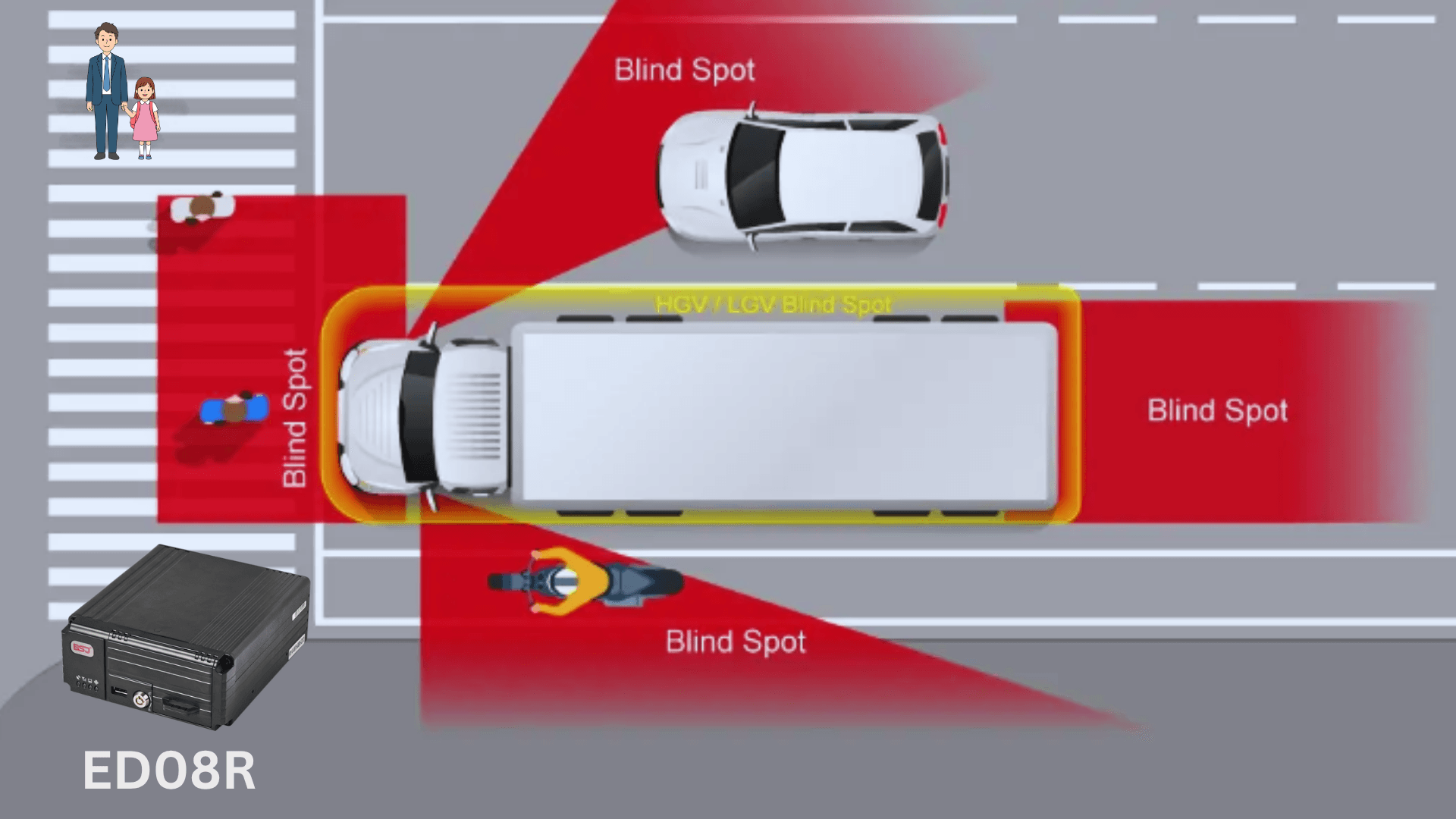
An AI MDVR combines video recording with supported intelligent safety functions. For example, BSJ's ED02R-V2 is a four-channel AI-powered MDVR. Its official product information identifies high-definition four-channel recording, real-time uploads, and ADAS, DMS, and BSD functions.
These capabilities support different monitoring tasks. ADAS relates to driver assistance and road-risk alerts, DMS focuses on driver status, and BSD supports blind-spot detection. Available functions and camera configurations should be confirmed against the selected model and installation requirements.
How Does Real-Time Video Reach Fleet Managers?
Real-time monitoring involves several connected steps. Cameras capture selected views, the MDVR records video, and network connectivity allows available live footage or event-related information to reach a compatible platform.
A typical workflow includes:
The process depends on network coverage, device settings, platform compatibility, and data configuration. Live viewing may be interrupted when vehicles travel through areas with weak mobile signals. Local recording and remote transmission should therefore be evaluated as separate functions during deployment planning.
A suitable mobile dvr system should also fit the fleet's existing data workflow. At BSJ Technology, our BSJ Monitoring System supports vehicle tracking, live video, video playback, and fleet status monitoring. Available functions depend on connected devices and platform configuration.
Which Fleet Operations Can Benefit from Video Monitoring?
Video monitoring can help fleet teams investigate events that cannot be fully understood through location records alone. Its practical value varies according to vehicle type and operating environment.
For logistics and trucking operations, recorded footage can support reviews of road incidents, driving events, and unexpected stops. When a delivery vehicle is involved in an incident, relevant recordings may help supervisors understand the surrounding conditions and coordinate an internal review.
Public transportation operators may require multiple camera views to monitor different areas of a bus. Camera placement should reflect the vehicle's interior layout, passenger operations, and monitoring policy. Footage can then support incident reviews and routine safety management.
Construction and industrial fleets may also use video equipment in vehicles operating near machinery, loading areas, or restricted-access locations. Reviewing recordings can help management understand how an event developed and identify whether operating procedures need adjustment.
For these applications, equipment should be selected according to camera coverage, recording functions, and platform compatibility rather than channel count alone.
What Should Operators Check Before Installing an AI MDVR?
Before selecting equipment, fleet operators should define what they need to monitor and identify the camera views required for each vehicle type. Check the supported channel count, camera connections, mounting positions, viewing angles, and lighting conditions. A multi-channel device is useful when its configuration matches the intended monitoring tasks.
Recording and transmission requirements also need attention. Consider video resolution, storage capacity, network coverage, and whether the operation needs continuous live viewing or event-based uploads. These factors influence data consumption and how footage can be retrieved during an investigation.
Platform integration is another consideration. If a fleet already uses a third-party telematics platform, confirm supported integration methods before purchasing devices in volume. BSJ's official website describes integration capabilities for connecting compatible hardware with third-party fleet management platforms.
Operators should also establish access permissions and video retention procedures. Define who can view recordings, how footage is retrieved, and how incident-related files are handled. Clear procedures help departments use video information consistently.
Making Vehicle Video Data Part of Daily Operations
An MDVR is most useful when its recordings support defined fleet processes. Dispatch teams can review footage when investigating vehicle events, while safety supervisors can use recordings during driver coaching and incident analysis. Managers can also examine recurring findings to identify where additional training or operational adjustments may be appropriate.
At BSJ Technology, we offer a range of telematics hardware designed for commercial fleet operations, including AI dashcams, MDVR systems, and GPS tracking devices. Our AI MDVR products combine video recording with model-dependent monitoring and AI capabilities. By considering vehicle requirements, recording needs, and platform compatibility, businesses can select suitable equipment for their fleet monitoring projects.

BSJ Technology (SZSE: 301608) is a global provider of AI Video Telematics and Connected Fleet IoT solutions. Since 2009, BSJ has developed AI Dashcams, MDVR systems, and GPS tracking solutions for commercial fleets worldwide.