Choose your operating system to start
Fuel is one of the most closely watched operating costs in commercial transportation, especially for heavy trucks and tankers. Yet fuel management involves more than recording refueling. Operators also need to identify unusual losses, understand consumption patterns, and connect fuel events with actual vehicle activity.
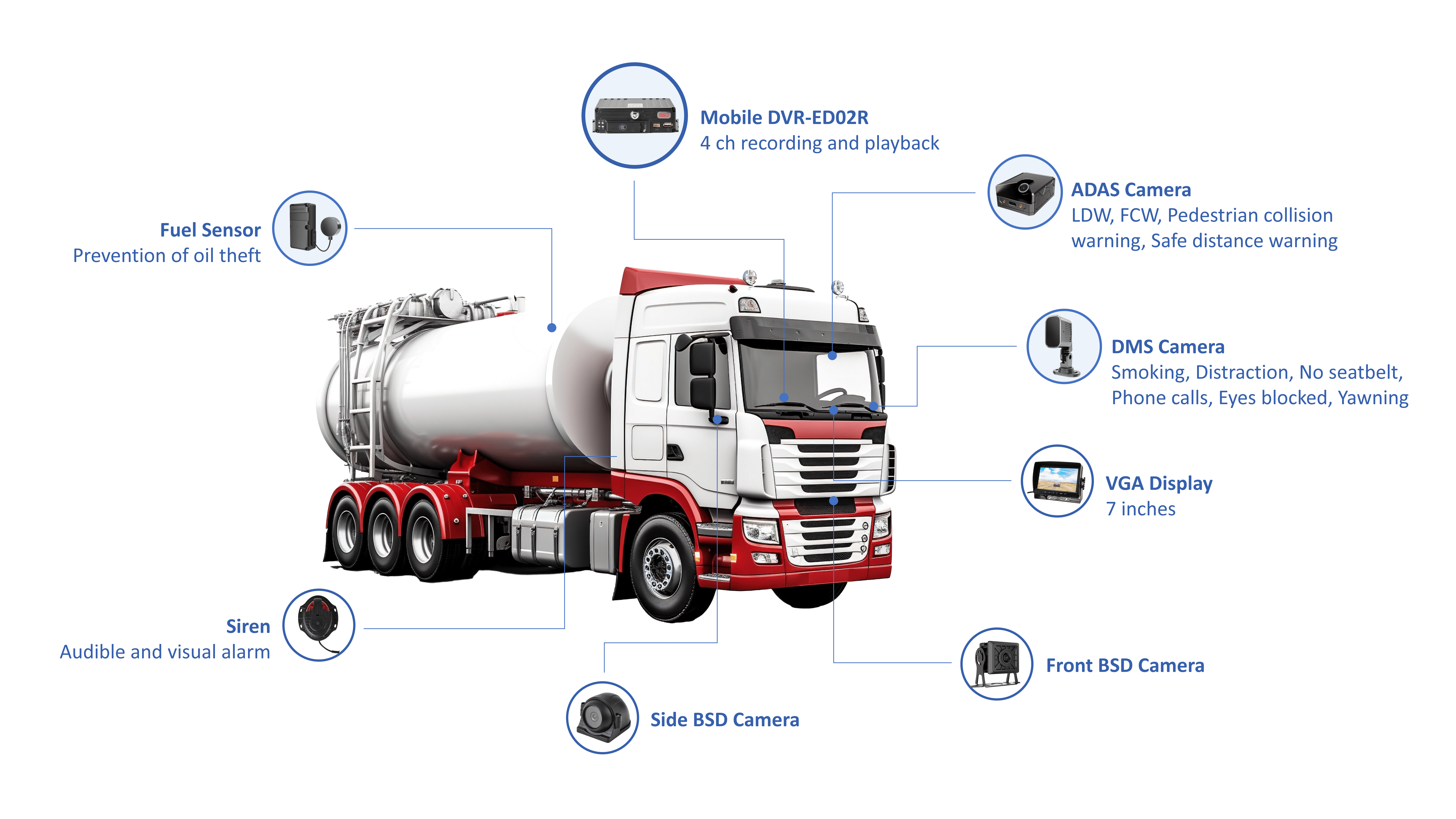
At BSJ, we approach fuel monitoring as part of a broader vehicle telematics architecture. By combining fuel sensing with positioning, communications, video, and fleet software, operators can build a clearer record of what happens during a trip.
A telematics-based fuel monitoring system usually contains several connected layers:
Fuel sensor → Telematics device → Cellular connection → Fleet platform → Alert or analysis
The sensor detects fuel-level changes. A telematics device receives that information and associates it with vehicle status, location, and time before sending it to a management platform.
Context matters. A sudden decrease while a truck is parked may deserve attention, while a similar change during normal driving could reflect expected consumption.
The sensor is the first measurement point. Its job is to detect fuel-level changes consistently enough to support consumption analysis and unusual-event detection.
Our connected fleet solutions can incorporate fuel-monitoring devices into the wider telematics system. We also support ultrasonic fuel monitoring for relevant applications. An external ultrasonic fuel sensor can be installed on the fuel tank and use ultrasonic measurement to monitor changes before transmitting the information to a compatible tracker and fleet platform.
This keeps fuel data connected to the vehicle instead of treating the sensor as a standalone instrument, allowing readings to become part of a larger record covering trips, locations, and events.
Fuel readings alone do not always explain an abnormal event. Location provides another important layer.
Consider a truck whose fuel level falls unexpectedly. A fleet manager may need to know:
When fuel information is combined with GPS tracking, these questions can be investigated more systematically. This partly explains why fleet management for oil and gas requires more than a simple vehicle locator. Our oil and gas solution combines real-time vehicle tracking with smart sensing and other telematics capabilities to give operators broader visibility into tank-truck activity.
A connected platform can apply rules to incoming sensor information. Rather than asking managers to continuously watch fuel levels, the system can flag changes that fall outside expected conditions.
A simplified workflow is:
Fuel reading changes → system checks vehicle activity and location → unusual condition is identified → alert is created → manager investigates
Possible warnings include an unexpected fuel drop while the vehicle is stationary or a change that does not match expected operating behavior.
The objective is not to classify every fuel reduction as theft, but to focus attention on events that deserve review.
Fuel consumption is affected by driving behavior, idling, route selection, traffic, payload, and vehicle condition.
This is especially relevant when building fleet management in oil and gas industry because operators may need to evaluate both cost control and safety performance. Our oil and gas solution combines fuel monitoring with GPS tracking, AI cameras, ADAS, driver monitoring, and blind-spot detection. These functions add information about fatigue, distraction, speeding, and other operating conditions.
The vehicle picture becomes:
A fuel sensor can indicate that an unusual event occurred, but it may not explain why. Video can provide another layer of evidence.
Suppose a fuel reading drops unexpectedly while a truck is parked. GPS can identify the location and time, while a camera may help show activity around the vehicle.
Fleet management for oil and gas relies on our integrated oil and gas solution, which combines fuel monitoring with AI-powered video and live monitoring. The same architecture can support front and side blind-spot monitoring for large tank trucks.
This creates a useful evidence chain:
Fuel event + location + vehicle status + video = stronger incident analysis
The same infrastructure can support both asset protection and road safety.
Fuel monitoring can serve several operational goals:
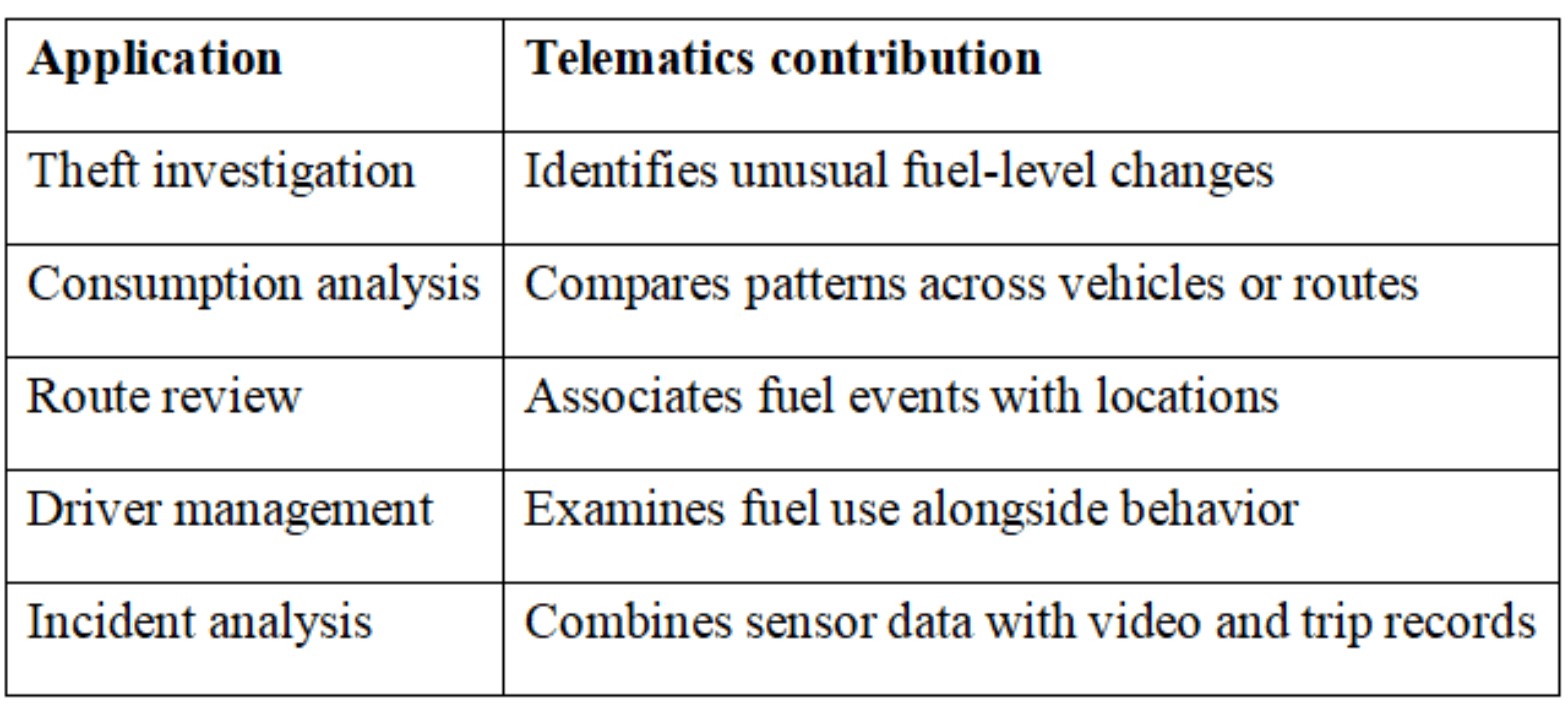
These capabilities are useful for oil and gas transport, where vehicles may cover long distances under demanding safety and security requirements.
Fuel monitoring delivers greater value when it is part of a wider telematics system. The same connected environment can bring together location, fuel information, video, driver behavior, and vehicle status.
Effective fleet management in oil and gas industry relies on this unified data view. Our platform also includes GPS tracking, live video monitoring, event playback, fleet status management, device configuration, and remote firmware management. This allows fuel-related information to remain connected with other vehicle records throughout the fleet lifecycle.
At BSJ Technology, we focus on building connected fleet solutions in which sensors, vehicle devices, software, and communications work together. For companies evaluating fuel-monitoring technology, the key question is not only whether fuel can be measured. It is whether those measurements can be connected with location, vehicle activity, driver behavior, and video so managers can understand what happened and respond appropriately.

BSJ Technology (SZSE: 301608) is a global provider of AI Video Telematics and Connected Fleet IoT solutions. Since 2009, BSJ has developed AI Dashcams, MDVR systems, and GPS tracking solutions for commercial fleets worldwide.