Choose your operating system to start
Rejection of a high-value pharmaceutical or fresh meat load at the receiver dock represents one of the steepest financial hits a carrier can absorb. Cargo insurance rarely covers spoilage without proof that refrigeration ran continuously within contract parameters. Once perishable goods spoil, operational margins for an entire quarter evaporate.
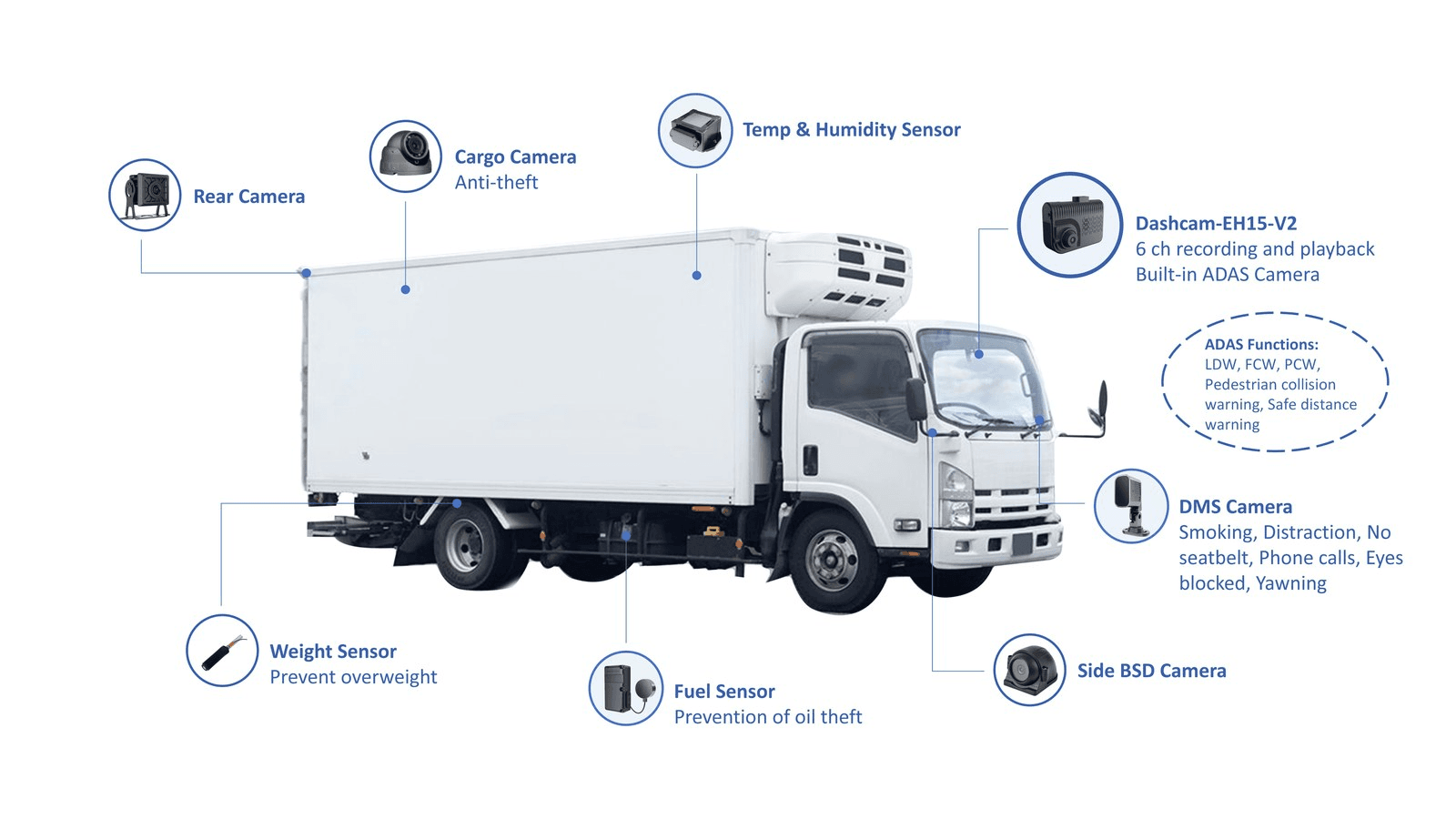
Carriers face immense financial exposure because temperature fluctuations develop silently across lengthy distribution lanes. Human operators inside the tractor cab cannot visually assess internal trailer conditions while driving at highway speeds. Drivers remain completely unaware that cargo is deteriorating until dashboard warning indicators flicker or destination docks refuse pallets.
Traditional transport workflows rely heavily on post-journey temperature data loggers extracted hours after trailer doors swing open. Discovering that a secondary evaporator iced over or ran out of fuel five hours prior offers zero operational recourse. Mitigating catastrophic cargo claims requires identifying thermal volatility while shipments remain fully salvageable on the road.
Verifying proper trailer box pull-down before loading cargo forms the first line of defense against transit thermal shock. Staging warm goods inside an uncooled trailer forces refrigeration compressors to labor under unsustainable heat loads. Latent heat trapped inside corrugated wall panels continuously radiates outward, quickly warming sensitive packaging.
Our manufacturing teams at BSJ Technology build ruggedized digital environmental probes designed specifically for industrial transport abuse. Rigid IP67-rated enclosures protect sensitive thermistors from high-pressure washdowns, corrosive sanitizing chemicals, and violent physical vibrations. Consistent physical reliability guarantees that raw baseline telemetry remains untainted across years of abusive highway operation.
Deploying calibrated cold chain temperature monitoring during pre-cooling routines ensures that loading dock crews only release pallets into verified environments. Dispatch systems can lock gate access until onboard sensors confirm that the entire bay matches required transport setpoints. Enforcing empirical staging protocols eliminates heat-soak events before vehicles ever leave the terminal yard.
Standard reefer displays report the return air temperature near the ceiling evaporator, misleading fleet operators into assuming cargo stays safe. Cold air drops quickly while stagnant warm air rises toward uninsulated roof panels, generating invisible thermal stratification. Pallets stacked near the rear bulkhead frequently experience severe warming while front-row cargo freezes solid.
Sensor nodes distributed across floor channels and rear cargo bulkheads capture true volumetric conditions throughout the haul. Multi-point telemetry maps air stagnation pockets caused by shifted pallets, collapsed packaging, or torn ceiling air delivery chutes. Continuous gradient tracking highlights localized heat accumulation long before ambient return air temperatures register a noticeable shift.
Modern refrigerated fleet management demands active correlation between cooling output and distributed spatial probes. Comparing localized probe curves against refrigeration engine modes identifies defective defrost heaters or slipping fan belts immediately. Operations teams gain the precise technical visibility needed to instruct drivers to redistribute freight or inspect airflow obstructions.
Curbside multi-drop distribution introduces intense thermal shock into chilled holds whenever drivers swing rear doors open. Humid summer air rushes across exposed inventory, rapidly coating packaging in condensation and driving air temperatures skyward. Drivers rushing between tight delivery windows frequently leave side doors unlatched, letting ambient heat overwhelm active refrigeration systems.
Wireless door sensors developed by BSJ Technology log opening events with millisecond precision, pairing physical access events with environmental telemetry. Industrial magnetic reed switches withstand slamming roll-up doors, transmitting instantaneous state changes directly to the primary cab telematics gateway. This uninterrupted event data prevents personnel from disguising prolonged unloading delays as mechanical equipment failures.
Correlating physical access duration with continuous cold chain temperature monitoring reveals how fast compartments recover post-closure. Diagnostic algorithms measure the exact recovery curve, evaluating whether the refrigeration unit pulls temperature down at manufacturer-specified rates. Slow recovery curves alert maintenance supervisors to degraded compressor reed valves or aging door gaskets requiring immediate overhaul.
Cellular dead spots along remote transit routes create dangerous monitoring blackouts if telematics hardware relies strictly on cloud processing. Trailers parked in underground staging depots or remote desert corridors lose cellular signals, blinding central management consoles. Temperature spikes occurring during connectivity drops must still trigger immediate corrective action to prevent total cargo write-offs.
Embedded microcontrollers programmed by BSJ Technology evaluate incoming probe telemetry locally against configurable multi-stage temperature profiles. Edge logic operates independently of external network connectivity, instantly activating high-decibel cab buzzers and exterior strobe lights when thresholds breach. Drivers receive instantaneous physical alerts to check refrigeration unit fuel, clear air grilles, or secure loose rear latches.
Direct integration of refrigerated fleet management platforms with secondary supercapacitors guarantees telemetry continuity even during tractor battery disconnections. Unpowered drop trailers maintain complete sensor polling and internal non-volatile memory logging while staged at remote railway interchanges. Once wireless connectivity resumes, stored buffer packets transmit unbroken chronological event timelines to compliance servers without data loss.
Consignees examine electronic records with microscopic scrutiny, seeking any contractual basis to reject compromised freight. Disputed temperature claims drag on for months when carriers lack continuous, minute-by-minute verification of ambient compartment conditions. Handing receivers fragmented driver logs or sporadic temperature captures invites costly chargebacks and legal liability.
Automated cold chain temperature monitoring closes documentation gaps by compiling tamper-proof records from loading dock to final uncoupling. High-resolution telemetry proves whether thermal spikes stemmed from receiver loading dock dwell rather than in-transit cooling failure. Unbroken evidentiary trails protect transport margins and establish immediate carrier credibility during audit reviews.
Adopting hardware-driven refrigerated fleet management secures cold logistics operations against unpredictable mechanical, operational, and human failures. Relentless multi-sensor validation transforms vulnerable insulated trailers into resilient, self-monitoring cold assets that preserve product integrity across every delivery mile.

BSJ Technology (SZSE: 301608) is a global provider of AI Video Telematics and Connected Fleet IoT solutions. Since 2009, BSJ has developed AI Dashcams, MDVR systems, and GPS tracking solutions for commercial fleets worldwide.