Choose your operating system to start
Mining operations depend on coordinated movement between haul trucks, loaders, excavators, service vehicles, and processing points. In these environments, dispatch teams must balance production targets, equipment availability, traffic conditions, and operator safety at the same time. Small delays can quickly create truck queues, underused loading equipment, excess fuel consumption, or avoidable equipment wear.
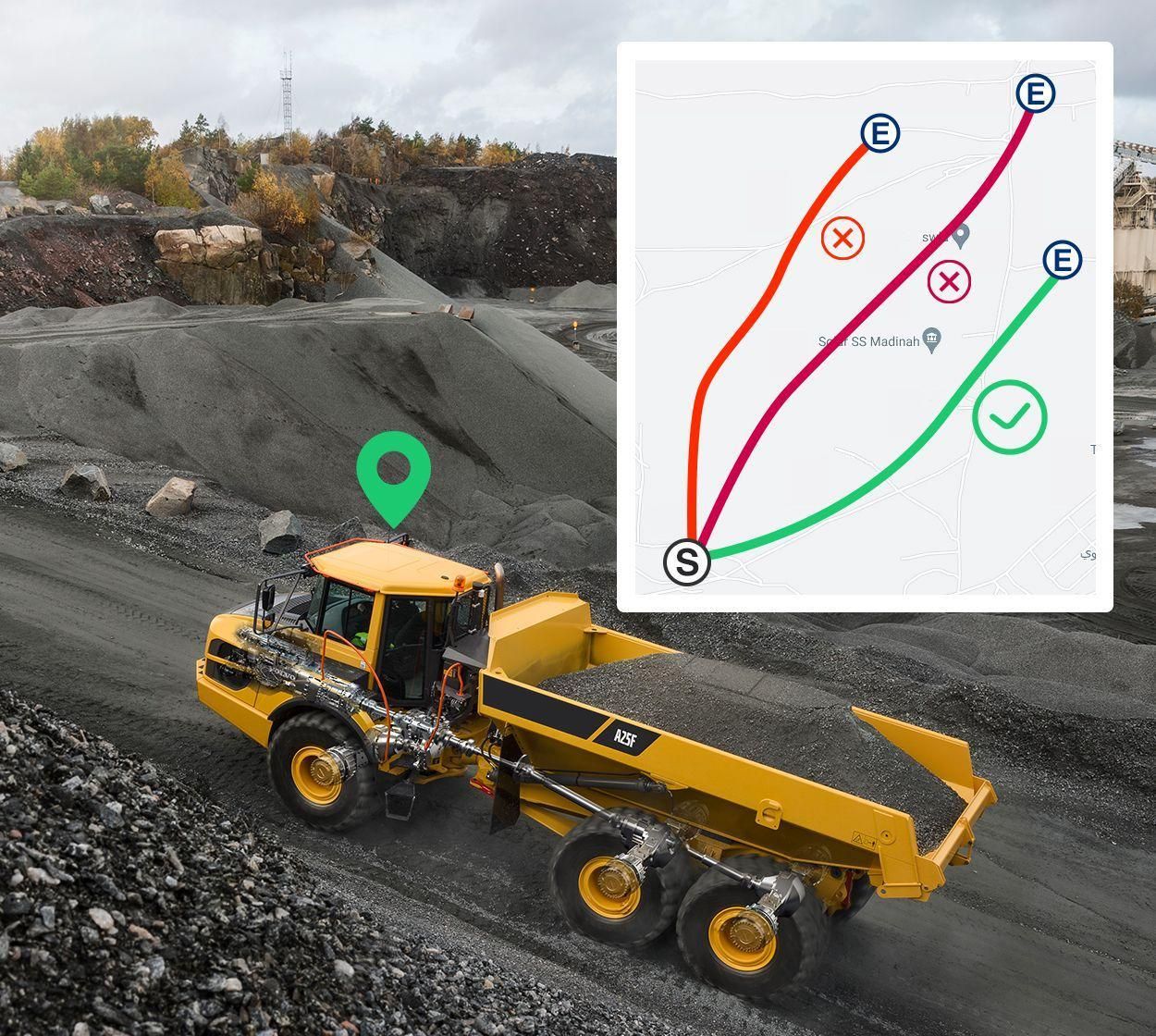
A modern mining vehicle tracking system gives dispatchers a clearer operational picture. Instead of depending mainly on radio calls, manual logs, or delayed reports, teams can use live vehicle locations, route information, operating status, and selected vehicle data to coordinate daily haulage more effectively. The result is a more measurable dispatch process in which decisions are based on current field conditions rather than assumptions.
An effective mining fleet management system connects tracking hardware with fleet software to provide continuous visibility of mining vehicles. Dispatchers can see where trucks are located, how they are moving, and whether they are following assigned routes. This is particularly useful when several loading areas, dump points, and haul roads are operating simultaneously.
Location data becomes more valuable when combined with vehicle status and driver behavior information. For example, excessive idling, harsh braking, speeding, or unexpected stops may indicate a developing operational issue. Dispatchers can respond by adjusting assignments, investigating the cause, or directing vehicles away from congested areas. Geofencing can also help define loading zones, restricted areas, routes, and other operational boundaries, making it easier to compare actual vehicle movements with planned activities.
Cycle-time analysis is another important function. By comparing loading, hauling, dumping, and return periods, mine managers can identify where delays occur during a shift. These insights can support better truck allocation and help reduce empty travel. Over time, historical data can also provide a basis for evaluating route performance, utilization, and dispatch efficiency.
A mining fleet management system relies heavily on effective mining dispatch, which cannot be separated from equipment condition. A truck that appears available on a dispatch screen may still have a developing mechanical problem that affects productivity or safety. BSJ's mining solutions incorporate vehicle health monitoring alongside GPS tracking and driver behavior monitoring, helping operators build a more complete view of fleet conditions.
Useful data may include engine temperature, brake performance, tire pressure, and other diagnostic information, depending on the vehicle and installed sensors. Monitoring these parameters can help maintenance teams identify abnormal conditions earlier and reduce the chance that a minor issue becomes a longer unplanned stoppage.
Safety information also supports dispatch decisions. AI-enabled cameras and driver monitoring functions can help identify fatigue, harsh driving, speeding, and blind-spot risks. When safety events are connected with vehicle location and operational data, supervisors have more context for deciding how a vehicle should be handled. This creates a stronger connection between dispatch efficiency and risk management.
Mining environments place demanding requirements on tracking hardware. Dust, vibration, temperature changes, water exposure, electrical fluctuations, and rough terrain can all affect onboard equipment. A tracking device used on a mining truck therefore needs to be selected for continuous industrial operation rather than light-duty vehicle use.
The hardware also needs to support dependable communication and data collection across large sites. Open-pit mines may contain remote work zones where network coverage varies. A practical solution should therefore combine robust onboard devices with appropriate data storage and communication methods, so important operational information is not unnecessarily lost during temporary connectivity interruptions.
A fleet management system mining solution depends on more than just hardware reliability. Scalable deployment matters as well. A mine may begin with GPS tracking on haul trucks and later add cameras, sensors, vehicle diagnostics, or other connected equipment. Choosing an architecture that can support additional devices helps reduce the complexity of future expansion.
Mining companies often use more than one software platform to manage production, maintenance, safety, and fleet operations. A tracking solution becomes more useful when its data can be connected to existing systems rather than creating another isolated data source.
BSJ supports integration with established fleet platforms and provides hardware designed for solution providers and system integrators. The company works with platforms including Wialon and other fleet management ecosystems, allowing operators to connect tracking and telematics data with existing workflows. This approach can reduce system fragmentation and make it easier to combine GPS, video, vehicle data, and safety events within a centralized operational environment.
For larger fleets, centralized tools can further reduce administrative effort. BSJ's fleet software ecosystem includes monitoring, device configuration, and remote firmware management capabilities, supporting more consistent fleet-wide deployment and maintenance.
The value of mining telematics is not simply knowing where a truck is. The stronger objective is turning location, vehicle, safety, and operational data into better dispatch decisions. With real-time visibility, measurable cycle times, vehicle health information, and driver safety alerts, mine teams can identify bottlenecks earlier and respond with greater precision.
For mining companies evaluating a fleet management system mining solution, the key considerations should include tracking accuracy, hardware durability, data integration, scalability, and the ability to support both operational and safety requirements. A system that addresses these areas can provide a stronger foundation for improving fleet utilization without separating dispatch priorities from maintenance and safety management.
BSJ Technology provides AI dashcams, GPS trackers, MDVR systems, and fleet telematics solutions for commercial and mining applications. Its mining-focused solution combines GPS tracking, intelligent dispatching, vehicle health monitoring, driver behavior monitoring, and safety alerts to help operators improve visibility and control across demanding working environments.

BSJ Technology (SZSE: 301608) is a global provider of AI Video Telematics and Connected Fleet IoT solutions. Since 2009, BSJ has developed AI Dashcams, MDVR systems, and GPS tracking solutions for commercial fleets worldwide.