Choose your operating system to start
A long-haul truck, a city delivery van, and a refrigerated trailer may all require vehicle tracking, but their operational priorities differ considerably. One fleet needs to monitor long-distance journeys, another must manage frequent stops, and a third needs evidence that cargo conditions remained within acceptable limits. Selecting the same tracking configuration for every vehicle can leave important information gaps.
At BSJ Technology, we focus on vehicle telematics hardware that supports these different operating requirements. Understanding how tracking technology fits each commercial fleet application helps operators, distributors, and platform providers choose equipment based on actual vehicle operations.
Vehicle tracking starts with GNSS positioning, which provides location and movement data for supported fleet platforms. Its practical value depends on the questions dispatchers and managers need to answer. Route progress, unauthorized movement, driving events, and cargo conditions require different combinations of devices and data sources.
Effective fleet management tracking solutions connect each operational requirement with an appropriate hardware configuration. GPS trackers support location monitoring, while cameras, compatible vehicle interfaces, and external sensors can provide additional information. The objective is to capture relevant evidence without adding equipment that does not serve a defined purpose.
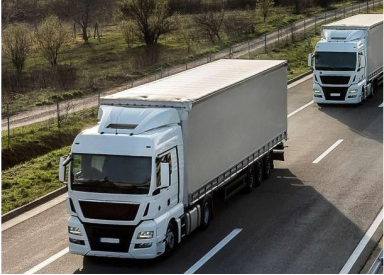
Long-distance freight operators need visibility across extended routes and multiple stops. GPS tracking helps dispatchers review vehicle positions and journey history, while onboard video can provide additional context when an incident occurs.
AI dashcams may combine video recording with supported Advanced Driver Assistance Systems (ADAS) and Driver Monitoring Systems (DMS). Depending on the device configuration, these functions can warn of selected driving risks or identify certain signs of fatigue and distraction. Multi-channel mobile digital video recorder (MDVR) systems suit installations requiring footage from several camera positions.
Urban delivery vehicles follow a different pattern. Frequent stops, tight delivery windows, and repeated customer interactions make location history and incident verification particularly relevant.
Configured geofences can identify vehicle entry into or departure from designated areas when the tracking device and platform support this function. Camera footage may help investigate vehicle damage, disputed deliveries, or road incidents. For fleet driver management, reviewing location records alongside relevant video provides more context than relying on isolated alerts or driver recollections.
Public buses and school buses require oversight of vehicle movements and events involving passengers. Location records help authorized personnel check route progress and investigate deviations, while appropriately positioned interior and exterior cameras can document relevant incidents.
Driver-monitoring functions may provide additional alerts when supported by the installed hardware. However, camera access, footage retention, and handling procedures should reflect the operator's responsibilities and applicable privacy requirements. Tracking technology supports established safety procedures rather than replacing them.
A location record can show where a refrigerated vehicle traveled, but it cannot independently establish whether cargo remained within its required temperature range. Temperature and humidity sensors, where supported, provide measurements that can be associated with journey records.
Combining location, timestamps, and sensor readings helps operators investigate suspected temperature excursions and identify when further checks are necessary. Camera footage may add context to loading, unloading, or security incidents, depending on camera placement and recording coverage.
Tankers, mining vehicles, and construction equipment operate under conditions that can require more than standard position reporting. Depending on the application, fleets may use vehicle-status inputs, fuel-related sensors, or additional camera views to support operational oversight.
The correct configuration depends on the vehicle interface, working environment, required measurements, and intended response. Specifying these requirements before installation reduces the risk of deploying hardware that cannot provide the information the operator expects.
Tracking data becomes useful when it answers a specific question. A route deviation may require dispatch intervention, a driving alert may warrant a safety review, and a temperature excursion may trigger an inspection of refrigeration equipment or cargo handling.
Well-defined fleet driver management procedures establish who reviews each event, what evidence is required, and how follow-up is recorded. An alert should initiate investigation rather than automatically establish responsibility. Video quality, camera angle, connectivity, and storage availability also affect how much evidence can be retrieved.
Many fleet operators already use third-party telematics software. Adding tracking devices therefore requires verification of supported communication protocols, data fields, connectivity, and video-access methods. Integration should be confirmed for the specific hardware and platform rather than assumed from a general compatibility statement.
Our work at BSJ Technology centers on vehicle telematics hardware, including GPS trackers, AI dashcams, and MDVR systems, for connected fleet deployments. We mainly provide telematics hardware together with auxiliary device-management tools, and we do not oblige partners to migrate from their current fleet management platforms. OEM/ODM projects can address specific product configurations and integration requirements for distributors, system integrators, and platform providers. Available customization and device-management functions depend on the selected product and project scope.
A location-focused delivery fleet may need a different setup from a passenger bus operator that requires video evidence or a refrigerated transporter that must monitor cargo conditions. Start with the operational questions, identify the data sources needed to answer them, and verify that the hardware and software can exchange the required information.
A representative vehicle trial can then test installation, data availability, alert handling, and record retrieval before the configuration is expanded. For commercial buyers, the strongest fleet management tracking solutions are those that fit actual vehicle duties and existing workflows.
We at BSJ Technology support this application-led approach through vehicle telematics hardware and customization options designed around defined deployment requirements.

BSJ Technology (SZSE: 301608) is a global provider of AI Video Telematics and Connected Fleet IoT solutions. Since 2009, BSJ has developed AI Dashcams, MDVR systems, and GPS tracking solutions for commercial fleets worldwide.