Choose your operating system to start
Tanker trucks and mobile fueling bowsers move liquid currency every single day. While ordinary haulers focus strictly on engine mileage and delivery schedules, bulk liquid carriers transport thousands of gallons of volatile inventory. Even fractional measurement errors, unauthorized valve discharges, or undetected cargo evaporation can erase operating margins across regional supply routes.
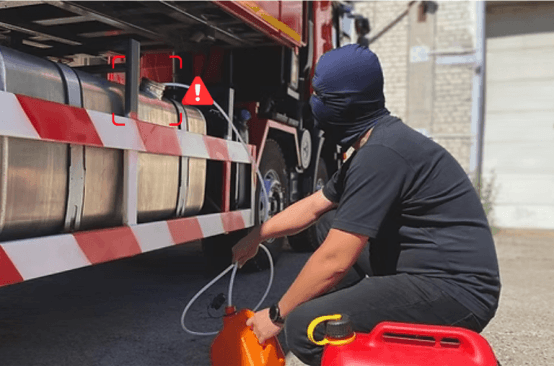
Liquid asset distribution demands uncompromising transparency across every kilometer traveled. Operators servicing off-road construction sites, mining haul fleets, and agricultural equipment cannot rely on manual paper logbooks or delayed dipstick measurements. Fleets require continuous real-time data bridging what the propulsion engine burns against what the delivery manifold dispenses.
Standard commercial logistics telematics cannot address the operational reality of hazardous liquid transport. Long-haul tractors consume diesel from saddle tanks to power their powertrains, while their trailers carry separate compartmentalized cargo. Commercial distributors require a specialized fuel management system for fleet operations to eliminate inventory shrinkage during multi-drop routes.
At BSJ Technology, we engineer multi-interface telematics gateways that separate propulsion fuel telemetry from payload meter data. Connecting directly to vehicle CAN bus networks via J1939 protocols captures live engine load, idling fuel burn, and throttle dynamics. Concurrently, our auxiliary serial channels gather independent liquid volume data from each cargo cell, preventing drivers from masking fuel theft behind engine consumption reports.
Investing in an advanced fuel monitoring system for trucks that measures engine consumption alongside cargo compartments gives dispatchers complete asset visibility. Route controllers instantly detect whether an unexpected volume decline stems from heavy highway climbing, extended auxiliary power unit operation, or unauthorized offloading between scheduled delivery stops.
Cargo tanks require precision measurement technologies that resist sloshing, temperature expansion, and mechanical wear. Traditional float sensors with moving components frequently jam, corrode, or generate electrical sparks inside volatile atmospheres. Modern liquid logistics relies on externally mounted ultrasonic transducers attached directly to the bottom outer shell of fuel tanks.
Integrating an ultrasonic fuel monitoring system for trucks eliminates tank wall drilling while delivering continuous millimeter-level liquid level tracking. High-frequency acoustic pulses calculate liquid depth through echo-return time, maintaining measurement accuracy above 98 percent after software calibration. Real-time temperature compensation algorithms adjust volume calculations as diesel and gasoline expand under midday heat or contract during sub-zero overnight parking.
Mobile service bowsers operating in mining and civil construction environments require digital flow meter integration to record exact dispensed volumes. Telematics hardware interfaces directly with onboard positive displacement meters and pulse transmitters via RS485 or RS232 connections. Every liter pumped into a heavy excavator or remote generator logs an immutable electronic delivery receipt matched to vehicle ID and operator credentials.
Manifold valves and discharge hoses represent the primary vulnerability points for organized cargo diversion. Unscrupulous operators sometimes skim fuel at unapproved roadside laybys by tapping gravity-drop lines before reaching designated customer storage tanks. Preventing unauthorized discharge requires physical switch monitoring combined with active visual verification across all loading and unloading manifolds.
We at BSJ Technology integrate multi-camera video triggers with sensor feeds, capturing automated video snapshots whenever discharge valves cycle outside authorized coordinates. Ruggedized magnetic switches and pneumatic pressure sensors register the exact timestamp a valve handle turns. If an operator opens a discharge line outside a geofenced customer terminal, our onboard controller flags a high-priority tampering alert.
Unifying manifold telemetry within a centralized fuel management system for fleet oversight ensures that unauthorized valve activity immediately triggers supervisory alerts. External blind-spot cameras and rear-facing lenses capture wide-angle footage of the discharge bay during pumping operations. Having clear visual records protects transport contractors against spurious short-delivery allegations while deterring dishonest practices in the field.
Transporting flammable hydrocarbons imposes strict safety engineering mandates on all onboard electronics. Auxiliary telematics gateways, sensor cabling, and power converters installed near tanker compartments must eliminate all ignition risks. Spark-free enclosures, intrinsically safe barrier circuits, and sealed connectors prevent electrical arcs from contacting explosive fuel vapors during loading rack hookups.
Harsh industrial operating conditions also subject vehicle electronics to severe electrical transients from heavy-duty alternators and pump motors. Onboard telemetry hardware must feature wide input voltage tolerances, supporting uninterrupted operation from 9V to 90V alongside built-in reverse polarity protection. Power-loss safeguards powered by industrial supercapacitors guarantee that critical emergency cut-off events transmit successfully even during catastrophic master switch disconnects.
Reconciling terminal loading manifests against customer invoice slips traditionally requires days of tedious paperwork audits. Discrepancies between terminal rack meters and receiver tanks lead to painful payment withholdings and disputed billings. Automated telemetry networks bridge physical delivery quantities directly with enterprise billing databases in real time.
Coupling a rugged fuel monitoring system for trucks with central telemetry dashboards turns chaotic mobile fueling runs into transparent, verifiable asset transfers. Automated data feeds record the starting compartment volume, precise dispensing coordinates, total delivered quantity, and remaining tank ullage. Operating teams verify route profitability instantly without waiting for paper receipts to return to regional dispatch offices.
Implementing an end-to-end fuel management system for fleet distribution protects profit margins against internal siphoning, transit discrepancies, and unbilled deliveries. Field service vehicles refuel hundreds of remote industrial machines weekly with auditable precision. Partnering with us at BSJ Technology gives fuel logistics operators indisputable audit trails from loading rack to field nozzle.
Securing volatile liquid assets across complex distribution channels requires purposeful hardware engineering, intelligent sensor fusion, and dependable cloud connectivity. Protecting bulk fuel cargo transforms vulnerable tanker transport into a controlled, profitable, and safe commercial logistics operation.

BSJ Technology (SZSE: 301608) is a global provider of AI Video Telematics and Connected Fleet IoT solutions. Since 2009, BSJ has developed AI Dashcams, MDVR systems, and GPS tracking solutions for commercial fleets worldwide.