Choose your operating system to start
Purchasing transit platforms involves operational complexities that long-haul freight tracking systems never encounter. Public transit authorities and private coach operators manage dynamic headway intervals, complex route variations, passenger safety mandates, and revenue reconciliation across dense urban networks. A software interface designed for simple cargo routing cannot address the multi-layered demands of scheduled passenger services.
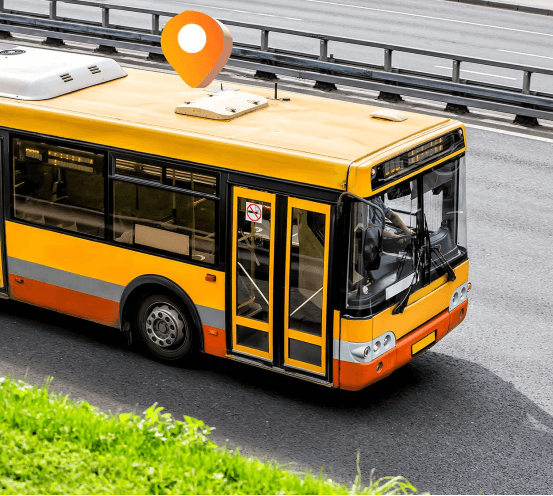
Selecting bus fleet management software without evaluating underlying in-vehicle hardware architecture creates severe integration deadlocks. Cloud dashboards remain entirely dependent on the quality, frequency, and breadth of physical telemetry captured onboard each coach. If physical sensors fail to stream synchronized passenger, video, and diagnostic packets, even the most elegant software platform becomes useless.
Fleet buyers must look beneath marketing demonstrations to assess real-world transit readiness. Scrutinizing peripheral integration, passenger flow analytics, edge video intelligence, and open protocol compatibility ensures that long-term technology investments yield measurable operating improvements.
Passenger throughput dictates operational efficiency and municipal subsidy allocation across public transport networks. Static timetables quickly collapse during peak commuter surges or unexpected weather delays, leaving crowded stops underserved while empty coaches burn diesel on quiet streets. Optimizing headway requires continuous, stop-by-stop passenger occupancy tracking.
Stereoscopic overhead sensors and structured-light optical counters tally boarding and alighting commuters at every bus portal with clinical precision. Ingesting live passenger count data into bus fleet management software allows dispatchers to identify overcrowding trends and deploy relief vehicles to overloaded corridors. Historical passenger density curves also empower transit planners to eliminate redundant route deviations during off-peak hours.
Reliable occupancy analytics provide essential audit transparency when cross-referenced against electronic ticketing validator records. Comparing physical passenger boardings against collected fares exposes fare evasion hot spots across specific transit lines. Empirical passenger counts allow transport agencies to substantiate ridership figures and protect grant allocations during fiscal reviews.
Multi-Channel Video Telematics and In-Cabin Liability Protection
Transit operations face distinct legal and physical risks, ranging from fraudulent slip-and-fall claims to driver assaults and boarding door entrapments. Forward-facing dashcams fail to provide the multi-angle visibility required to resolve passenger disputes or investigate onboard safety incidents. Protecting municipal operators demands continuous interior and exterior optical coverage.
Evaluating modern bus fleet management systems requires verifying seamless interoperability with multi-channel Mobile DVR (MDVR) platforms. Ruggedized transit hardware must record simultaneous high-definition streams from passenger saloons, fareboxes, blind spots, step-wells, and rear bumpers. Consolidating video signals inside a central onboard recorder prevents data fragmentation and simplifies video retrieval.
Incorporating edge-based neural processing enables onboard hardware to flag hazardous events automatically. Advanced algorithms detect driver microsleep, mobile phone use, and passenger aisle obstructions locally, sounding cab alerts before collisions occur. Flagged event clips upload automatically over cellular links, giving safety supervisors instant evidentiary proof when investigating customer complaints or insurance claims.
Open Protocol Architecture Versus Proprietary Lock-In
Municipal transit projects routinely integrate legacy electronic ticketing machines, destination LED displays, passenger announcement speakers, and automated fare collection terminals. Proprietary software ecosystems force buyers into costly vendor lock-in, requiring total hardware replacement whenever a single software provider alters licensing terms or drops product support.
Sustainable bus fleet management relies on software platforms built around open, standardized communication protocols. Architectures supporting MQTT, JT/T 808, JT/T 1078, and General Transit Feed Specification (GTFS) enable modular hardware expansion. Open protocol compliance allows fleet operators to incorporate third-party passenger counters or upgrade onboard dispatch screens without rewriting cloud backend logic.
We at BSJ Technology build open-architecture telematics gateways and MDVR units that interface cleanly with diverse transit platforms and ticketing peripherals. Providing comprehensive protocol documentation and flexible API toolkits ensures transit authorities retain full ownership of their operational data, protecting capital budgets against restrictive proprietary platforms.
Powertrain Diagnostics and Electric Bus Telemetry Demands
Urban transit operators are accelerating fleet electrification to fulfill urban clean-air mandates and lower lifecycle operating expenditures. Battery-electric buses (BEVs) introduce complex charging schedules, regenerative braking cycles, and route-range limitations that traditional diesel fleet platforms cannot manage. Buyers must confirm that transit software can interpret high-voltage electric vehicle architectures natively.
Choosing bus fleet management software requires robust CAN bus integration capable of decoding J1939, FMS, and custom manufacturer battery management parameters. Onboard gateways must track high-voltage battery state-of-charge, cell temperature variances, and auxiliary HVAC power draw continuously. Instantaneous warnings for thermal degradation or insulation resistance faults prevent roadside breakdowns and protect passenger safety.
Telematics hardware engineered by BSJ Technology interfaces directly with electric vehicle controllers and diesel electronic control units to extract granular diagnostic codes. Consolidating powertrain telematics into preventive maintenance workflows enables maintenance teams to identify dragging brakes, failing cooling pumps, or battery pack imbalances before mechanical failures disrupt daily commuter schedules.
Hardware-Software Synergy for Long-Term Transit Reliability
Procurement committees must evaluate the physical endurance of in-vehicle computing hardware before committing to software contracts. Public buses operate up to eighteen hours daily across rough urban pavement, subjecting onboard electronics to relentless vibration, electrical surges, and intense passenger compartment heat. Software cannot generate reliable operational insights if underlying hardware reboots under electrical strain.
Grounding municipal bus fleet management in automotive-grade hardware ensures uninterrupted data collection over fifteen-year vehicle lifecycles. Wide-voltage power supplies, internal supercapacitors, and rugged IP-rated enclosures protect microprocessors from alternator load dumps and sudden battery disconnects, guaranteeing that critical transit records commit safely to local storage during power cuts.
Collaborative engineering solutions developed by BSJ Technology equip public transit authorities and system integrators with durable, open-standard hardware ecosystems. Aligning industrial-grade onboard telematics with intelligent transit software delivers the operational visibility, passenger safety, and schedule precision required to modernize public transport networks.

BSJ Technology (SZSE: 301608) is a global provider of AI Video Telematics and Connected Fleet IoT solutions. Since 2009, BSJ has developed AI Dashcams, MDVR systems, and GPS tracking solutions for commercial fleets worldwide.