We're here to help. Reach out for any inquiries about our products, services, or partnerships.
Choose your operating system to start
A refrigerated truck can complete its route on time and still leave fleet managers with unanswered questions. Was the cargo kept within the required temperature range? Did a temperature change occur during loading or delivery? Can the operations team trace the event back to a specific vehicle and journey?
These questions show why refrigerated transportation needs more than basic vehicle tracking. A connected fleet program brings together cargo-condition monitoring, GPS data, driver safety, and trip records. For logistics companies and fleet solution providers, the challenge is to make these functions work as part of one operational process.
Start With the Requirements of Each Refrigerated Fleet
Not every refrigerated fleet operates in the same way. A company transporting food between distribution centers may have different monitoring priorities from a logistics provider handling temperature-sensitive pharmaceutical shipments. Vehicle configuration, cargo compartments, delivery schedules, and customer requirements all influence system design.
A cold chain fleet management program should therefore begin with a review of operational needs. Managers can identify which cargo conditions need monitoring, how many temperature zones are involved, and who needs access to the information.
For vehicles with multiple compartments, monitoring each area separately may be useful. BSJ's cold-chain solution supports up to four independent temperature zones, with a published temperature accuracy of ±0.5°C. This allows the monitoring setup to address different compartment requirements rather than relying on one vehicle-wide reading.
Connect Cargo Conditions With Vehicle Movement
Temperature data explains the condition of the cargo, but it does not tell the whole story of a delivery. Location and route information help establish where a change occurred and what the vehicle was doing at that time.
For example, a temperature deviation during a scheduled delivery stop may require a different investigation from one recorded while the truck is travelling. When GPS records and sensor readings are available together, managers can review the event against the journey timeline.
This is where connected cold chain solutions become useful. Rather than checking temperature logs and vehicle tracking records separately, operators can consider cargo conditions alongside vehicle movement and trip information.
The same approach can help identify recurring patterns. If similar deviations appear during particular delivery stages, the operations team can examine loading procedures, waiting times, or route planning. The data provides a starting point for investigation, not an automatic explanation of the cause.
Include Driver Safety and Cargo Protection
A refrigerated vehicle is also a commercial vehicle operating in changing road conditions. Driver fatigue, distraction, and unsafe driving behavior can affect delivery schedules and create risks for both the driver and the cargo.
BSJ's cold-chain offering includes AI-powered Driver Monitoring System functions for detecting fatigue, distraction, and seatbelt violations. ADAS functions provide additional road-safety alerts. These capabilities allow fleet operators to consider driver-related events alongside cargo monitoring.
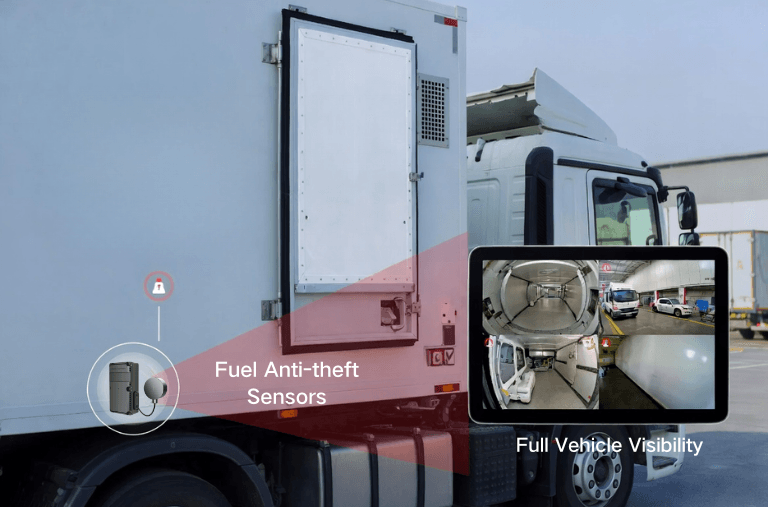
Security deserves similar attention. Cargo monitoring cameras and fuel anti-theft sensors can provide additional information about vehicle and cargo activity. For businesses transporting valuable goods, these functions may help with the review of unauthorized access or suspected tampering.
The important point is to define how each function will be used. Operations teams may handle temperature alerts, while safety supervisors review driver events. Clear responsibilities help turn connected data into practical action.
Make Trip Records Useful for Daily Management
A connected fleet program should not stop at real-time notifications. Historical records are equally important when a customer questions a delivery, an incident needs investigation, or managers want to review transportation performance.
BSJ's solution combines temperature data, video footage, and GPS location into trip records that can be stored and accessed for traceability. This gives operators several types of information to review when examining a completed journey.
Before deployment, businesses should consider:
| Area | Planning consideration |
| Data access | Which teams need access to trip records? |
| Alert handling | Who reviews temperature and safety notifications? |
| Video records | When should footage be retrieved for investigation? |
| Data retention | How long should different records be stored? |
| Integration | How will the system connect with existing fleet platforms? |
These decisions should reflect customer agreements and applicable regulatory requirements. A monitoring platform can support record keeping, but it does not replace the procedures that each business must establish.
Build a Program That Can Grow With the Fleet
A connected refrigerated fleet does not need to be deployed across every vehicle at once. Starting with a representative group of vehicles allows operators to evaluate sensor performance, GPS data continuity, alert delivery, and the usefulness of trip records before expanding the project.
At BSJ Technology, we bring together GPS tracking, temperature and humidity monitoring, AI-powered cameras, and MDVR systems for commercial fleet applications. Our cold chain solutions are designed to connect cargo monitoring with vehicle safety, security, and trip traceability.
For logistics companies, fleet operators, and telematics integrators, BSJ Technology offers connected hardware and integration options for different project requirements. A well-planned program starts with the actual transportation workflow and develops around the information teams need to manage each journey.

BSJ Technology (SZSE: 301608) is a global provider of AI Video Telematics and Connected Fleet IoT solutions. Since 2009, BSJ has developed AI Dashcams, MDVR systems, and GPS tracking solutions for commercial fleets worldwide.