Choose your operating system to start
Fleet managers regularly struggle with risky driving habits, untracked vehicles, and fragmented data. AI Video Telematics, fleet IoT, and GPS tracking solve these problems together, not separately, because each one covers a blind spot the others leave open. This guide breaks down how the three technologies interlock into a single fleet management solution.
AI Video Telematics matters because it turns raw dashcam footage into an active safety system instead of a passive recording. Traditional dashcams generally capture video passively rather than analyzing risks in real time. AI-enabled systems analyze that video in real time, using onboard processing to flag risky behavior as it happens.
Most fleet accidents trace back to driver behavior, not mechanical failure, yet fleet managers usually find out about risky driving only after a crash. AI Video Telematics closes that gap by detecting hazards before impact.
This works through three onboard AI features, commonly bundled together:
ADAS (Advanced Driver Assistance System): watches the road ahead and warns drivers about lane departure, forward collision risk, or tailgating.
DMS (Driver Monitoring System): watches the cabin and flags fatigue, distraction, or phone use.
BSD (Blind Spot Detection): alerts drivers to vehicles or pedestrians in blind zones during turns and lane changes.
As a result, fleets get real-time alerts instead of after-the-fact footage, and insurers increasingly reward that shift. That is because industry data from Together for Safer Roads shows fleets integrating telematics into their safety culture see up to an 80% reduction in preventable crashes and up to a 30% drop in insurance claims.
GPS tracking complements AI Video Telematics by answering a question cameras alone cannot: where is every vehicle right now, and how is it being used? Cameras show fleet managers what happened inside and around the vehicle, while GPS tracking shows them where the vehicle was and when the event occurred.
GPS tracking provides continuous location, route, and utilization data that dispatch teams rely on daily. Without it, a fleet manager can review a driver's dangerous braking event but still not know whether the truck was on schedule, idling, or off-route.
Modern GPS trackers extend this further with sensor integrations:
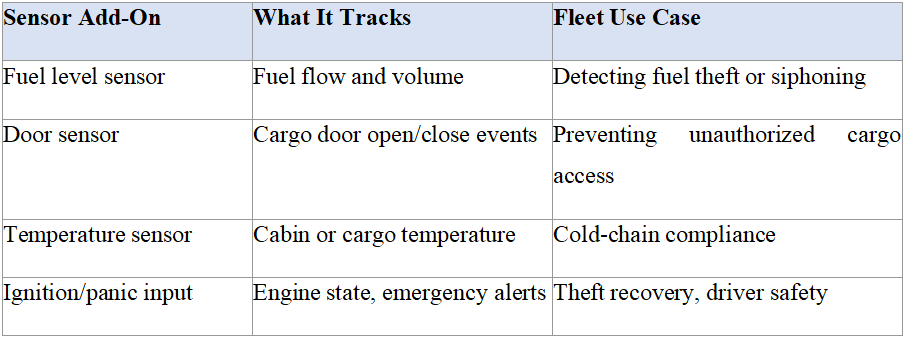
Because location data and video data share the same timeline, fleet managers can cross-reference a hard-braking alert with the exact route and stop where it occurred — turning two data streams into one coherent story.
Fleet IoT is the backbone because it's the connective layer that moves data from vehicles to a usable dashboard. Cameras and GPS trackers only generate raw signals; fleet IoT — the network of connected devices, cellular modules, and cloud platforms — is what turns those signals into decisions.
The process generally follows four steps: a device (camera, tracker, or sensor) captures an event, onboard connectivity (typically 4G LTE) transmits it, a cloud platform aggregates it with other vehicle data, and a dashboard surfaces it to a fleet manager. If any link breaks, the whole chain loses value.
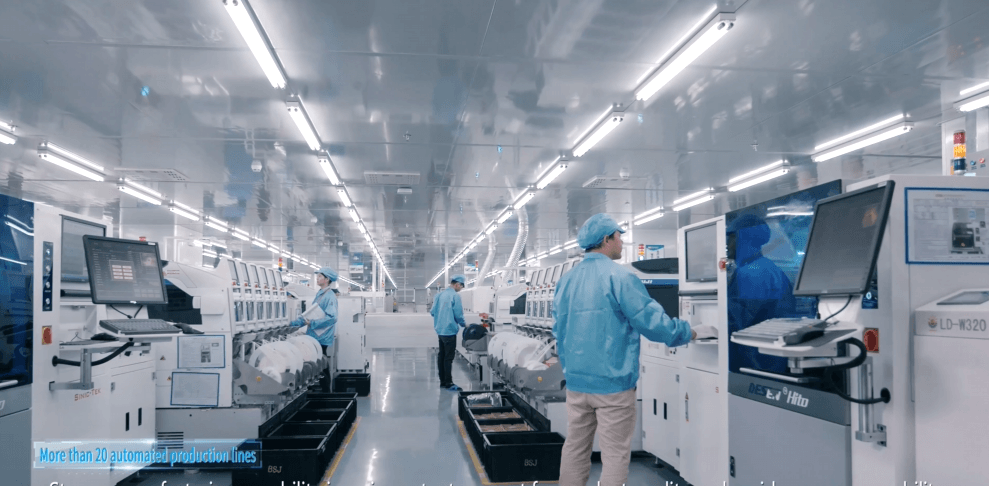
This is why open-protocol design matters. A fleet management solution that only talks to one closed platform limits scalability, while devices built to integrate with third-party telematics software give fleets room to grow without replacing hardware.
BSJ Technology combines all three layers by manufacturing AI dashcams, MDVR (Mobile Digital Video Recorder) systems, and GPS trackers that share a common cloud platform, rather than selling them as isolated products. BSJ Technology has built this ecosystem since 2009 and now serves fleets across more than 30 countries.
At the video layer, BSJ's AI MDVR systems record HD footage across front, rear, cabin, and blind-spot cameras while running ADAS, DMS, and BSD detection simultaneously. At the connectivity layer, GPS trackers such as the KG-27 and solar-powered EG06G connect with external sensors to add fuel, door, and location sensing capabilities.
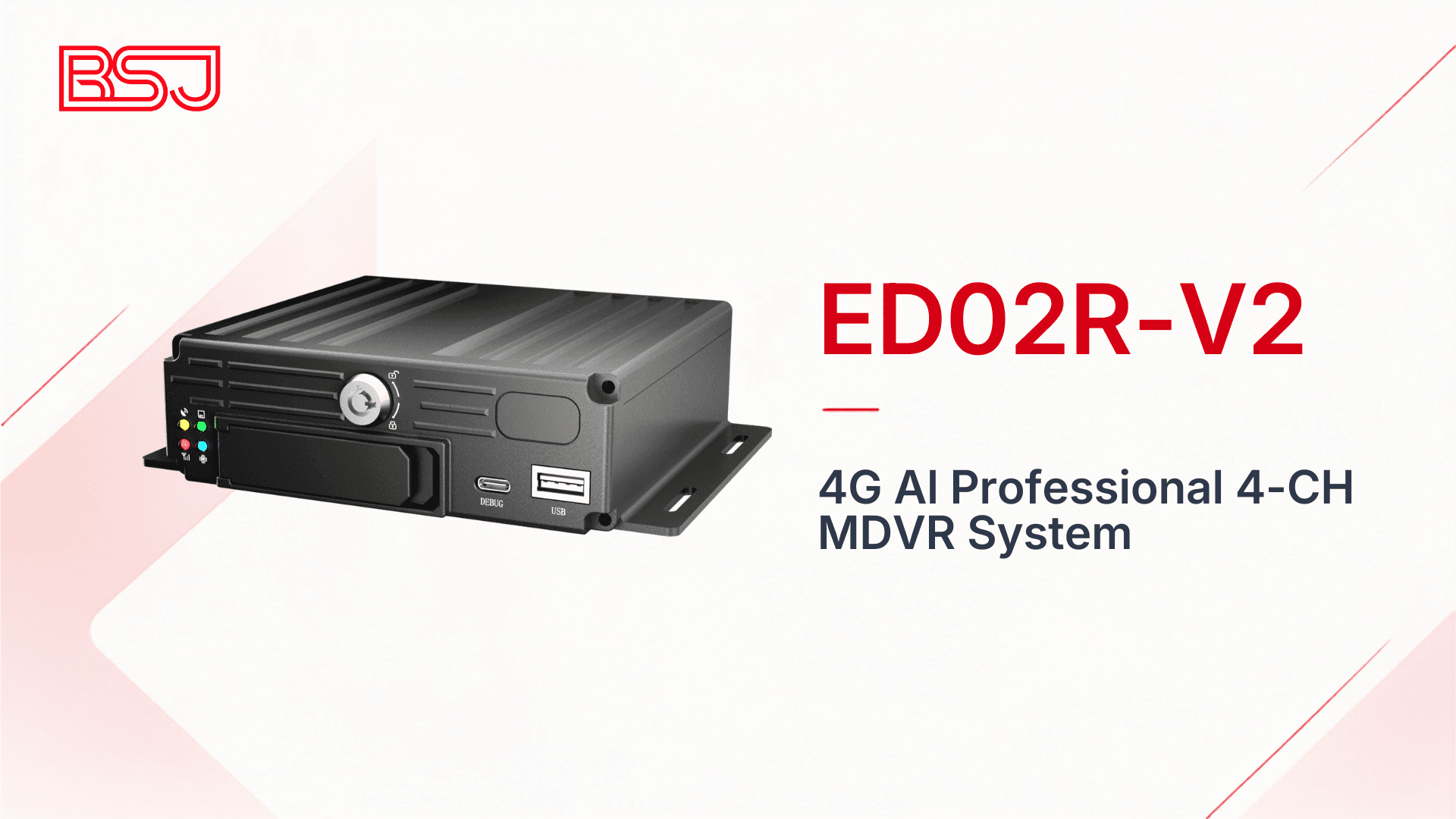
All of it reports into the BSJ Monitor cloud dashboard, which supports open protocols and integrates with platforms like Wialon, RedGPS, and Uffizio. For large fleets, that means dispatchers see video alerts, GPS position, and sensor data on one screen instead of three logins.
Choosing among fleet telematics technology providers comes down to one question: does the hardware fit your existing software stack, or will it force you to rebuild it? Providers vary widely on this point.
Before shortlisting a provider, compare them against these criteria:
AI Video Telematics, GPS tracking, and fleet IoT are no longer separate purchases — they function best as one integrated fleet management solution that gives dispatchers visibility from the cab to the cargo hold. Fleets that adopt this combined approach are the ones capturing the crash-reduction and insurance savings documented across the industry.

BSJ Technology recently brought this connected approach to industry audiences at IAA TRANSPORTATION 2026 in Hannover, where the company presented its AI video telematics and connected fleet IoT lineup to logistics operators and system integrators. Fleet managers evaluating their next telematics upgrade can review the full IAA TRANSPORTATION 2026 recap for a closer look at where this technology is heading next.

BSJ Technology (SZSE: 301608) is a global provider of AI Video Telematics and Connected Fleet IoT solutions. Since 2009, BSJ has developed AI Dashcams, MDVR systems, and GPS tracking solutions for commercial fleets worldwide.