We're here to help. Reach out for any inquiries about our products, services, or partnerships.
Choose your operating system to start
Commercial fleet management increasingly requires advanced telematics beyond traditional GPS to mitigate rising operational risks, control collision costs, and meet stringent insurance compliance. Across long-haul logistics, mining, public transit, and cold-chain distribution, fleets face mounting liabilities from preventable road incidents. Modern optimization demands real-time situational awareness, proactive in-cab risk mitigation, and verifiable video evidence to protect drivers, exonerate fleets, and streamline daily operations.
An AI dashcam combines high-definition recording, multi-GNSS positioning, 4G cellular connectivity, and edge-computing artificial intelligence within a ruggedized hardware unit. Unlike passive legacy devices, an AI powered dashcam analyzes high-contrast driving environments and operator behavior in real time, issuing immediate audio alerts and streaming actionable telemetry to supervisors. This bridges vehicle hardware with cloud platforms to drive proactive safety and continuous visibility.
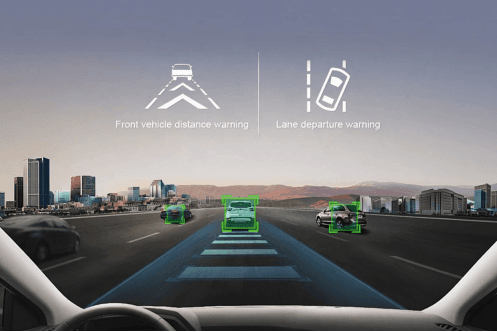
Advanced Driver Assistance Systems utilize forward-facing lenses and edge AI to monitor road conditions and identify collision risks proactively. They calculate spatial distances and closing speeds to deliver instant audio-visual alerts for forward collisions, unintended lane departures, and unsafe headway intervals, effectively correcting hazardous driving behaviors.
Driver Monitoring Systems employ inward-facing infrared cameras and optical algorithms to monitor operator attentiveness during shifts. The technology detects behavioral precursors such as fatigue, micro-sleep, distraction, phone use, smoking, and seatbelt non-compliance, issuing in-cab alerts to help drivers recognize unsafe behavior and respond before risks escalate.
Blind Spot Detection extends visibility to exterior flanks and rear zones of large commercial vehicles where mirrors fail. Using specialized side cameras or sensors, it identifies vulnerable road users and surrounding vehicles during tight urban maneuvers and highway congestion.
Global Positioning System tracking integrates multi-constellation satellite data and 4G modems to broadcast precise locations, historical paths, and speeds to command centers. This core layer enables continuous asset tracking, geofencing boundary monitoring, and detailed journey reconstruction alongside video telemetry.
| Feature Category | Core Technical Function | Primary Operational Benefit |
|---|---|---|
| ADAS | Forward road scanning & proximity analysis | Prevents head-on collisions and lane-drift accidents |
| DMS | In-cab infrared driver behavioral monitoring | Eliminates distracted driving and operator fatigue |
| BSD | Exterior flank & rear zone observation | Protects pedestrians and cyclists during urban turns |
| GPS Tracking | Real-time positioning & route telemetry | Enhances dispatch efficiency and asset visibility |
Preventing commercial collisions requires transitioning safety protocols from reactive reviews to proactive hazard mitigation. Smart vehicle hardware intervenes the millisecond a risk is detected, replacing traditional monthly coaching with immediate in-cab correction and automated event logging.
In-cab coaching leverages real-time voice warnings and chimes triggered by edge algorithms during dangerous habits or external risks. This immediate feedback loop prompts drivers to self-correct instantly, Repeated alerts and follow-up coaching can help drivers recognize unsafe habits and improve their driving practices over time.
Event-triggered video logging automatically captures high-definition clips encompassing pre- and post-incident windows during severe G-forces, sudden braking, or sharp steering. These priority clips upload instantly via 4G cellular networks, enabling safety managers to review high-risk events and intervene within minutes.
Exoneration evidence protects transport firms from fraudulent liability claims and litigation by motorists. Multi-channel video recordings capture exact external sequences and interior states, providing visual records that can help fleet managers review accident circumstances, respond to insurance claims, and assess potential liability.
Achieving operational transparency across decentralized fleets demands real-time insight into vehicle interiors, cargo conditions, and transit progress. Fleet dashcams transform commercial vehicles into active data nodes that feed comprehensive situational awareness directly back to headquarters. By connecting video feeds with GPS data, they help fleet managers monitor vehicle activity and respond to operational issues more effectively.
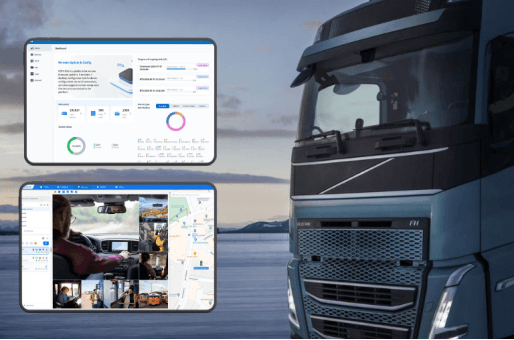
Live video streaming empowers dispatchers and safety directors to view multi-channel camera feeds from the road, cabin, and cargo bays on demand. This is vital during emergencies, inspections, or route delays to coordinate rapid operational responses.
Geofencing alerts use integrated GPS coordinates to establish virtual boundaries around depots, restricted areas, and transit corridors. Notifications trigger instantly whenever vehicles enter or leave unauthorized zones, securing cargo and optimizing route adherence.
Automated diagnostics monitor vehicle health parameters—such as fuel levels, fault codes, and compartment temperatures—in real time. Streaming telemetry directly to maintenance teams allows preventative repairs before minor issues cause costly breakdowns, maximizing uptime.
Selecting technology infrastructure requires partnering with a manufacturer capable of delivering rugged, field-tested hardware. Founded in 2009 and listed on the Shenzhen Stock Exchange (Stock Code: 301608), BSJ Technology develops AI video telematics and connected fleet IoT products for commercial vehicle applications. Its current website reports more than 9 million devices deployed across over 30 countries, supported by in-house R&D and manufacturing capabilities.
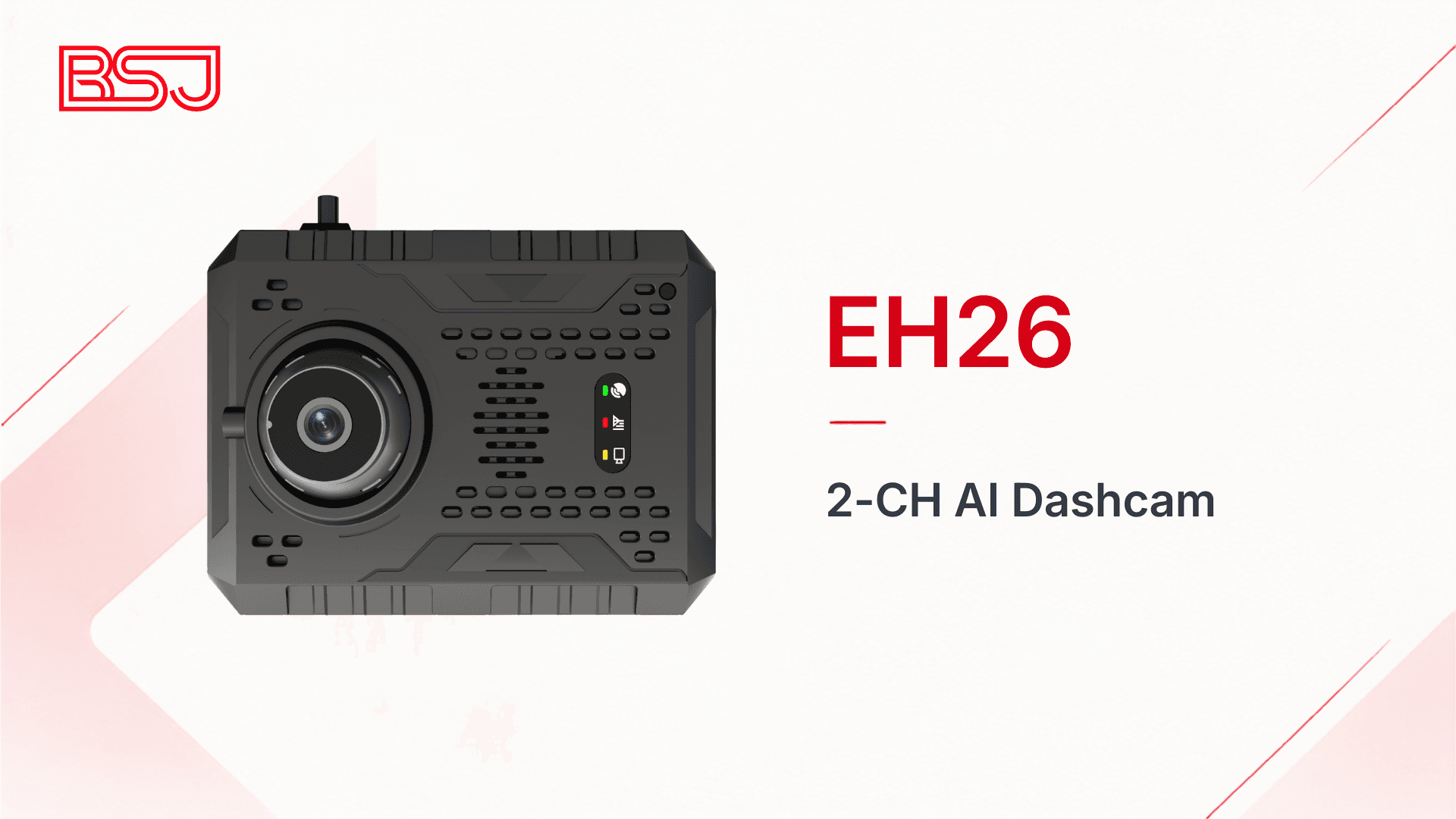
BSJ offers different AI dashcam configurations for commercial fleets, including the EH26 2-channel model and DR03 3-channel model. EH26 combines dual-channel HD recording with ADAS, DMS, 4G LTE, and multi-system GNSS. DR03 adds a 1.0 TOPS AI NPU, Linux-based operation, and three-channel video recording. These differences allow fleet operators and technology partners to select hardware according to their monitoring and integration requirements.
Multi-system integration ensures hardware adapts seamlessly into diverse software ecosystems via comprehensive API documentation, open protocols, and tools like the BSJ Configurator and FOTA Web. This open architecture empowers integrators to expand service portfolios efficiently.
Deployment flexibility enables partners to scale rollouts across varied vehicle classes, from delivery vans to oil tankers. BSJ offers modular product combinations ranging from GPS tracking to advanced AI safety, alongside comprehensive OEM/ODM and custom development support.
Justifying smart vehicle technology requires a clear financial analysis beyond hardware costs. Fleet executives evaluate ROI by measuring how connected safety solutions reduce operational losses, lower recurring expenses, and protect overall enterprise profitability across key cost centers.
Insurance premium reduction represents an immediate financial return. Video telematics can provide additional records for insurers when reviewing vehicle incidents and claims. Time-stamped footage may help clarify accident circumstances and support a fleet's risk-management documentation. However, insurance discounts are not automatic. Fleet operators should confirm whether their insurer offers any incentives and review the applicable policy conditions.
Reduced fuel consumption stems from monitoring and correcting idling, harsh braking, and speeding. Real-time driving alerts and follow-up coaching can help fleet managers identify excessive idling, harsh braking, and speeding. By reviewing these patterns and adjusting driver practices, operators may find opportunities to improve fuel efficiency. Actual results depend on vehicle type, operating conditions, and driver behavior.
Lower litigation costs protect companies from exorbitant legal judgments and fraudulent claims. Time-stamped video evidence can help companies review accident circumstances and provide supporting records during claim investigations. Its usefulness depends on recording coverage, video quality, and whether the footage captures the relevant events.
Adopting modern video telematics is essential for commercial operators navigating high-risk markets. By integrating advanced ADAS, DMS, BSD, and GPS technologies into reliable hardware from BSJ Technology, commercial fleets eliminate operational blind spots and prevent collisions. Whether optimizing safety, expanding technical capabilities, or scaling platform services, intelligent hardware lays the foundation for sustainable business growth.

BSJ Technology (SZSE: 301608) is a global provider of AI Video Telematics and Connected Fleet IoT solutions. Since 2009, BSJ has developed AI Dashcams, MDVR systems, and GPS tracking solutions for commercial fleets worldwide.