Choose your operating system to start
A 4-channel Mobile DVR gives a fleet the ability to observe several operational zones at the same time, but four channels only create value when every viewpoint answers a defined question. Road evidence, driver behavior, passenger or cargo activity, and side or rear blind zones may all matter, yet the correct layout differs between buses, trucks, construction vehicles, and specialized transport equipment.
For commercial fleet procurement, the recorder also needs to work as part of a connected telematics process. An MDVR with 4G should combine video continuity, usable storage, event retrieval, positioning context, cellular communication, and manageable configuration. Buyers should therefore judge the complete workflow from camera installation to incident review rather than compare recorders only by their channel count.
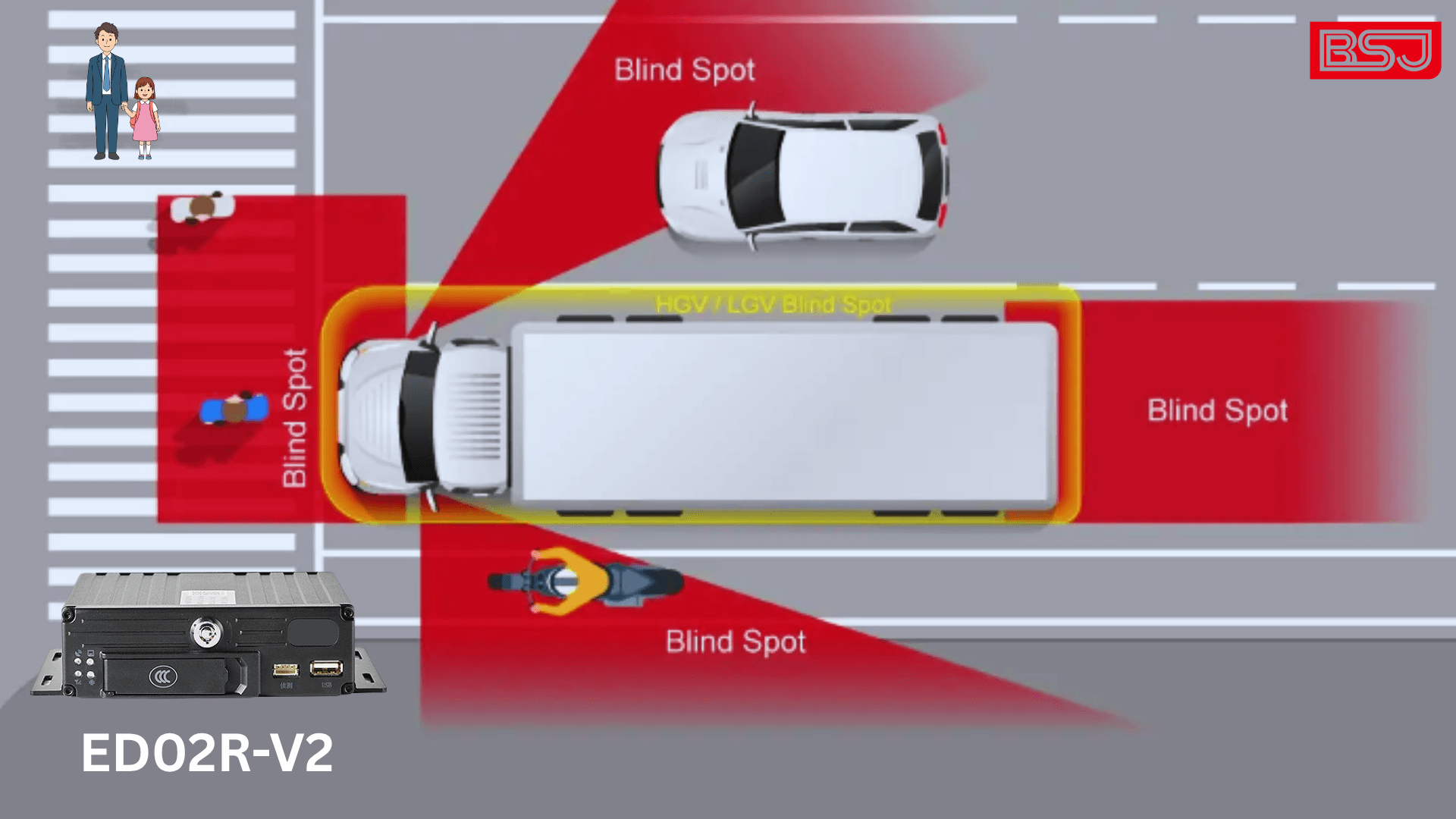
Camera allocation should begin with a vehicle drawing or physical survey. This is the core planning task for a 4-channel Mobile DVR project. A front channel can document traffic conditions, a cabin view can support driver or passenger review, and the remaining channels can cover cargo doors, rear approaches, sides, or known blind zones.
The selected field of view and mounting height should be checked on real vehicles because bodywork, mirrors, interior partitions, and accessories can block otherwise logical positions. Within our four-channel architecture, ED02R-V2 supports 1080P or 720P video collection with real-time uploads, playback, and easy access to historical video.
Those capabilities let a project combine local evidence with remote review, but the fleet should still define how long footage must remain available and which events deserve immediate upload so storage and cellular costs stay predictable. Lighting and motion conditions should be represented in the acceptance test. Night routes, backlighting, vibration, rain, dirty lenses, depot lighting, and fast changes between bright and dark areas can affect evidence quality.
Procurement teams can review sample footage from their own operating environment rather than rely on a static demonstration, especially when the image may later support claims, disciplinary review, or compliance documentation. Cable routing deserves its own installation standard.
Four cameras mean more connectors, longer harnesses, and more opportunities for loosened plugs or damaged cable runs. Workshop teams should document cable protection, connector access, fuse placement, antenna position, recorder mounting, and service clearance. A clear standard reduces variation between depots and makes fault diagnosis faster after the original installers are no longer available.
Video context becomes more useful when safety events can be associated with the same timestamp and vehicle identity. For AI-assisted review, our ED02R-V2 can combine ADAS, DMS, and blind-spot detection. These capabilities can support road-risk alerts, driver monitoring, and blind-zone awareness, but their operating thresholds should be aligned with the fleet's safety policy rather than treated as automatic conclusions about driver behavior.
In our ED02R-V2 engineering work at BSJ Technology, the important question is whether an event can move cleanly from detection to review. A safety manager may need the alert category, vehicle, location, time, camera angle, and relevant clip together. If those elements are split across systems or use inconsistent identifiers, the four-channel architecture can create more data without actually shortening an investigation. Remote administration influences maintenance cost after rollout.
The device works with BSJ Configurator and FOTA Web, allowing parameter setup and remote firmware management. A buyer should test batch changes, version tracking, permissions, device-health reporting, and recovery from interrupted updates before depending on remote tools for a fleet distributed across several service locations. Third-party integration should be validated with real messages and commands.
In an integrated project, 4G MDVR may feed a customer-facing fleet platform, an insurer workflow, or an integrator's monitoring center. Protocol mapping should confirm alarm codes, channel references, video requests, GPS fields, and acknowledgements so the hardware behaves consistently inside the existing ecosystem rather than creating a parallel application that staff must manage separately.
The pilot fleet should represent different vehicle bodies, electrical systems, network conditions, and risk profiles. Teams can measure installation time, channel coverage, recording continuity, retrieval speed, data consumption, AI event usefulness, and remote administration. Including the difficult vehicles early provides a more realistic estimate of field effort than testing only the easiest units and discovering exceptions during mass deployment. Procurement also needs a replacement and support plan.
Spare recorders, camera compatibility, storage media, cable harnesses, SIM provisioning, firmware versions, and configuration backups should be controlled so a failed unit can be replaced without creating inconsistent behavior. This is especially relevant to operators that cannot bring every vehicle back to a central workshop for service. We support OEM/ODM projects where distributors or solution providers need customized hardware, branded firmware, accessories, or platform integration.
The useful measure is not the availability of customization by itself, but whether engineering changes can be documented, tested, approved, and reproduced across later production batches with predictable delivery and quality control. Four camera channels become operationally useful only when the fleet knows what each view is intended to prove.
For multi-channel projects, our team at BSJ Technology uses the ED02R-V2 to connect local recording, AI events, GPS context, remote access, and lifecycle control around a defined evidence process. A 4-channel Mobile DVR should be commissioned with consistent channel names, retention rules, upload priorities, and access permissions so reviewers can retrieve the right footage quickly.
An 4G MDVR deployment also needs realistic bandwidth and network testing before scale. Once those controls are documented alongside installation and firmware baselines, the recorder becomes a maintainable fleet component rather than four independent video feeds that create more data than the organization can use.

BSJ Technology (SZSE: 301608) is a global provider of AI Video Telematics and Connected Fleet IoT solutions. Since 2009, BSJ has developed AI Dashcams, MDVR systems, and GPS tracking solutions for commercial fleets worldwide.