Choose your operating system to start
Fleet managers cannot ride in every cab, so they need evidence of what happens on the road. A 3 channel dashcam records the road ahead, the driver and a third view in one unit. A 4G connection links that unit to your fleet management platform or third-party tracking software.
The stakes are high. IIHS reports that 4,354 people died in large truck crashes in 2023, accounting for 11% of all motor vehicle crash deaths. Here is how these two technologies address the problem.
Fleets are adopting a 3 channel dashcam because one lens shows what happened but not why it happened.
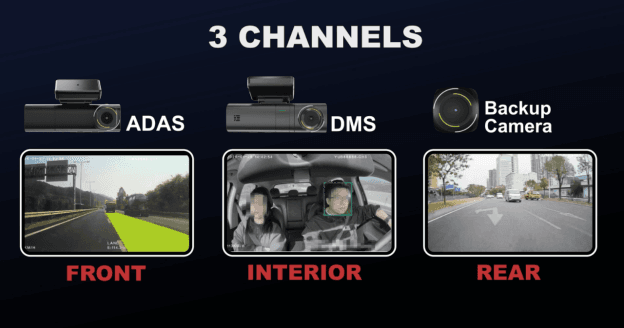
A forward-facing camera can show a hard stop. It cannot show whether the driver was looking at a phone. As a result, a collision dispute often becomes one account against another.
Each channel answers a different question after an incident. The table below shows the split.
| Channel | View | Question it answers |
| 1 | Forward road | What did the road and other vehicles do? |
| 2 | In-cabin | What was the driver doing? |
| 3 | Optional external camera | What happened at another angle on the vehicle? |
A 4G dashcam links vehicles to your platform, reducing reliance on physical depot visits.
Footage on an SD card stays in the vehicle until someone pulls it. For a fleet spread across several depots, that creates delays and extra labor. Therefore, connectivity matters as much as camera count.
GNSS (Global Navigation Satellite System) positioning tells you where a vehicle is. FOTA (firmware over-the-air) lets you update device software remotely. Together, they remove two common reasons to pull a vehicle off the road.
| Task | SD-card-only recorder | 4G-connected dashcam |
| Changing settings | Technician visits the vehicle | Remote configuration |
| Firmware updates | Manual, vehicle by vehicle | FOTA updates |
| Vehicle position | Unknown until data is downloaded | GNSS position through your platform |
ADAS and DMS flag risky driving as it happens, so managers can coach drivers before a risk becomes a claim.
ADAS (Advanced Driver Assistance Systems) watches the road. DMS (Driver Monitoring System) watches the driver. The distinction matters because an FMCSA study found that driver action or inaction was the critical reason in 88 percent of the crashes it examined.
Driver fatigue was also recorded as an associated factor in 13% of those crashes. This research is older (reported in 2007), but it still explains why driver behavior is the focus.
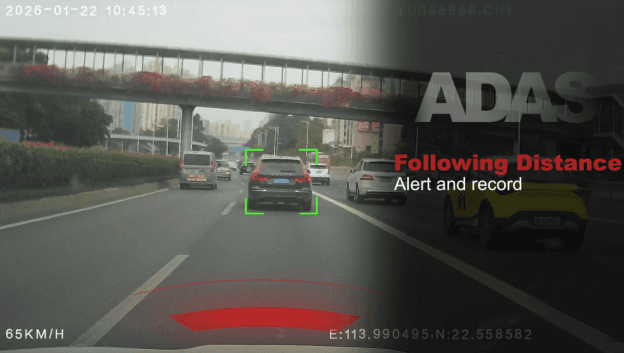
ADAS detects four road risks: forward collision, unsafe following distance, lane departure and pedestrian collision. For example, a headway warning gives a driver a chance to increase the gap before braking becomes an emergency.
DMS catches driver-side risks that a forward camera cannot see. In addition, a built-in G-sensor reports harsh driving events.
l DMS alerts: eyes closed, yawning, phone use, smoking, distraction, seat belt, camera blocked and no driver detected.
l G-sensor alerts: overspeed, harsh braking, harsh acceleration, harsh turning and collision.
The DR03 from BSJ Technology is a 3-channel AI dashcam that combines ADAS, DMS and 4G LTE in one unit. BSJ was founded in 2009, is listed on the Shenzhen Stock Exchange (301608) and builds AI video telematics hardware for commercial fleets. This 3 channel dash cam runs on a 1.0 TOPS NPU (neural processing unit) with a Linux operating system.
The official datasheet lists the following:
| Feature | DR03 specification |
| Video | 3 channels: 2×1080p plus 1×1080p/720p, H.264 |
| Cellular | 4G LTE Cat.4 |
| Positioning | GPS, Galileo, BeiDou, GLONASS |
| Storage | TF card slot, 32GB–512GB |
| Power input | 9–36V DC |
| Operating temperature | -25°C to +75°C |
| Certification | CE |
BSJ lists logistics fleets, taxis, buses, ride-hailing and enterprise fleets as target users. For partners—including system integrators, telematics platforms, and distributors—the DR03 supports remote configuration, FOTA updates, and flexible integration with existing management architectures.
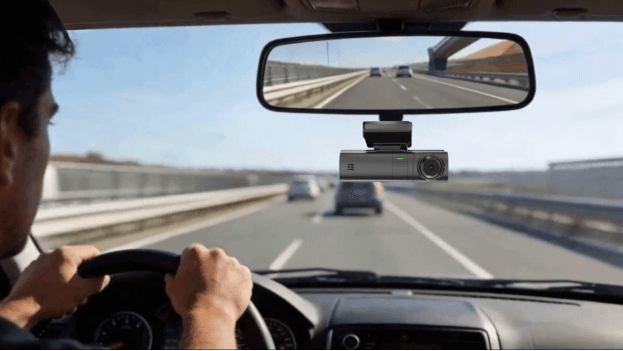
Choose a 4G dashcam by matching its features to the problem each buyer needs to solve.
Each role checks different specifications, as the table shows.
| Buyer | Main problem | What to check |
| Fleet owner or manager | Unseen driver risk | ADAS and DMS alerts that match your incidents |
| Distributor | Regional fit | LTE bands for your market, certification |
| System integrator | Platform compatibility | Remote configuration, FOTA, integration support |
Start with the risk you cannot currently see. A 3 channel dash cam shows the road and the cab together, and 4G keeps every vehicle manageable from one place.
Before you buy, confirm three points:
1. Which incidents or disputes cost you the most.
2. Whether the device’s LTE bands and platform integration fit your market.
3. Whether the alerts cover your main risks.

BSJ Technology (SZSE: 301608) is a global provider of AI Video Telematics and Connected Fleet IoT solutions. Since 2009, BSJ has developed AI Dashcams, MDVR systems, and GPS tracking solutions for commercial fleets worldwide.